
by Jon Kohler
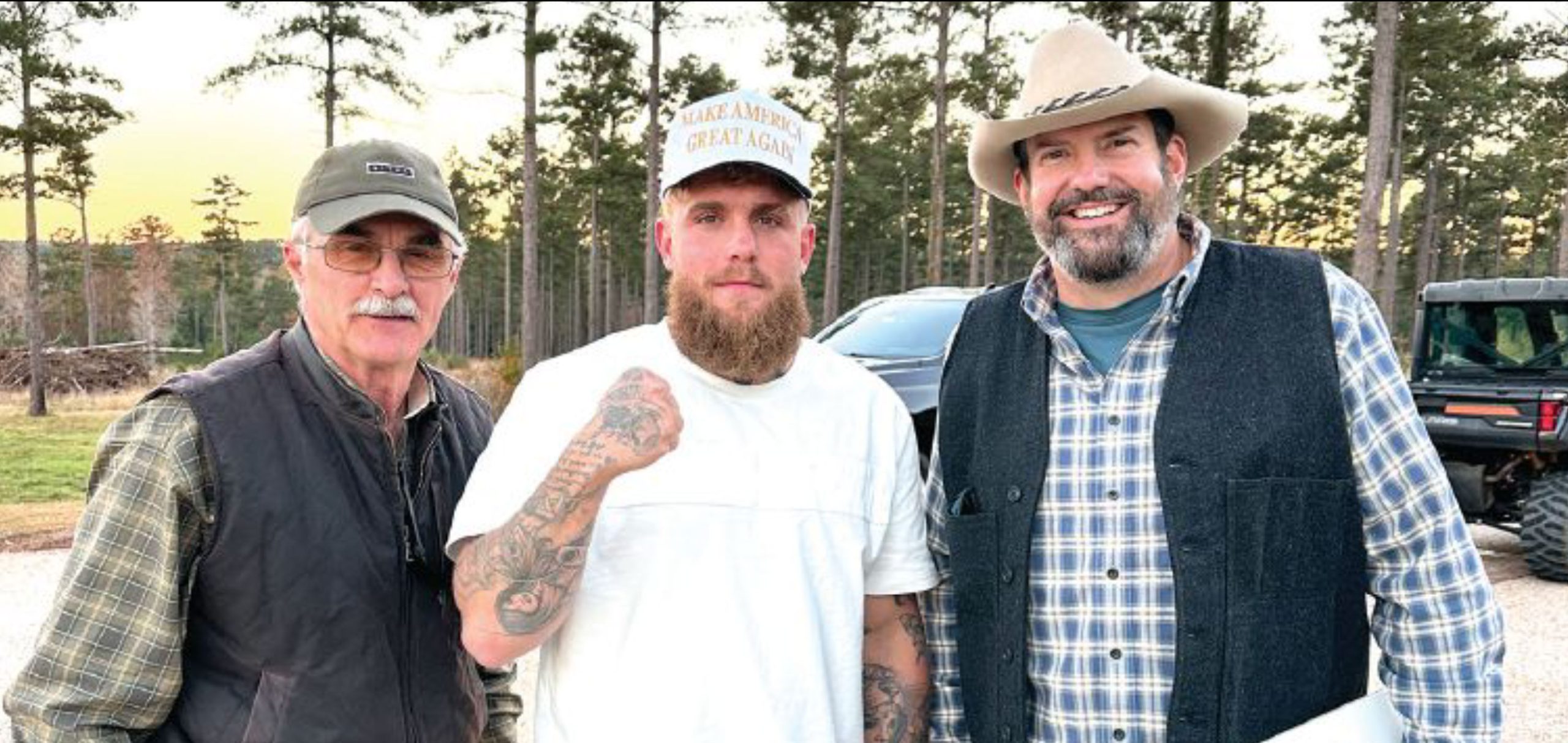
Biases doesn’t always align. For generations, fortunes were spent to de-velop rural land into something “produc-tive.” But in a twist of modern irony, it’s often those who undo that development – those who restore the wild – that see land’s true value rise. What was once commercially logged or farmed is now transformed into private havens of con-servation and recreation. And it’s become a booming asset class. Enter Jake Paul. The international celebrity, boxer and social media mogul just bought Southlands Plantation, 5,750 acres in southwest Georgia, for $39 million – a staggering $6,800 per acre. That makes it the highest recreational land sale ever recorded in the region. And, it wasn’t just a flex. Paul bought it as a recreational investment. As a private national park. As something that – even with wealth – few can say they truly own. Southlands: From Timberland to Trophy Once a national model for managed timberland, Southlands – best known as the Southlands Experimental Forest and the flagship of International Paper’s 12-million-acre empire – has since rede-fined its legacy. This isn’t normal land. The late EE Calloway authored a book saying this was the site of the Garden of Eden. Today, it stands as a benchmark for a different kind of wealth: habitat restoration, prescribed fire and biodiversity enhancement. Originally established by Herbert Stoddard – the pioneering ecol-ogist who championed fire management long before it gained mainstream recognition – Southlands has emerged as the crown jewel of Georgia’s recreational land movement. What’s fascinating is how it’s all come full circle. Southlands – now managed as a recreational property with fire – just sold for three times what it was worth as timberland. It’s been a long journey to get here, but this sale proves what I’ve been saying for the last 30 years: natural places equal real wealth. Its journey mirrors that of other transformational properties across the country. And, one name keeps surfacing in these stories: Jim Dahl.
Jim Dahl and the Power of Seeing Land Differently
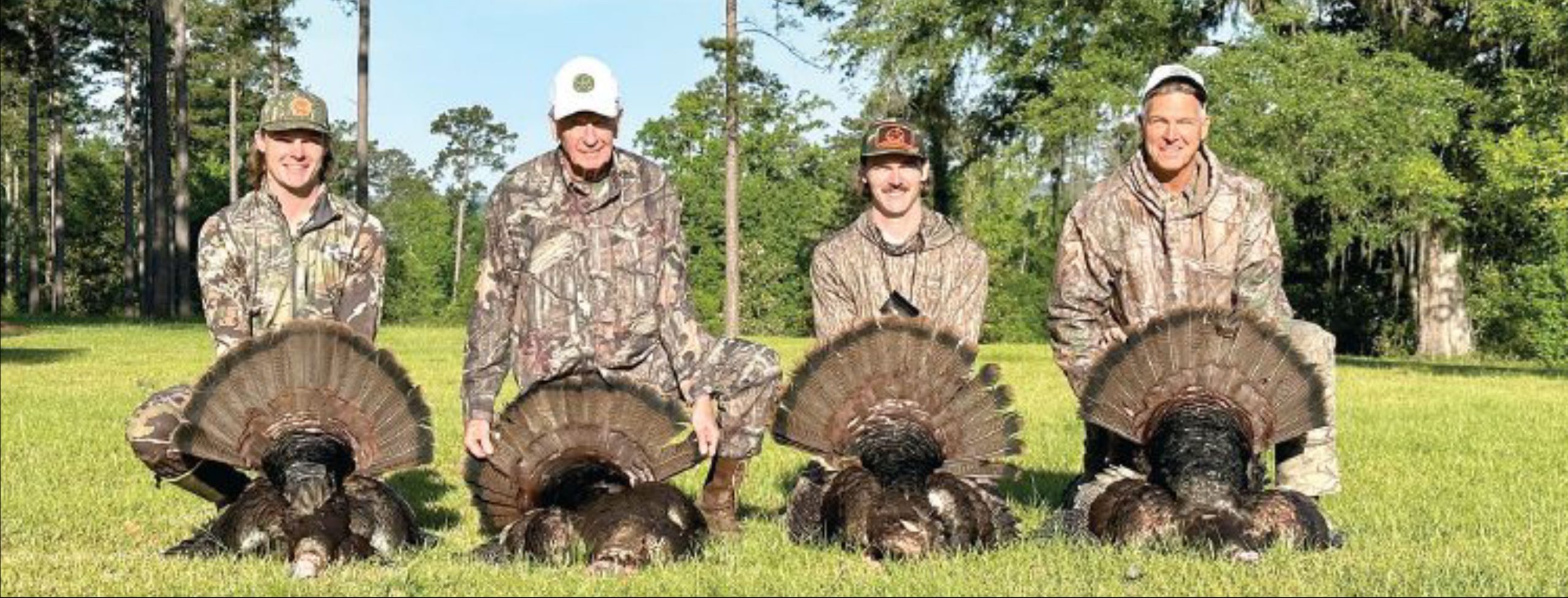 Long before “influencer” became synonymous with social media, Jim Dahl was influencing the way people thought about land as an investment. After leav-ing Wall Street in the wake of the Junk Bond era, he came back to Tallahassee not just with capital – but with a vision. Dahl was the one who flipped the script. He showed us that reversing the industrial timber model could create more long-term value. He proved that recreational land – with more habitat and less timber – wasn’t just beautiful, it was smart business. Looking back, it kind of snuck up on me. Over the years, I closed more than $300 million in land deals with Dahl. I can’t think of one that didn’t turn into a landmark sale that helped define this mar-ket. He had a gift for seeing what others missed. The Sanger Ranch in Wyoming. Centerville. Honey Lake. Miccosukee Hills. Deep Creek Plantation in Florida. And, now – Southlands. Deep Creek: Deer Sashimi, Diplomacy and the FBI Then there’s Deep Creek Planta-tion. It started as a paper company tract, tucked away in a $1 billion timberland sale back in 2001. Today, it’s one of Flor-ida’s most iconic riverfront recreational properties. It’s changed hands four times – including a memorable chapter with two Chinese buyers who famously (or infamously) served raw deer backstrap sashimi at their welcome dinner. “It was one of those moments,” a broker I know recalled. “Trying to balance culture, hygiene and hospitality, and someone hollers, ‘Who the hell put the raw backstrap on the table?’” The story even made it as far as the FBI. With Deep Creek just 90 miles from a nuclear submarine base, there were questions – and rightfully so. Why were two women from Beijing buying thou-sands of acres near critical infrastruc-ture? It was a legitimate inquiry. With Ruby Ridge and Waco still in mind, I volunteered to meet at the FBI office, not at Lick Skillet. Today, those questions echo even louder, as international land ownership becomes part of a much broader geo-political conversation. But one thing is clear: recreational land in our region has gone global. It’s not just American outdoorsmen who see the value anymore – the world is paying attention. From Cattle to Cast & Blast This trend isn’t limited to the Southeast. Out West, the legendary Sanger Ranch in Wyoming – 75,000 acres steeped in cowboy heritage and cattle grazing – was re-imagined into part of Brush Creek Ranch, now recog-nized as the #1 recreational resort in the world. Originally sold for $25 million, it later changed hands for nearly double that. Not for cows – but for fly rods, fresh air and sharing God’s great outdoors with others. It took us eight years to find that ranch. It was never even on the market. As far as we can tell, it was the first true change in ownership since the Treaty of Laramie. Imagine sitting on one of the top three fly-fishing properties in the lower 48 and not even realizing what the water was worth. We’ve seen the same story play out closer to home. River’s Edge, once just another piece of land, was transformed into a world-class deer hunting property. We sold it for $4,200 an acre and just a few years later, fetched over $8,000 per acre – outpacing even the legendary quail plantations of Thomasville. These lands are no longer being valued just for what you can extract from them – but for what you can experience on them. In Southwest Georgia, that means Boone & Crockett-caliber white-tails and wild coveys of bobwhite quail. The shift is clear: beauty, biodiversity and the thrill of the chase now define true land value. Recreation Is the New Yield In a world where capital seeks ref-uge from volatility, land has become a haven. But not just any land – recreation-al land. Places where deer, ducks and dogs roam free. Places where habitat im-provements yield not commodities, but memories. Buyers like Jake Paul aren’t just looking for privacy – they’re buying prestige, legacy and the promise of na-ture in a curated form. So Why Jake Paul? It’s the question everyone’s ask-ing. Why would a Gen Z celebrity buy a Georgia plantation? Maybe it’s because in a world full of noise, 5,750 acres of silence has be-come the greatest luxury. Maybe it’s be-cause land is still the ultimate long-term play. Or maybe – just maybe – he’s writ-ing the next chapter in a movement that people like Jim Dahl helped pioneer. As a Social Storm Property™, it’s built to hold value through every cycle – to appreciate in both good times and bad. In many ways, it may just be the perfect hedge. Jake Paul may not be the landowner people expect – but then again, neither was Jim Dahl when he started. Forty years ago, the old guard whispered sim-ilar doubts. Now, we look back and see how his vision changed the land world for the better.
Will Paul do the same?
The $142 Million Handshake:
How One Call Changed Everything Sunday night. My wife Erica’s ad-vice: “Don’t take it.” But with $4 million on the line, going “hard” in 10 days with a public company – no paper trail, just trust – it was a call I had to answer. This was the ultimate Rolodex test. For two weeks, my office sat emp-ty. I lived in pajamas, never pausing long enough to drive across Centerville to the office, which was usually buzzing with the organized chaos of a deal taking shape. I made my case, built the team, and we went to work. The result? A $142 million, 10-state timberland transaction – the largest in the South in eight years. But what was the real price? South-lands: Dahl and his partners bought that extra 120,000-acre tract just to reach their ultimate prize – Southlands itself. It was a strategic acquisition, a means to an end. Unbeknownst to me at the time, Walter Hatchett, who played a key role in that initial deal, would later co-list Southlands with me, ultimately selling it to Jake Paul years later. It went full circle from the “crown jewel” of International Paper’s 12M acre empire to the high-est-selling recreational property in Geor-gia history. The layers of these deals are truly fascinating. God places opportuni-ties; it’s up to us to see them. Closing Thoughts I started this piece to write about Jake Paul. I ended up writing about Jim Dahl. Funny how legacy sneaks up on you. Dahl created a blueprint for valuing land in its most natural, beautiful state. He showed us that wild land isn’t worth-less – it’s priceless. Maybe Paul sees that too. Maybe these massive acquisitions are the start of a new generation of stewardship. And, if land really is the Garden of Eden we lost, maybe it’s through fire, patience and vision that we find our way back.
 From murky farm ponds to pristine glacier-cut lakes and everything in between, Knox Daniels’ expertise stems from a lifelong fascination of water and the creatures that live in and around it. He recognizes and helps clients appreciate the value water features bring to a property. “My goal is to help buyers realize and sellers maximize the value different water bodies bring to a property, not only in a recreational sense, but also for social storm reasons.” After extensively traveling the country for collegiate BASS fishing tournaments, Knox graduated and worked for the Southeast’s finest fisheries and wildlife biologist, Greg Grimes. With Grimes’ company, AES, Knox managed many of the southeast’s finest private lake estate/impoundment properties, and learned the intricacies of upscale property management. Learning from Greg and other biologists, Knox honed in on the specific conditions and habitat needed for optimal gamefish growth in private lakes. He has also worked as a property manager on several thousand acres and for a commercial developer, facilitating the dirt work and builds of several apartment complexes, but his true passion has always been in the outdoors. “I’ve always had an insatiable fascination with ponds/lakes and am grateful to be able to help to place clients on the properties of their dreams and make their personal fisheries/wildlife goals reality with JKA.” – Knox Daniels
 Jason has been assisting landowners for the last 28 years in Georgia and South Carolina obtain achievements the owners did not realize were possible. His degree in Biology from Georgia Southern stemmed from the desire to know how things in nature work. His plantation roots began at just 16 years old outside of Albany, GA and the last 20 years were spent in the Lowcountry of South Carolina. His entire career has been spent developing a global approach to plantation management. That plan included sales. Sales is in Jason’s blood- his mom had a 45-year career as a real estate broker. After college, he chose to pursue his passion of making properties great. In 2011, Jason sold his first plantation. Since then, he has assisted buyers and sellers with over $20 million in sales while most of that time working as a full-time General Manager of a large Lowcountry plantation. Today, he is committed to using his unique skill set and experience to guide landowners through the many challenges of plantation ownership.
 Bruce Ratliff is a retired elected official (Property Appraiser Taylor County). Bruce brings years of experience in ad valorem tax knowledge. His property tax background gives JKA Associates & clients a unique insight into the complicated tax process. Bruce held several positions in the Florida Association of Property Appraisers, including member of the Board of Directors, President, Vice-President and Secretary, and served on the Agricultural & Legislative Committees for the Association. The real estate business has been part of Bruce’s life since childhood. His mother, Shirley Ratliff owned Professional Realty of Perry, Florida and his father, Buster owned Ratliff Land Surveying which Bruce was General Manager of before his political career.
 Hailing from a long line of outdoorsmen, Tim learned a great deal from his father and grandfather. He saw first-hand what it means to be a good land steward. He believes land is so much more than a place to hunt, fish, and grow timber or crops. “It’s an identity, a resting place, a safe haven and a way of life, said Tim.” Tim’s family ties to Alabama run deep. During his grandfather’s first term, Governor James was responsible for signing into law Alabama’s first state duck stamp which helped to ensure funding for the procurement, development, and preservation of wetlands for migratory waterfowl habitat. He also established Alabama’s lifetime hunting license, so it is no surprise that Tim is an avid outdoorsman with a keen eye as to how best to improve habitat for the greater good of its wildlife.
 With Madison County roots, Lori grew up on her family farm at Pettis Springs along the historic Aucilla River. A love of the land was instilled in Lori very early on by her father who was a local farmer. Lori understands the importance of good land stewardship and has witnessed first-hand how her own father, a former 2-term member of the Florida House of Representatives whose district encompassed many rural counties of the Red Hills Plantation Region, with a little bit of sweat equity, so lovingly worked their own family land. These are core values she carries with her today, and nothing gives her more personal satisfaction than to represent some of the south’s best land stewards.
 Cole’s dedication to land management lies in his family roots. As a fourth-generation timber expert, Cole’s earliest memories were spent with his father managing timber investments. With a degree in Food Resource Economics from the University of Florida, Cole is the epitome of an up-and-coming leader. He grew up with a hands-on approach to learning land management and conservation and has spent the last 15 years learning every angle of the real estate and forest industry. Cole is a member of the Florida Forestry Association, Red Hills Quail Forever, Southeastern Wood Producers Association and he uses this platform as an advocate for landowners and their land investments. His family has dedicated the past 60 years to providing landowners in North Florida and South Georgia with professional land management services focused on improving and protecting one’s forestland and wildlife investment. In fact, their family business, M.A. Rigoni, Inc., was one of the first to introduce whole tree chipping to the Red Hills Region.
 As a landowner of his own family farm, Lick Skillet, along with family land that has been passed down and enjoyed together at Keaton Beach for 40 years, Jon knows what it means to be a steward of the last best places. As a third-generation land broker with more than 30 years of experience in advising landowners in this niche, Jon is known for his innate ability to harvest a land’s unique intrinsic value. Touting several notable sales under his belt, Jon personally closed Rock Creek/Molpus – 124,000 acres of premium timberland at $142,000,000 – which was known as the largest timberland land sale in the Southeast for eight years running. He is a co-founding member of LandLeader and achieved the real estate industry’s highest honor, “2022 National Broker of the Year – Recreational Land Sales,” by the Realtors® Land Institute.