
by Jon Kohler
Africa has the Serengeti
he last great, naturally-functioning upland eco-system on Earth. A vast, contiguous landscape where the ancient cycles of flora and fauna play out just as they did in the Book of Genesis. It’s something beautiful to behold – and something worth protecting on a global scale. What many don’t realize is that here in the American South, we have our own Serengetis. In fact, we have four. And, like their African counter-part, these ecosystems were preserved not through government decree, but by a modern economic system powered by outdoorsmen – men and women who came to hunt and, in doing so, funded the conservation of wild game and the land it depends on. We call them Quail Plantation Belts – geographic clusters of high-qual-ity recreational hunting properties. Many of these properties were once cot-ton plantations. Then, about 140 years ago, Northern industrialists – former Yankees – began transforming them into quail preserves. The name “plantation” stuck, but the purpose changed. Today, wealthy outdoorsmen have expanded the legacy, combining world-class quail hunting with trophy deer, timber and family recreation. It’s the classic redemption story – land once tied to America’s darkest past now standing as its brightest ecological showcase. These regions aren’t just recre-ational hot spots – they’re sanctuaries for some of the healthiest upland eco-systems left in the country. And, they didn’t survive by accident. We have their landowners to thank. Unlike many wild places around the globe, these land-scapes are growing, not shrinking. Every year, the habitat improves. Every year, more people decide they want to become landowners and join in the covenant of stewardship.
The Four Pillars of
Southern Conservation
Each of the four great regions – Red Hills, Albany Area, Union Springs and the ACE Basin – is unique. But they all share one vital trait: they’ve remained largely intact and ecologically sound be-cause they never lost their natural season of fire.
 Red Hills Region
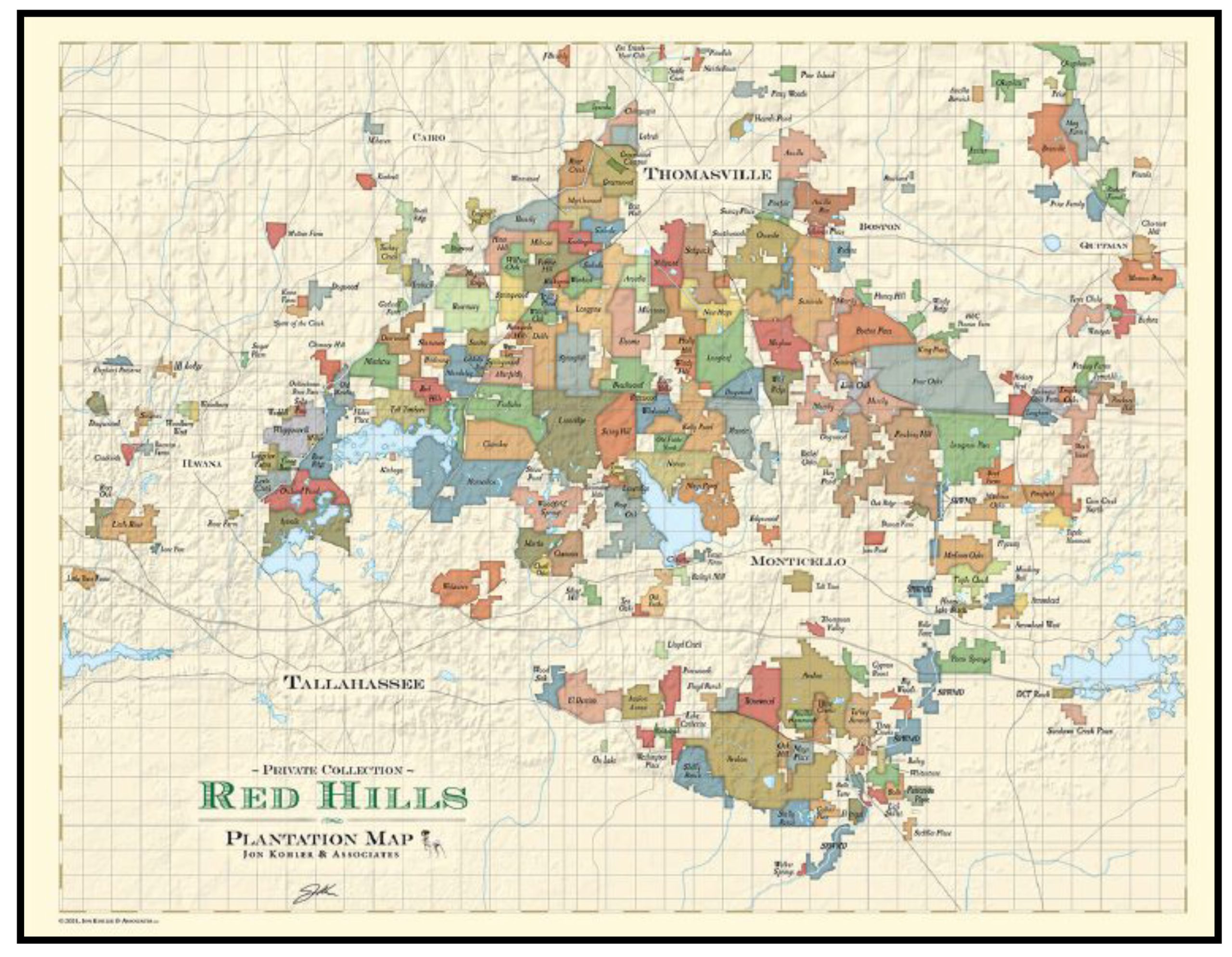
Spanning 300,000-plus acres be-tween Thomasville, Georgia and Talla-hassee, Florida, the Red Hills are known for their rolling hills, red clay soils, and incredible biodiversity. The Florida side leads the nation in prescribed burns, treating over 2.1 million acres annually. This is the epicenter of America’s fire culture.
 Albany Area, Georgia
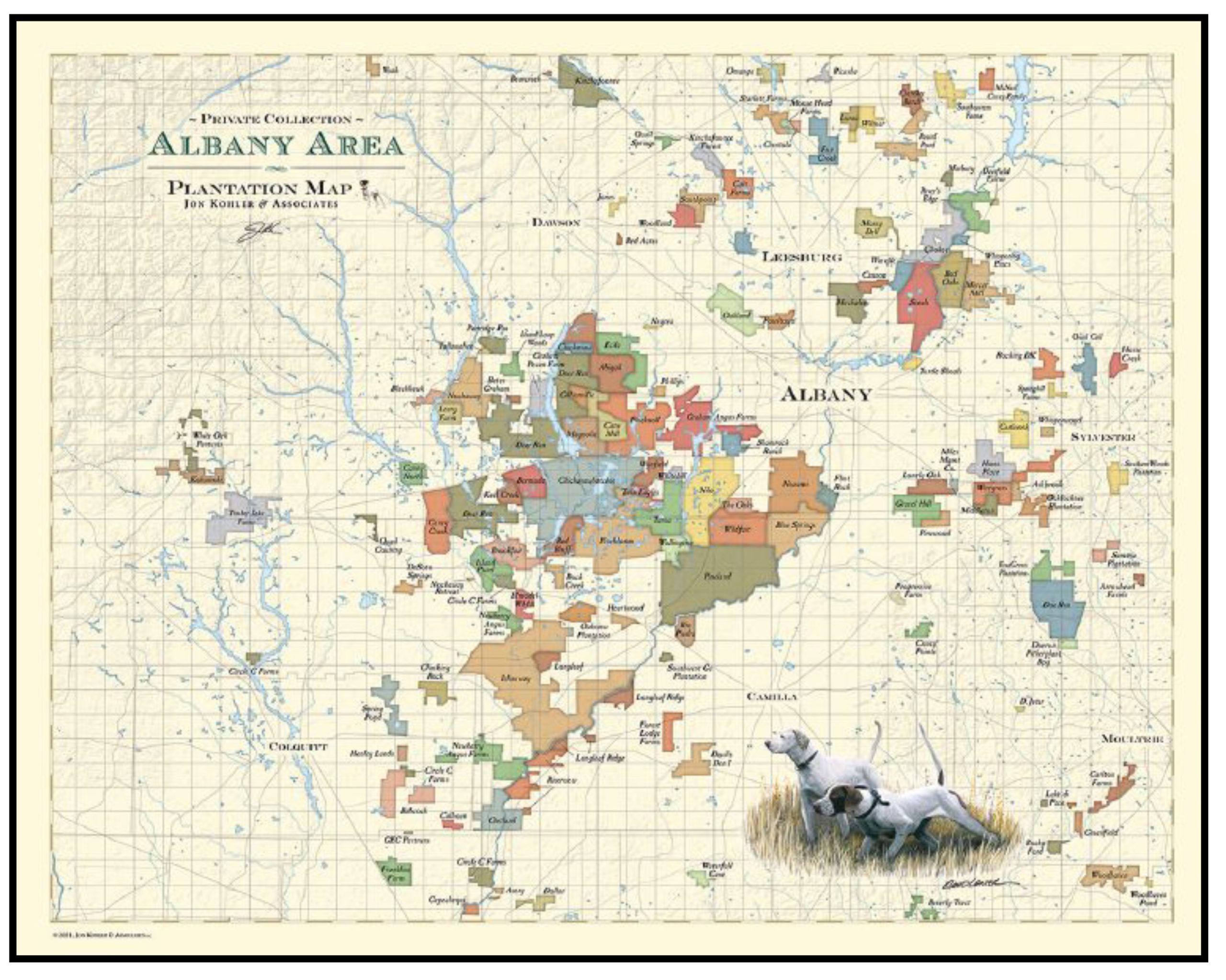
Covering another 300,000-plus acres, this belt is Georgia’s fire engine. Much of the state’s 1.2 million annu-al prescribed-burned acres come from Southwest Georgia. These are some of the most intensively and effectively managed lands in the country and ranked #2 in prescribed fire.
 Union Springs, Alabama
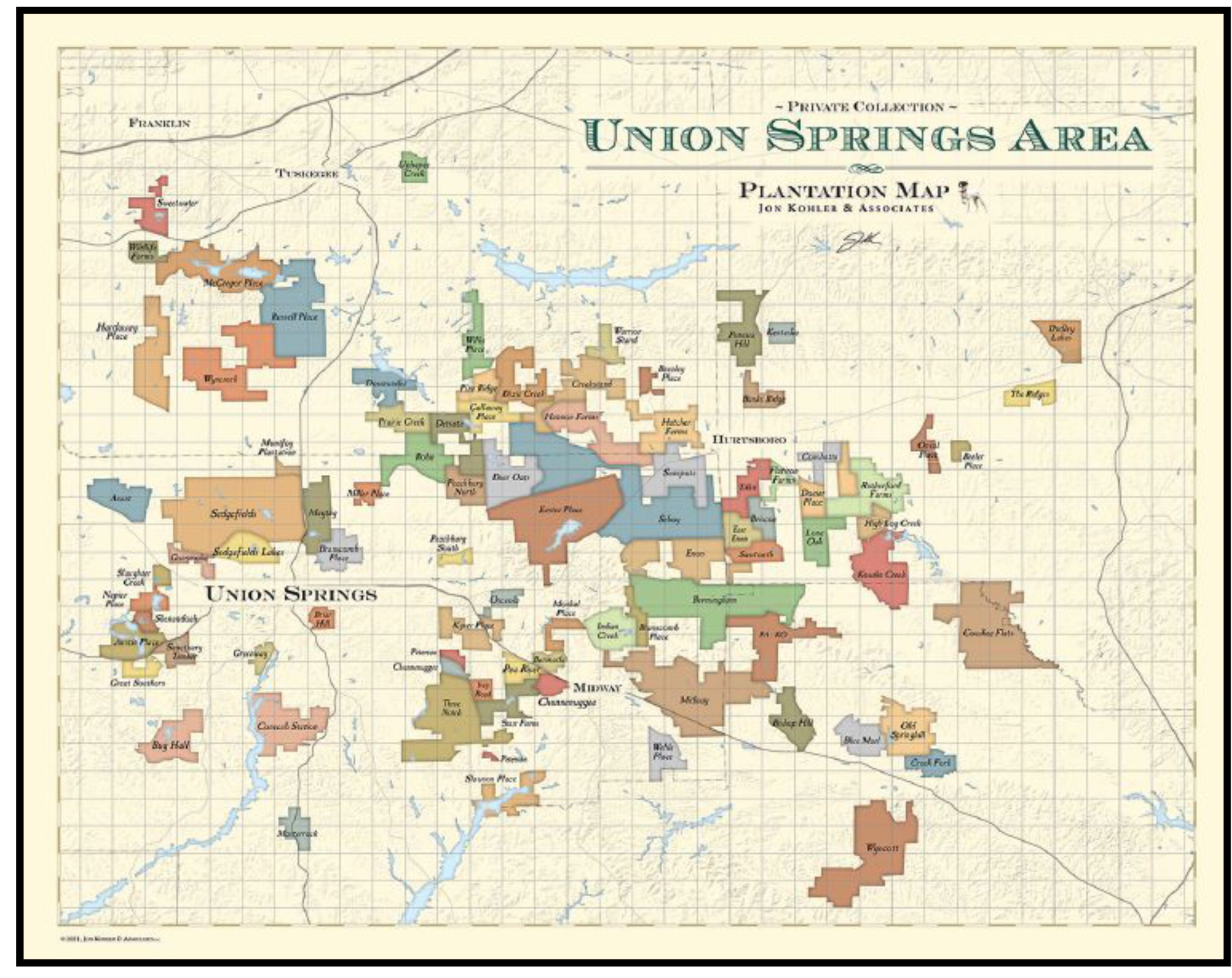
This area is the heartbeat of Alabama land management. With approximately 1 million acres burned each year, fire is a foundational practice here – restoring longleaf pine, supporting na-tive grasses and reducing wildfire risks across the region.
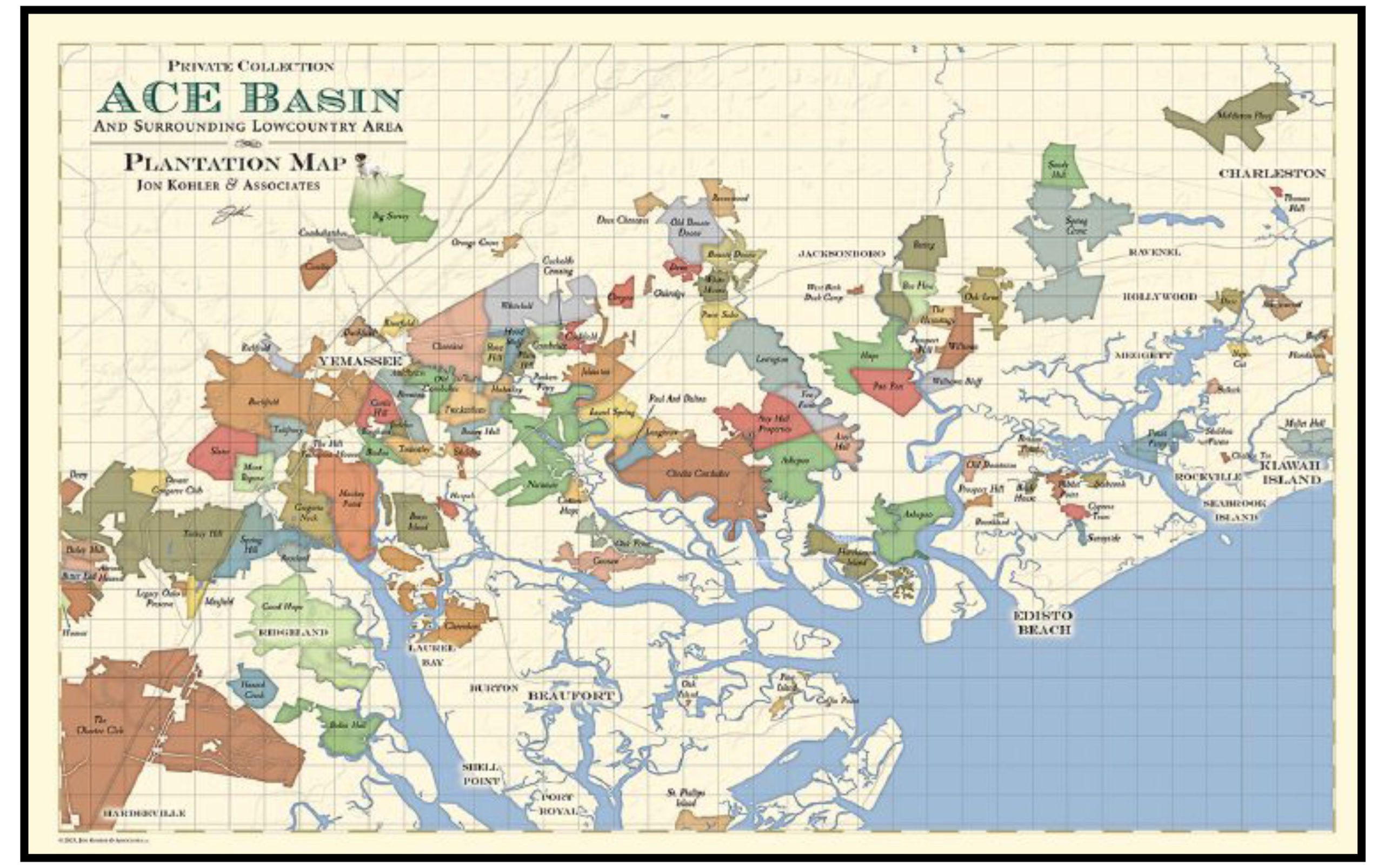 ACE Basin, South Carolina
The ACE Basin encompasses roughly 350,000 acres of wetlands and uplands near the Atlantic Coast. It’s one of the largest undeveloped estuarine ecosystems on the East Coast, where prescribed fire is used to manage hab-itat for ducks, turkeys, quail and more. South Carolina burns the equivalent of the entire ACE Basin every year.
Fire Is the Answer
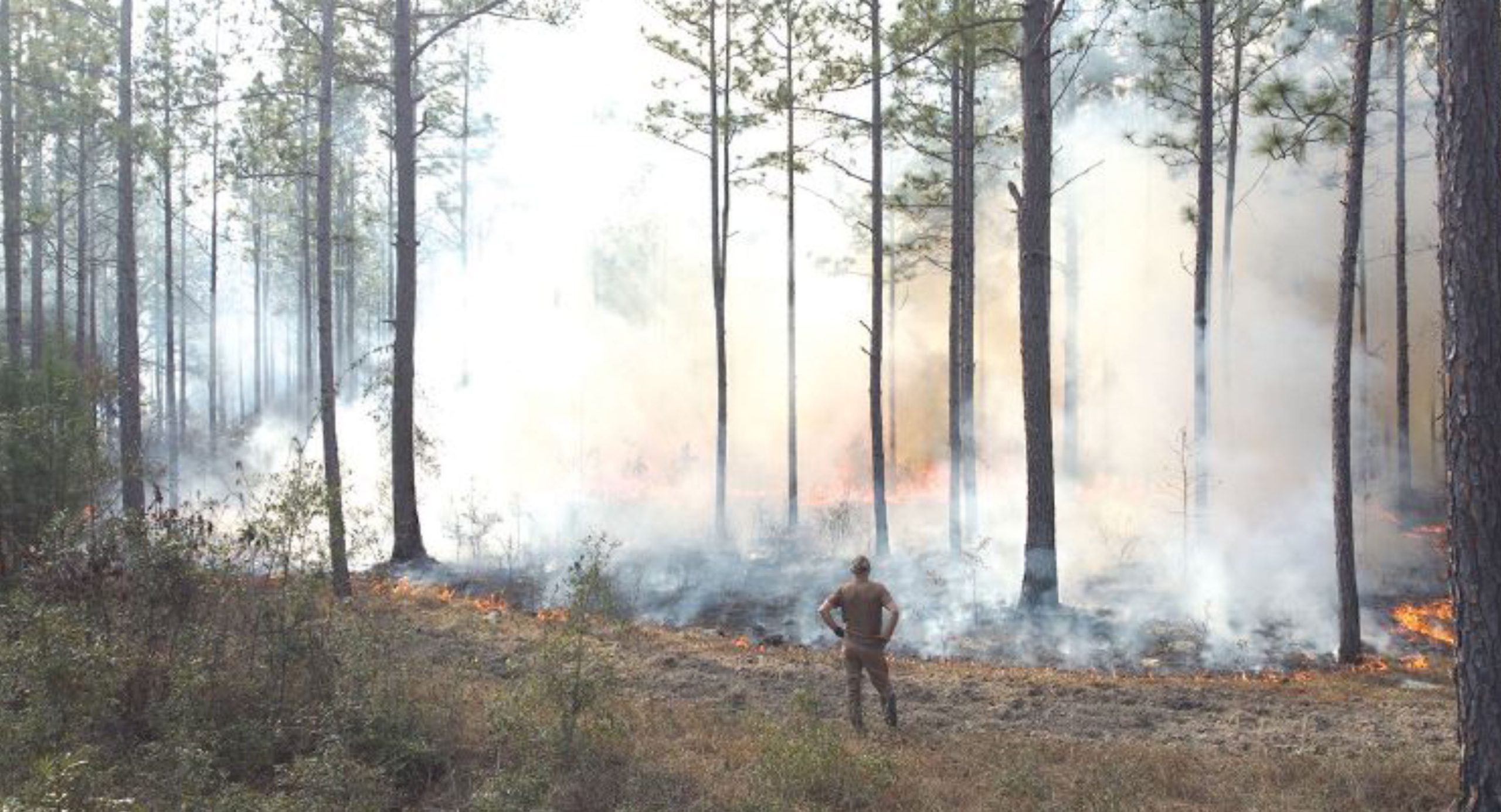
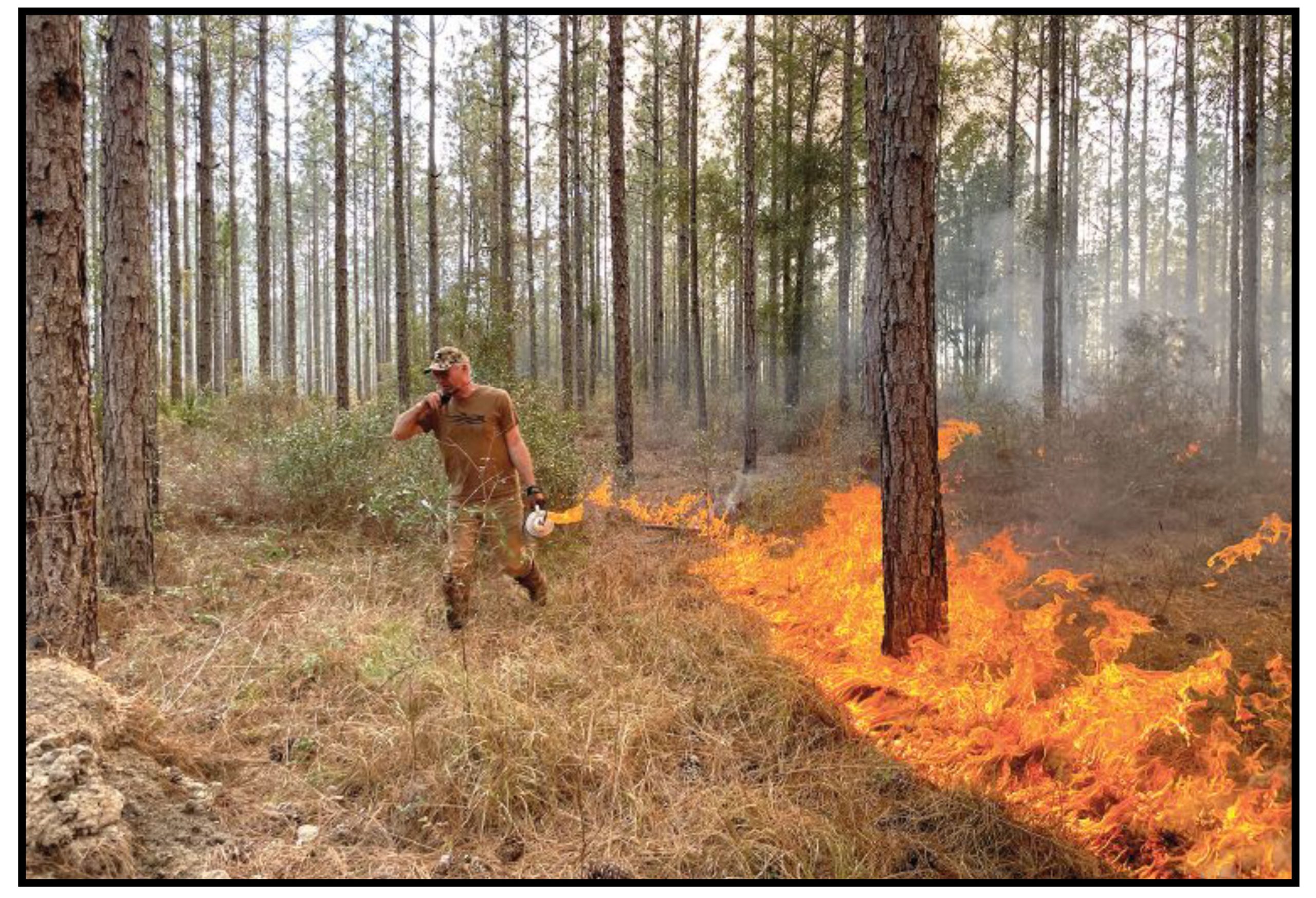 Collectively, these four regions are managed by roughly 1,000 private land-owners, united by a common purpose: to improve land through stewardship and the intentional use of fire. What they’ve built is a mosaic of ecological abundance that rivals anything on Earth. This is the South’s last best place. People travel from all over the world to walk these woods and fish these waters. It’s a sportsman’s paradise – but more than that, it’s living proof that eco-logical integrity and human purpose can coexist. So how did these landscapes re-main resilient while so many others withered? The answer, paradoxically, is fire. Here, smoke on the horizon doesn’t signal danger – it signals rebirth. The same way you might watch rain roll across the landscape, we watch fire with reverence. Most people understand the value of rain. Few understand that, in this region, the interval of fire is just as essential. The National Drought Center de-fines drought as “a prolonged period of deficient precipitation resulting in dam-age to crops and a loss of yield.” The same can be said of fire-drought. With-out regular fire, our land withers, chokes and ultimately collapses. The ideal interval? According to the late Lane Green, former CEO of Tall Timbers, “About every 18 months.” We often say we have a fifth sea-son – prescribed fire season. And, if it would look good on a flag, smoke from a prescribed burn would be on the Great Seal of Florida. “When I am flying to Florida, I al-ways know when we have crossed the state line, because no matter what time of year or which side of the airplane I am on, one can see numerous smoke plumes, “ said Howard Vincent, former CEO of Quail Forever These are the good old days. This isn’t sporadic land manage-ment – it’s a landscape-level movement. In Florida, Georgia and Alabama alone, private landowners and foresters burn over 4.4 million acres annually. Fourth place isn’t even close. That’s the equiv-alent of two Yellowstone National Parks – every single year. Combined with modern forestry and wildlife science, this rhythm of fire leads to more wildlife, more biodiversi-ty, more timber and safer communities. Meanwhile, national news tells a different story: catastrophic wildfires in places like California and Colorado –blazes sparked by lightning, negligence or sheer buildup. Why doesn’t that hap-pen here? Because here, we never stopped burning. In the 1940s, federal agencies mounted a campaign to demonize fire – turning an ancient ally of the land into a feared enemy. But in places like the Red Hills, the flame never went out. While the rest of the country suppressed fire with pride, the South kept its promise. But nature doesn’t forget. Suppress it long enough, and the result isn’t no fire – it’s uncontrollable fire. Whether it’s rainfall from a cloud, fire from a forest or, yes, even a bowel movement, living systems demand re-lease. Delay the natural rhythm too long, and the consequences will always be worse than the original. Today, thanks to organizations like Tall Timbers and Quail Forever, the South is leading the nation. Florida has trained an army of mostly landowner-funded fire managers who balance ecology with safety. The result? Lower insurance rates. Healthier forests. More wildlife. Safer towns. A land that looks and lives the way God intended. While the communities adjoining these “belts” are safe from catastrophic fire, they are the exception. The “fire drought” continues on. More needs to be done. So, the next time you’re driving down a Southern highway and see a haze of smoke drifting across a blue-skied afternoon, don’t flinch. Don’t worry. Don’t complain for the inconvenience. It’s short lived and as natural as a wet road after a refreshing spring rain. That smoke isn’t just a burn. It’s a covenant – a promise between landown-er and land. A symbol of redemption. A signal that we’re doing something right. The wildlife, beauty and outdoor recreation found in these four “planta-tion belts” is just as God intended. The stewards of these lands are America’s true conservation heroes
 From murky farm ponds to pristine glacier-cut lakes and everything in between, Knox Daniels’ expertise stems from a lifelong fascination of water and the creatures that live in and around it. He recognizes and helps clients appreciate the value water features bring to a property. “My goal is to help buyers realize and sellers maximize the value different water bodies bring to a property, not only in a recreational sense, but also for social storm reasons.” After extensively traveling the country for collegiate BASS fishing tournaments, Knox graduated and worked for the Southeast’s finest fisheries and wildlife biologist, Greg Grimes. With Grimes’ company, AES, Knox managed many of the southeast’s finest private lake estate/impoundment properties, and learned the intricacies of upscale property management. Learning from Greg and other biologists, Knox honed in on the specific conditions and habitat needed for optimal gamefish growth in private lakes. He has also worked as a property manager on several thousand acres and for a commercial developer, facilitating the dirt work and builds of several apartment complexes, but his true passion has always been in the outdoors. “I’ve always had an insatiable fascination with ponds/lakes and am grateful to be able to help to place clients on the properties of their dreams and make their personal fisheries/wildlife goals reality with JKA.” – Knox Daniels
 Jason has been assisting landowners for the last 28 years in Georgia and South Carolina obtain achievements the owners did not realize were possible. His degree in Biology from Georgia Southern stemmed from the desire to know how things in nature work. His plantation roots began at just 16 years old outside of Albany, GA and the last 20 years were spent in the Lowcountry of South Carolina. His entire career has been spent developing a global approach to plantation management. That plan included sales. Sales is in Jason’s blood- his mom had a 45-year career as a real estate broker. After college, he chose to pursue his passion of making properties great. In 2011, Jason sold his first plantation. Since then, he has assisted buyers and sellers with over $20 million in sales while most of that time working as a full-time General Manager of a large Lowcountry plantation. Today, he is committed to using his unique skill set and experience to guide landowners through the many challenges of plantation ownership.
 Bruce Ratliff is a retired elected official (Property Appraiser Taylor County). Bruce brings years of experience in ad valorem tax knowledge. His property tax background gives JKA Associates & clients a unique insight into the complicated tax process. Bruce held several positions in the Florida Association of Property Appraisers, including member of the Board of Directors, President, Vice-President and Secretary, and served on the Agricultural & Legislative Committees for the Association. The real estate business has been part of Bruce’s life since childhood. His mother, Shirley Ratliff owned Professional Realty of Perry, Florida and his father, Buster owned Ratliff Land Surveying which Bruce was General Manager of before his political career.
 Hailing from a long line of outdoorsmen, Tim learned a great deal from his father and grandfather. He saw first-hand what it means to be a good land steward. He believes land is so much more than a place to hunt, fish, and grow timber or crops. “It’s an identity, a resting place, a safe haven and a way of life, said Tim.” Tim’s family ties to Alabama run deep. During his grandfather’s first term, Governor James was responsible for signing into law Alabama’s first state duck stamp which helped to ensure funding for the procurement, development, and preservation of wetlands for migratory waterfowl habitat. He also established Alabama’s lifetime hunting license, so it is no surprise that Tim is an avid outdoorsman with a keen eye as to how best to improve habitat for the greater good of its wildlife.
 With Madison County roots, Lori grew up on her family farm at Pettis Springs along the historic Aucilla River. A love of the land was instilled in Lori very early on by her father who was a local farmer. Lori understands the importance of good land stewardship and has witnessed first-hand how her own father, a former 2-term member of the Florida House of Representatives whose district encompassed many rural counties of the Red Hills Plantation Region, with a little bit of sweat equity, so lovingly worked their own family land. These are core values she carries with her today, and nothing gives her more personal satisfaction than to represent some of the south’s best land stewards.
 Cole’s dedication to land management lies in his family roots. As a fourth-generation timber expert, Cole’s earliest memories were spent with his father managing timber investments. With a degree in Food Resource Economics from the University of Florida, Cole is the epitome of an up-and-coming leader. He grew up with a hands-on approach to learning land management and conservation and has spent the last 15 years learning every angle of the real estate and forest industry. Cole is a member of the Florida Forestry Association, Red Hills Quail Forever, Southeastern Wood Producers Association and he uses this platform as an advocate for landowners and their land investments. His family has dedicated the past 60 years to providing landowners in North Florida and South Georgia with professional land management services focused on improving and protecting one’s forestland and wildlife investment. In fact, their family business, M.A. Rigoni, Inc., was one of the first to introduce whole tree chipping to the Red Hills Region.
 As a landowner of his own family farm, Lick Skillet, along with family land that has been passed down and enjoyed together at Keaton Beach for 40 years, Jon knows what it means to be a steward of the last best places. As a third-generation land broker with more than 30 years of experience in advising landowners in this niche, Jon is known for his innate ability to harvest a land’s unique intrinsic value. Touting several notable sales under his belt, Jon personally closed Rock Creek/Molpus – 124,000 acres of premium timberland at $142,000,000 – which was known as the largest timberland land sale in the Southeast for eight years running. He is a co-founding member of LandLeader and achieved the real estate industry’s highest honor, “2022 National Broker of the Year – Recreational Land Sales,” by the Realtors® Land Institute.