
We have this one bird dog that my boys describe as stoic. “Buck” knows just about everything there is to know when it comes to finding bobwhite quail—and he has a long pedigree to back it up. However, he also seems to think he has everything figured out inside his own “800-acre kingdom.”
 One day it hit me: perhaps God looks at us the same way we look at our hunting dogs.
The Bible is full of metaphors that can be hard for me to understand. I’m not Jewish, and ancient Hebrew wedding traditions with oil lamps and watchful virgins are a far cry from my upbringing. But if Jesus had told a parable using hunting dogs, every Florida Cracker I know would’ve understood it immediately.
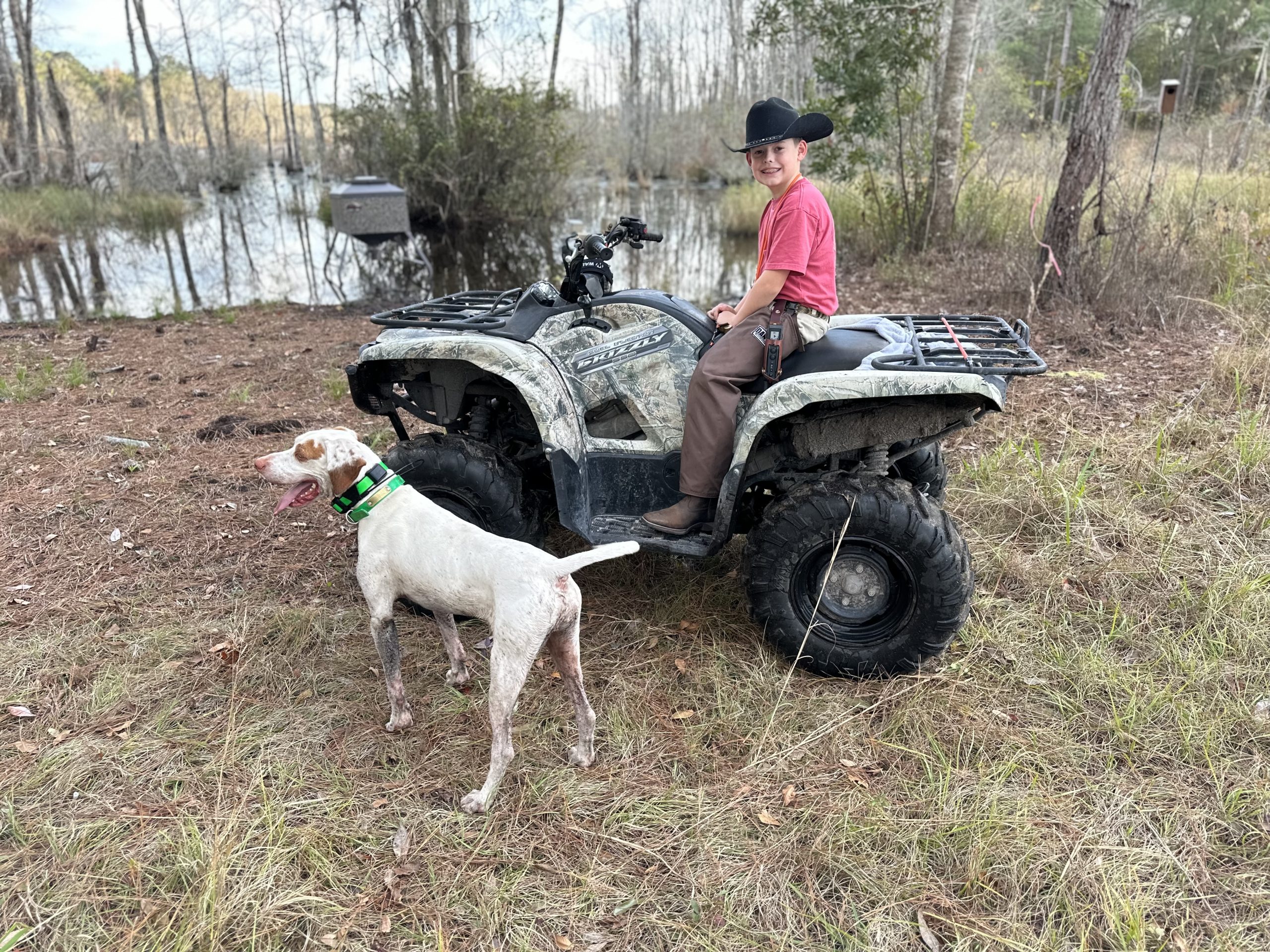
Lick Skillet is no Garden of Eden, but over the course of 35 years—through hard work and plenty of mistakes—it’s finally starting to come together. Everything is designed to facilitate hunting with dogs. From pointers, retrievers, flushers, terriers, and hounds, there’s something here that nurtures instinct and calls for adventure. In my small way, what I’ve created is a place for fellowship with dogs. Maybe God made us for something similar. Isn’t that what makes dogs so special—their loyalty, unconditional love, and desire to spend time with us in relationship?
My boys love Buck, but recently we had a good laugh at his expense. He stands on a hill and gazes across Lick Skillet like he understands the entire universe, completely unaware of the world beyond it. He has seen glimpses and some evidence that there is more but he sure doesn’t understand and never will. We laughed because we know that’s exactly how we are. On a scale of knowledge, we are higher than Buck but nowhere near that of the Creator of the Universe.
Maybe our role—like a good bird dog—is simply to do what we were created to do: be prepared to go on an adventure with God, with the right attitude, during our limited time on earth, and not let our own selfish issues mess it up when it’s our turn to hunt.
Buck understands this is a team journey with changing roles and responsibilities. Pointers point. Retrievers retrieve. Everyone has a role in something bigger than themselves. Like us, its usually our thoughts and attitudes that cause us to stumble. Even dogs wrestle with envy. Humans don’t grow out of it—we just get more sophisticated at hiding it.
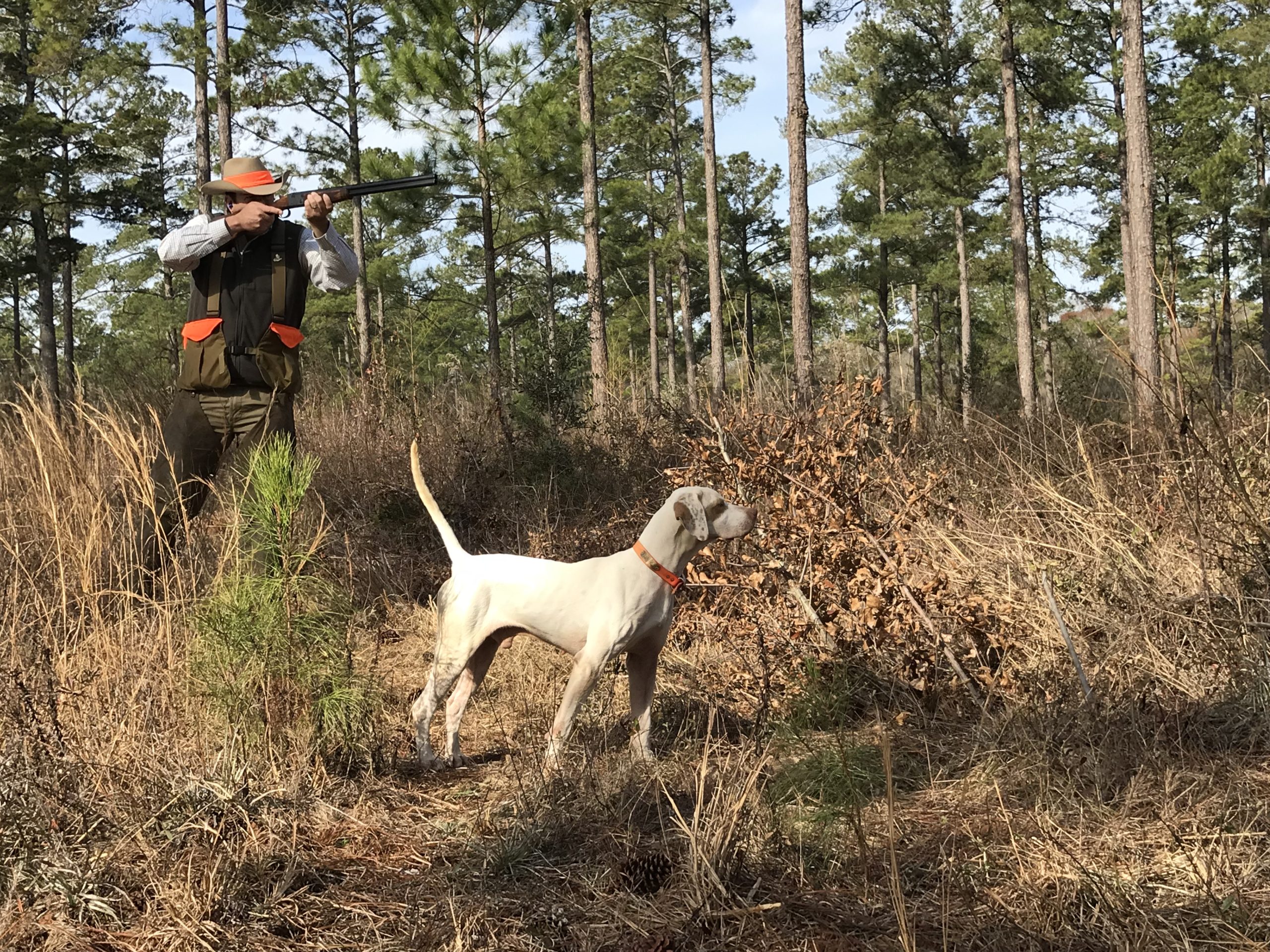
 One of the reasons I admire Buck is that he is a team player. He finds the birds and then holds them on point—steady—while other dogs, (who have been leisurely riding the buggy no doubt) rush in to flush and retrieve. He doesn’t get jealous when others get some of the glory. That’s a hard thing to do—standing still while guns are firing, birds are flying, and your counterparts are now proudly holding the birds you just found! Most pointers won’t stand for it.
Buck stays in his lane—something Jesus tried to teach Peter in John 21:22: “If I want him to remain until I come, what is that to you? Follow Me.” In other words, stop comparing your calling to someone else’s. The blessings God chooses to give others is between them and God. Not our business. Buck would’ve made a fine disciple.
Like dogs, we’re born with both good instincts and bad ones. We have to be trained not to hunt on our own, to trust the handler, to obey when called, and then to be conditioned so we can hunt to the best of our natural ability. We have to get past the fact that many things are the opposite of how we would like them to be. Work is long and the hunt is short. We learn more by failing and bad situations than we learn by success and good times.
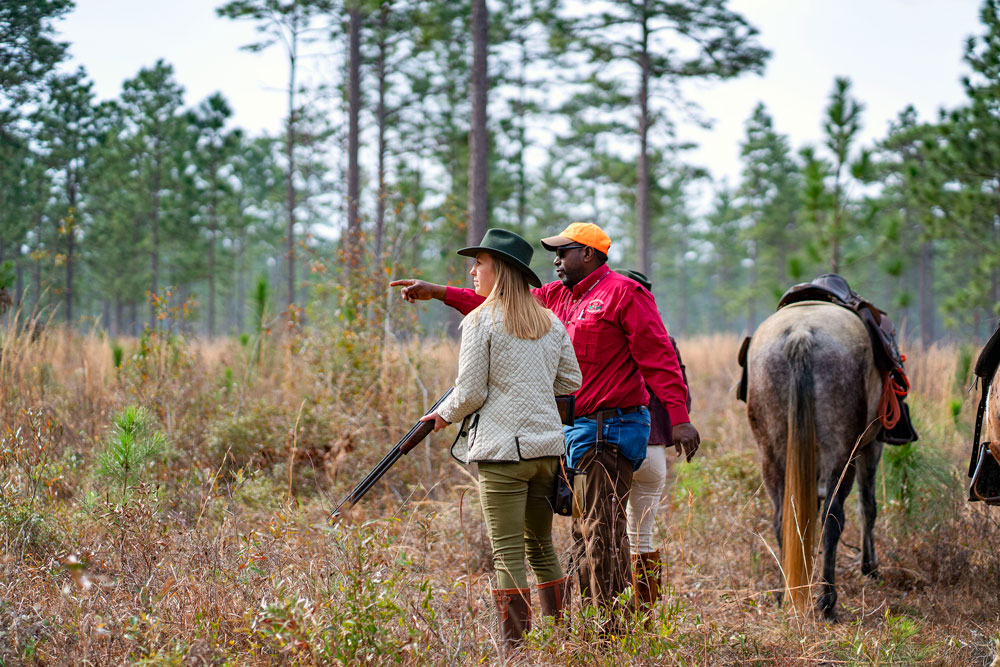
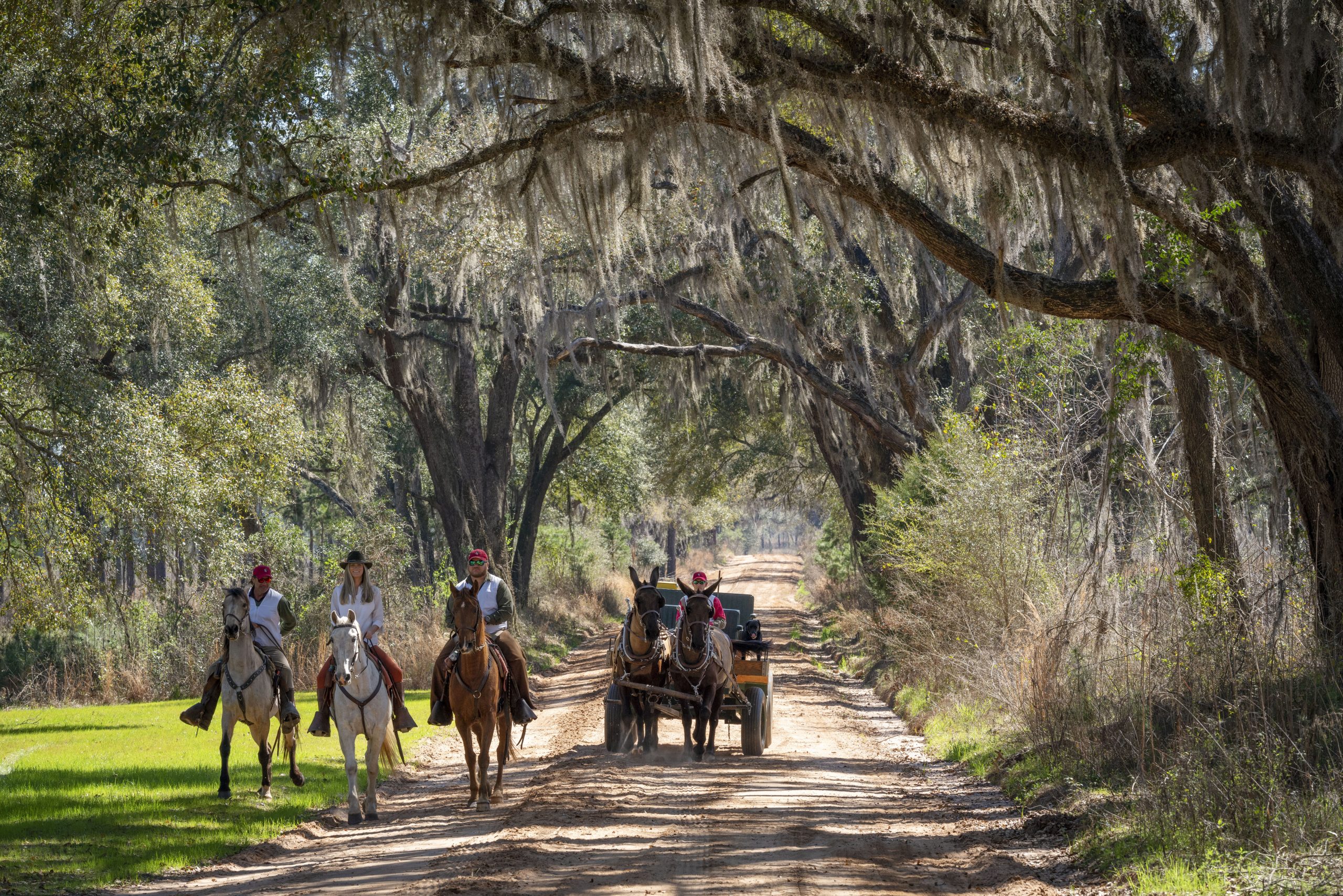
When I sell large quail plantations to folks new to the tradition, I explain that a proper quail hunt is like a ballet or a broadway show. The full production costs about the same, too. It takes a specialized team and years of practice. Everything must come together—the handler, scout, wagon driver, horses, mules, pointers, flushers, and retrievers. Then the shooter has to hit the quail! When everyone performs their role, it’s absolutely beautiful. The piney woods become a cathedral, offering one of the finest outdoor experiences imaginable. If you have never done it, I encourage you to try it. Places like Southwind, Pine Hill and Greenwood use traditional mule-drawn wagons, if you want the full experience. Like a broadway show, everyone should experience it at least once and Southwest Georgia is more hospitable than NYC.
 However, if a dog decides to hunt for himself—or a horse gets a bad attitude—the ballet can quickly go from beautiful to as ugly as a fat guy dancing in a pink leotard. A single act of disobedience can turn beauty into chaos—just like sin does in God’s choreography.
One of the hardest things about hunting dogs is teaching obedience. A handler doesn’t just “shock” a dog any more than God throws lightning bolts. A good handler starts with the lightest pressure possible—just enough to warn of discomfort ahead. Before a dog can truly hunt, he must learn to obey when danger lies ahead—roads, snakes, barb-wire etc., trouble that he can’t foresee but the handler can. He must hone his good instincts and suppress the bad.
Like us, it takes a long time to figure this out but a smart dog learns to appreciate the mild warning, sees it as doing him a favor and quickly corrects course. Others take longer and more electricity before they get it. Correction isn’t cruelty; it’s love. It’s preparation. Without it, neither dog nor man is fit for the journey. It shapes a dog for the hunt just as God shapes us for His purposes.
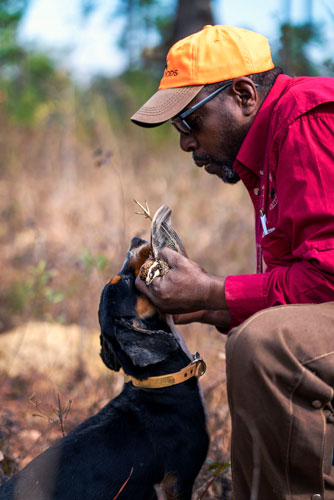
No dog is born with an instinct for real obedience. Like us, their nature leans the other way. Once a dog learns that the handler sees more, knows more, and wants what’s best, he begins living his best life. Another hard lesson is giving up the bird. It’s easy for a dog to think it’s his bird—but it’s not. Like someone who learns to tithe, Buck understands that sharing and cheerful bringing it to the Master yields far greater rewards than trying to keep a dead bird. We call that “mouthing the bird” when its half chewed up and barely fit for the table. Don’t mouth up what should otherwise be a blessing.
The dog that gives willingly is the one the handler enjoys hunting with—the one marked by mutual respect and shared love. That reminds me of how God describes certain people in Scripture.
David was called “a man after My own heart.” Abraham was called God’s friend. Noah “walked faithfully with God.” The Apostle John is repeatedly referred to as “the disciple Jesus loved.” It’s no accident that the traits we admire in great dogs—loyalty, obedience, faithfulness, trust—are the same traits God honors in His people.
When a dog hunts as part of a team, following the instincts he was created with, sharing the adventure across God’s great creation, and trusting the handler—that’s one of life’s great joys. We didn’t make the world, but we should be thankful we were created by the Creator to enjoy it with Him.
It’s interesting too that when COVID caused a “puppy rush” a noticeable number of non-hunters bought hunting dogs. Then the dogs grew up. They then began noticing things they didn’t expect like intense focus on birds, freezing in mid stride or obsessions with scent. Surprisingly, many of these people who had never hunted birds before learned how to hunt themselves. They wanted to share the experience of developing their dogs natural instincts.
 Alternatively, its lifelong lifestyle for many. I serve on the National Board of Directors of Quail Forever and Pheasants Forever where we have a total of 480,000 members and supporters/partners. An incredible 80% of our members have at least one dog making it one of the most dog-aligned conservation audiences in America. Im on dog number 22, so I am just now figuring out how much I don’t know and how big the universe is.
So for me, I’ve decided to hunt for Jesus. If Buck can trust me with his entire being, surely I can trust Jesus with mine. I want to be ready when He sends me into the next piney-woods assignment—ready to trust Him even when I think the covey is somewhere else. I want to return the birds to Him, because they were His to begin with.
And when it’s all over, I hope He looks at me the way I look at Buck:
a loyal companion He enjoyed,
who hunted hard,
stayed faithful,
and followed the Handler’s lead.
 From murky farm ponds to pristine glacier-cut lakes and everything in between, Knox Daniels’ expertise stems from a lifelong fascination of water and the creatures that live in and around it. He recognizes and helps clients appreciate the value water features bring to a property. “My goal is to help buyers realize and sellers maximize the value different water bodies bring to a property, not only in a recreational sense, but also for social storm reasons.” After extensively traveling the country for collegiate BASS fishing tournaments, Knox graduated and worked for the Southeast’s finest fisheries and wildlife biologist, Greg Grimes. With Grimes’ company, AES, Knox managed many of the southeast’s finest private lake estate/impoundment properties, and learned the intricacies of upscale property management. Learning from Greg and other biologists, Knox honed in on the specific conditions and habitat needed for optimal gamefish growth in private lakes. He has also worked as a property manager on several thousand acres and for a commercial developer, facilitating the dirt work and builds of several apartment complexes, but his true passion has always been in the outdoors. “I’ve always had an insatiable fascination with ponds/lakes and am grateful to be able to help to place clients on the properties of their dreams and make their personal fisheries/wildlife goals reality with JKA.” – Knox Daniels
 Jason has been assisting landowners for the last 28 years in Georgia and South Carolina obtain achievements the owners did not realize were possible. His degree in Biology from Georgia Southern stemmed from the desire to know how things in nature work. His plantation roots began at just 16 years old outside of Albany, GA and the last 20 years were spent in the Lowcountry of South Carolina. His entire career has been spent developing a global approach to plantation management. That plan included sales. Sales is in Jason’s blood- his mom had a 45-year career as a real estate broker. After college, he chose to pursue his passion of making properties great. In 2011, Jason sold his first plantation. Since then, he has assisted buyers and sellers with over $20 million in sales while most of that time working as a full-time General Manager of a large Lowcountry plantation. Today, he is committed to using his unique skill set and experience to guide landowners through the many challenges of plantation ownership.
 Bruce Ratliff is a retired elected official (Property Appraiser Taylor County). Bruce brings years of experience in ad valorem tax knowledge. His property tax background gives JKA Associates & clients a unique insight into the complicated tax process. Bruce held several positions in the Florida Association of Property Appraisers, including member of the Board of Directors, President, Vice-President and Secretary, and served on the Agricultural & Legislative Committees for the Association. The real estate business has been part of Bruce’s life since childhood. His mother, Shirley Ratliff owned Professional Realty of Perry, Florida and his father, Buster owned Ratliff Land Surveying which Bruce was General Manager of before his political career.
 Hailing from a long line of outdoorsmen, Tim learned a great deal from his father and grandfather. He saw first-hand what it means to be a good land steward. He believes land is so much more than a place to hunt, fish, and grow timber or crops. “It’s an identity, a resting place, a safe haven and a way of life, said Tim.” Tim’s family ties to Alabama run deep. During his grandfather’s first term, Governor James was responsible for signing into law Alabama’s first state duck stamp which helped to ensure funding for the procurement, development, and preservation of wetlands for migratory waterfowl habitat. He also established Alabama’s lifetime hunting license, so it is no surprise that Tim is an avid outdoorsman with a keen eye as to how best to improve habitat for the greater good of its wildlife.
 With Madison County roots, Lori grew up on her family farm at Pettis Springs along the historic Aucilla River. A love of the land was instilled in Lori very early on by her father who was a local farmer. Lori understands the importance of good land stewardship and has witnessed first-hand how her own father, a former 2-term member of the Florida House of Representatives whose district encompassed many rural counties of the Red Hills Plantation Region, with a little bit of sweat equity, so lovingly worked their own family land. These are core values she carries with her today, and nothing gives her more personal satisfaction than to represent some of the south’s best land stewards.
 Cole’s dedication to land management lies in his family roots. As a fourth-generation timber expert, Cole’s earliest memories were spent with his father managing timber investments. With a degree in Food Resource Economics from the University of Florida, Cole is the epitome of an up-and-coming leader. He grew up with a hands-on approach to learning land management and conservation and has spent the last 15 years learning every angle of the real estate and forest industry. Cole is a member of the Florida Forestry Association, Red Hills Quail Forever, Southeastern Wood Producers Association and he uses this platform as an advocate for landowners and their land investments. His family has dedicated the past 60 years to providing landowners in North Florida and South Georgia with professional land management services focused on improving and protecting one’s forestland and wildlife investment. In fact, their family business, M.A. Rigoni, Inc., was one of the first to introduce whole tree chipping to the Red Hills Region.
 As a landowner of his own family farm, Lick Skillet, along with family land that has been passed down and enjoyed together at Keaton Beach for 40 years, Jon knows what it means to be a steward of the last best places. As a third-generation land broker with more than 30 years of experience in advising landowners in this niche, Jon is known for his innate ability to harvest a land’s unique intrinsic value. Touting several notable sales under his belt, Jon personally closed Rock Creek/Molpus – 124,000 acres of premium timberland at $142,000,000 – which was known as the largest timberland land sale in the Southeast for eight years running. He is a co-founding member of LandLeader and achieved the real estate industry’s highest honor, “2022 National Broker of the Year – Recreational Land Sales,” by the Realtors® Land Institute.