
Lately, it seems that in the increasing craziness of today’s world, I have been spending time refocusing on core beliefs. The reason is because they are under attack or called into question daily. Anything that has its basis in the Bible is the common denominator. Back in law school, we would debate like it was a sport. It was akin to arguing, but with a common set of rules or ethics that we all understood…and followed. We used logic not feelings, there was one “truth” not everyone’s individual changing “truth” and facts couldn’t randomly be changed either. Lying or being deceptive meant you instantly lost. That’s not how it works today.
 One of the things I am having issues with is finding the “good” that has become the new “green” movement. Landowners, managers, and hunters are America’s true conservation heroes. They are the “boots on the ground” spending their own time and money and loving what they do. Everything they do matters. Logically, one would think their input would carry the most weight. It doesn’t. The Environmental Industrial Complex does.
I’ve had the benefit of solar at Lick Skillet for over a decade and love it. With that being said, it’s on a roof or two; it’s not covering thousands of acres of habitat or fertile farmland. I just read about a new solar power “farm” covering 10,000 contiguous acres! In my business, we have a saying that if we can’t point out someone being dishonest, they lose. To me, I can’t in good conscience call it an industrial solar farm. These solar “farms” are no more a “farm” than the Nevada “bunny ranch” is a ranch. By the way, I have clients that have sold to them. Once encumbered, the title of these “farms” is like a hot potato. Few want to own the dirt underneath them as it’s widely believed they will be a toxic cleanup debacle. What they will be in 30 years when they reach the end of their life cycle out is anybody’s guess. I am told the industrial clean-up and chemical pollution is going to yet again spawn an entirely new industry, certainly one at the taxpayers’ expense.
It seems like if God did it, there is a lot of people that have issues with it. Despite modern discoveries and improved science, only about 30% of Americans today believe the Great Flood. To me, finding oyster fossils at an elevation of 5,300 feet at our old ranch at Fishtail, Montana only reconfirms climate change as mentioned in the Bible.
Speaking of Oysters, I am quite confident that the mullet, oysters, crabs, catfish, wild hogs, and a lot of other things I was raised to eat as a Florida Cracker wouldn’t be found on any Biblical menu despite how long anyone wondered around in the wilderness. That being said, I am not ready to stop frying my fresh mullet with a propane burner to save the planet as my friends on the left side of the aisle are now very concerned about. I am 100% sure that cooking using natural gas and banning it isn’t America’s biggest problem right now. It doesn’t surprise me the current President is mumbling about banning cooking with natural gas as well as banning my gas-driven AR-15s.
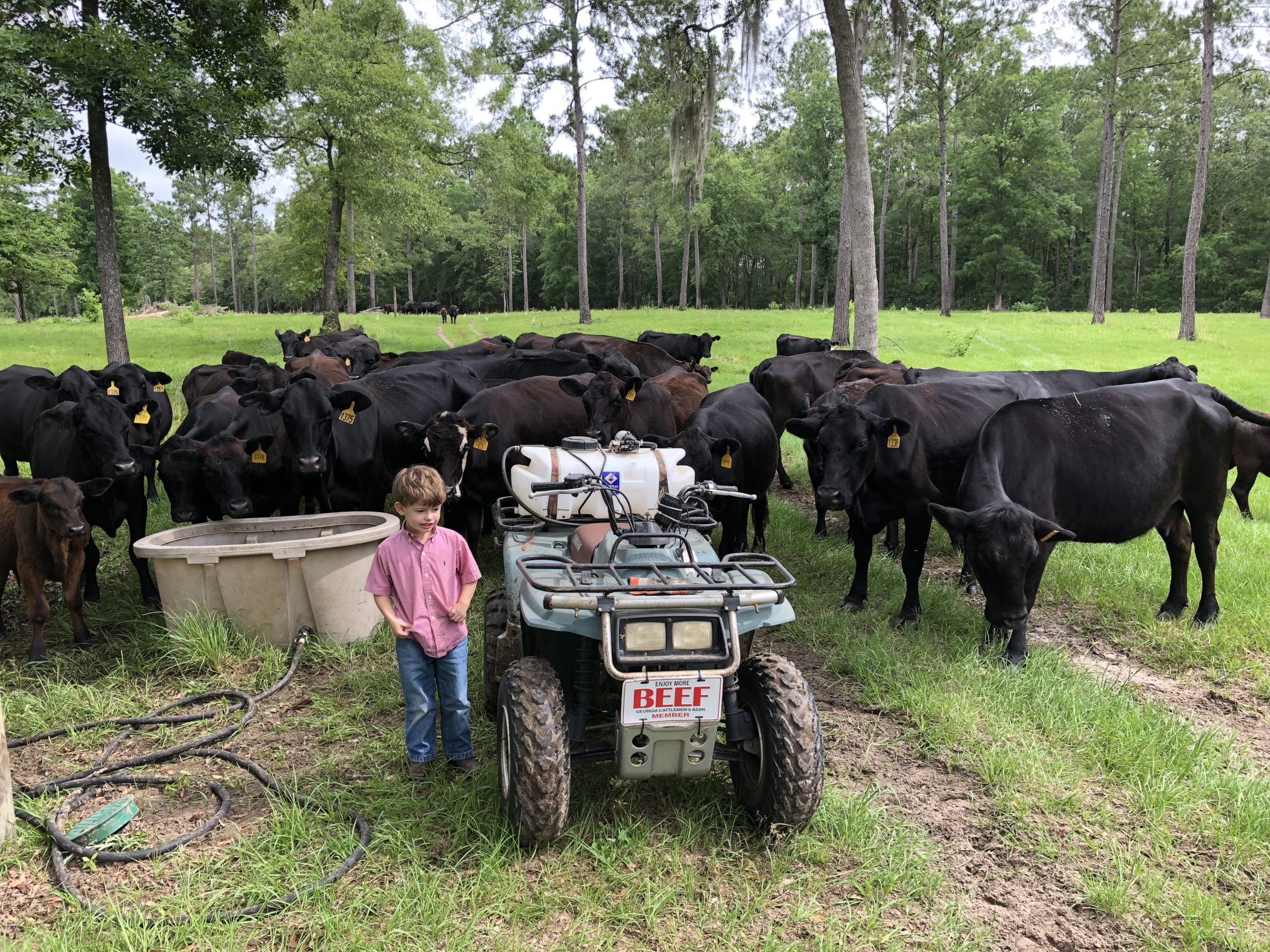
I have had cattle for a good part of my life. Florida has had cattle for over 500 years, and it is ingrained in our culture. Prior to that, we had bison, mammoths, and a host of other grazing creatures. Today, despite these other animals being mostly gone, the gas from the cattle that expels naturally is also increasingly alarming. Enough so, that an old-fashioned “gas tax” is being considered to rein and save the environment from “climate change.”
The biggest problem I have with cows came from an SRWMD Board meeting. The chairman of the Board was none other than Don Quincey who is now in the Agricultural Hall of Fame. I was representing a landowner who had a cattle ranch with a conservation easement on it. Completely out of decorum and without being recognized by the Chair, a lady stood up and started railing on about how “cows were individually drinking 700 gallons of spring water a day” and destroying the conservation lands. Don was a gentleman, let her yell her peace and after a time she finally quit interrupting others. That’s when it struck me that perhaps God made a huge mistake. The first one I had ever noticed. What if she was right? Instead of designing an animal that drinks 23-30 gallons of infertile spring water then by miraculous design distributes nutrients plants need and waters them at the same time they should be redeploying 700 gallons! I don’t think this was the point the crazy lady was trying to make. By burning only, a little “natural gas” they both irrigated and fertilized H2O making them better than any mobile pivots! To me, that would be the perfect “Six-minute abs” moment.
She was in the minority here and God didn’t make a mistake. The mistake I used to make was thinking hunters were in the majority. It seemed to me that everyone hunts, many to an almost professional level. I remember one of my clients telling me “he was taking the day off.” What he really meant was that he wasn’t going hunting that day. My core business is based on advising those who buy hunting lands. Few people know that in Florida hunters don’t even amount to 1% of the population! Now that’s a minority. In fact, it’s only .9%.
As a hunting advocate for the 1%, I was thinking wouldn’t it be nice if we had an opportunity to open the Olympics our way? Give us a chance like other minorities. Heck, I thought, archery and shooting are actually events. The “James Bond” guy from Turkey, who shoots like Ian Flemming himself taught him, seems pretty cool. I envisioned a committee well represented from Perry and Thomasville. Perhaps we could shoot the doves at the opening ceremony with our diverse set of retrievers at our side. We have “English” pointers, “German” shorthairs, “French” Brittanys all of which sound like they would be inclusive for both the DEI and the NRA crowd. I sent the article in to the editors, late. Then I woke up. Could I be dreaming? The first thing I saw posted on Facebook was the past Olympic sport of “100-meter running deer!” Yes, shooting offhand at both a 100-meter and 50-meter running deer target used to be a sport. Maybe there is hope.
 I will dare go here, swallow my pride, and compare Florida to California and New Jersey both of which only have .7%. I sell a lot of hunting land in Alabama and thank goodness they are at 9%, Georgia is at 6.7% and South Carolina is at 4%.
One place where Florida really outperformed California is its ability to prevent wildfires and that means restoring fire to its natural place.
This is because between the state and a private volunteer army Florida annually burns more land than anywhere in the world at 2,000,000 acres or about 5% of its land mass. Georgia is a close second.
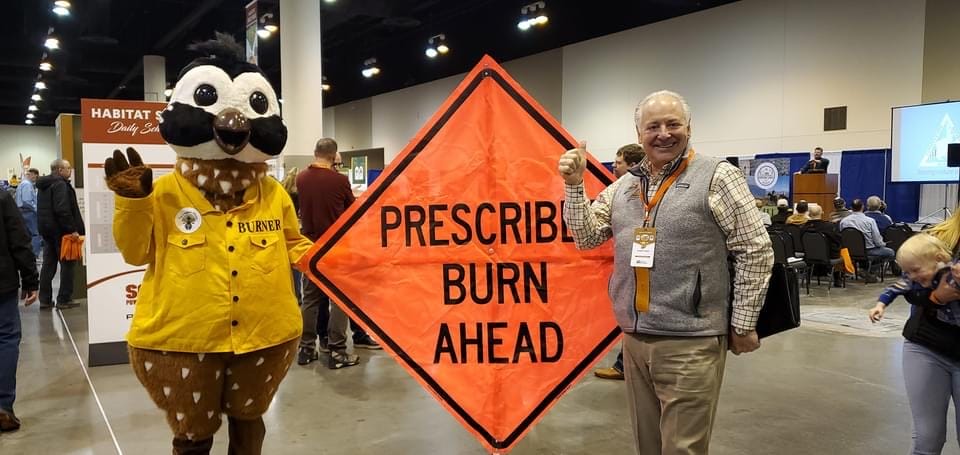
Some folks, a lot of them Californians, can’t get past the fact that fire is as natural as rain. Few people know that right now, in Washington DC, many are doing everything they can to stop us from using prescribed fire because of concern that smoke causes “global warming or climate change.” To me, this is just as crazy as getting mad at a cow drinking water. California actually has the same type of pyrogenic communities as Florida. However, unlike here, they tried to subdue, not work with, nature and failed miserably. Natural communities, like what’s found in most of Florida’s uplands, actually expect and require fire to be healthy as much as other places look forward to urinating cows. Smoke is just as natural a byproduct of a living healthy ecosystem the same as mist and wet grass after a summer rain.
Sometimes, I have buyers who have never been around fire, and they just don’t understand. The analogy I found that makes the most impact is I tell them that all living things have a bowel movement. The land too is alive unless it’s turned into a parking lot. It’s best to be regular. You can artificially hold it back but if you’re alive you’re going to have one, there are no exceptions. You might as well do it in a consistent and natural manner and not artificially try to hold it back lest it turn into an uncontrolled, explosive event that makes a mess everywhere. Even the Californians quickly get this analogy. What I didn’t know until recently, is that like our flood and hurricane insurance, there, lenders require wildfire insurance. I serve on the board of Landleader and see firsthand how expensive it is and getting fire insurance is turning into a big problem for landowners in other areas of the country. We don’t have that problem here in the South thanks to our private “army” of well-trained and heavily regulated landowners and managers who work and take risks on their own dime to make both their lands and all of our cities and towns safe. These are the true green heroes.
It’s a strange world we live in and getting stranger by the day. The Bible says this will happen. The debating rules we played by back in law school are long gone now. Something else took its place. It’s hard to imagine the intense pressure to make Florida California or to make the rest of America California…
 From murky farm ponds to pristine glacier-cut lakes and everything in between, Knox Daniels’ expertise stems from a lifelong fascination of water and the creatures that live in and around it. He recognizes and helps clients appreciate the value water features bring to a property. “My goal is to help buyers realize and sellers maximize the value different water bodies bring to a property, not only in a recreational sense, but also for social storm reasons.” After extensively traveling the country for collegiate BASS fishing tournaments, Knox graduated and worked for the Southeast’s finest fisheries and wildlife biologist, Greg Grimes. With Grimes’ company, AES, Knox managed many of the southeast’s finest private lake estate/impoundment properties, and learned the intricacies of upscale property management. Learning from Greg and other biologists, Knox honed in on the specific conditions and habitat needed for optimal gamefish growth in private lakes. He has also worked as a property manager on several thousand acres and for a commercial developer, facilitating the dirt work and builds of several apartment complexes, but his true passion has always been in the outdoors. “I’ve always had an insatiable fascination with ponds/lakes and am grateful to be able to help to place clients on the properties of their dreams and make their personal fisheries/wildlife goals reality with JKA.” – Knox Daniels
 Jason has been assisting landowners for the last 28 years in Georgia and South Carolina obtain achievements the owners did not realize were possible. His degree in Biology from Georgia Southern stemmed from the desire to know how things in nature work. His plantation roots began at just 16 years old outside of Albany, GA and the last 20 years were spent in the Lowcountry of South Carolina. His entire career has been spent developing a global approach to plantation management. That plan included sales. Sales is in Jason’s blood- his mom had a 45-year career as a real estate broker. After college, he chose to pursue his passion of making properties great. In 2011, Jason sold his first plantation. Since then, he has assisted buyers and sellers with over $20 million in sales while most of that time working as a full-time General Manager of a large Lowcountry plantation. Today, he is committed to using his unique skill set and experience to guide landowners through the many challenges of plantation ownership.
 Bruce Ratliff is a retired elected official (Property Appraiser Taylor County). Bruce brings years of experience in ad valorem tax knowledge. His property tax background gives JKA Associates & clients a unique insight into the complicated tax process. Bruce held several positions in the Florida Association of Property Appraisers, including member of the Board of Directors, President, Vice-President and Secretary, and served on the Agricultural & Legislative Committees for the Association. The real estate business has been part of Bruce’s life since childhood. His mother, Shirley Ratliff owned Professional Realty of Perry, Florida and his father, Buster owned Ratliff Land Surveying which Bruce was General Manager of before his political career.
 Hailing from a long line of outdoorsmen, Tim learned a great deal from his father and grandfather. He saw first-hand what it means to be a good land steward. He believes land is so much more than a place to hunt, fish, and grow timber or crops. “It’s an identity, a resting place, a safe haven and a way of life, said Tim.” Tim’s family ties to Alabama run deep. During his grandfather’s first term, Governor James was responsible for signing into law Alabama’s first state duck stamp which helped to ensure funding for the procurement, development, and preservation of wetlands for migratory waterfowl habitat. He also established Alabama’s lifetime hunting license, so it is no surprise that Tim is an avid outdoorsman with a keen eye as to how best to improve habitat for the greater good of its wildlife.
 With Madison County roots, Lori grew up on her family farm at Pettis Springs along the historic Aucilla River. A love of the land was instilled in Lori very early on by her father who was a local farmer. Lori understands the importance of good land stewardship and has witnessed first-hand how her own father, a former 2-term member of the Florida House of Representatives whose district encompassed many rural counties of the Red Hills Plantation Region, with a little bit of sweat equity, so lovingly worked their own family land. These are core values she carries with her today, and nothing gives her more personal satisfaction than to represent some of the south’s best land stewards.
 Cole’s dedication to land management lies in his family roots. As a fourth-generation timber expert, Cole’s earliest memories were spent with his father managing timber investments. With a degree in Food Resource Economics from the University of Florida, Cole is the epitome of an up-and-coming leader. He grew up with a hands-on approach to learning land management and conservation and has spent the last 15 years learning every angle of the real estate and forest industry. Cole is a member of the Florida Forestry Association, Red Hills Quail Forever, Southeastern Wood Producers Association and he uses this platform as an advocate for landowners and their land investments. His family has dedicated the past 60 years to providing landowners in North Florida and South Georgia with professional land management services focused on improving and protecting one’s forestland and wildlife investment. In fact, their family business, M.A. Rigoni, Inc., was one of the first to introduce whole tree chipping to the Red Hills Region.
 As a landowner of his own family farm, Lick Skillet, along with family land that has been passed down and enjoyed together at Keaton Beach for 40 years, Jon knows what it means to be a steward of the last best places. As a third-generation land broker with more than 30 years of experience in advising landowners in this niche, Jon is known for his innate ability to harvest a land’s unique intrinsic value. Touting several notable sales under his belt, Jon personally closed Rock Creek/Molpus – 124,000 acres of premium timberland at $142,000,000 – which was known as the largest timberland land sale in the Southeast for eight years running. He is a co-founding member of LandLeader and achieved the real estate industry’s highest honor, “2022 National Broker of the Year – Recreational Land Sales,” by the Realtors® Land Institute.