


Pleasant Ridge
Wilcox County, Alabama⁞19± ACRES
Magnificently Restored Brick Antebellum House in Canton Bend, Alabama. The Last Extant Brick Plantation House in Wilcox County
- Magnificently restored historic antebellum house situated on approximately 19 stately acres, known as ‘Pleasant Ridge’ and offered Turn-key
- Located in Canton Bend, Alabama, approximately 5 miles from the Wilcox County seat of Camden
- The last extant brick plantation house in Wilcox County, and also one of less than a dozen brick plantation houses to survive in the Black Belt. Tristram Bethea, a native South Carolinian, built this home around 1838
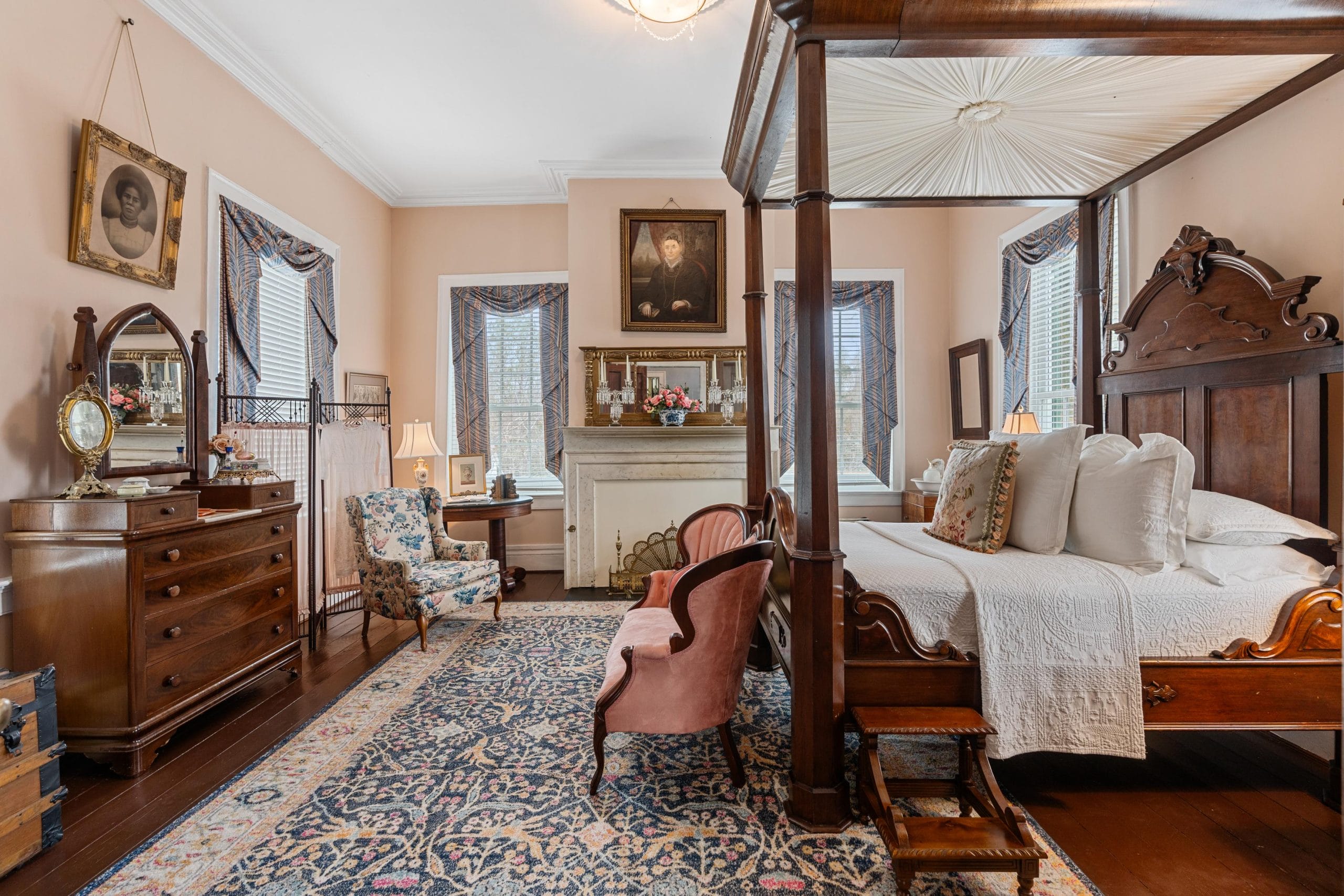
- 3500+/- square feet both Federal and Greek Revival style architecture with 2 bedrooms and 2 bathrooms in the main house with an attached mother-in-law suite with a bathroom
- The main floor includes a formal dining room and parlor in the front and a service wing (extending from the dining room) containing a library, a full bath, and huge family kitchen. The hall ends in a wide porch which engages rear service wings and the mother-in-law suite
- The main hall’s staircase accesses two large bedrooms with the same dimensions as the parlor and dining room below. A bathroom is located in between them
- The sale includes most of the furniture, which are valuable antiques, with the exception of a few pieces, personal items (family pictures, etc.)
- Two frame bunkhouses are situated on the property. Both possess porches and one has multiple rooms. With renovation, these would be great quarters for family and friends on weekends or holidays are easily at hand
- Spectacular views of manicured grounds with parterre gardens and centuries old cedar trees lining the oval drive
- Restored Log Cabin with bathroom, shower, fireplace, and back porch
- Recent Upgrades include a New Tin Roof, 32 Energy Efficient Windows (Historical Home Division Windows / Operable double pane), Renovated Kitchen & Downstairs Bathroom, Restored Back Porch, and a new cast iron fountain. This ornamental water feature is the centerpiece of the formal garden.
- Brick Columns anchor the wrought iron gated entrance with a white 3-rail fence along the road
- An easy drive from Birmingham, Montgomery, Mobile, and Meridian
- Convenient to restaurants, hardware & grocery stores in a quintessential southern town with more social & culinary options than any other town in the black belt.
- Exceptional hunting, fishing, and recreational opportunities are in short distance
- An upward trending rural town benefitting from increased investment and enjoyment of the historic buildings, dining options, and country pursuits
Pleasant Ridge Plantation circa 1838
Listed on the National Registry of Historic Places
Pleasant Ridge provides more than a pleasing prospect. While the views of and from this grand country seat are singular, they are but only a portion of the appeal of a truly remarkable property. We are talking about a historical, an architectural, and a landscape ensemble that is the ideal in the real. The past and present day experiences of this plantation property cause for greater appreciation of that prettiest of places upon a promontory.
 Located along one of the most picturesque stretches of scenic Highway 28, Pleasant Ridge is defined by its main house. This tall-columned “big house” is not only the last extant brick plantation house in Wilcox County, but also one of less than a dozen brick plantation houses to survive in the Black Belt. Though the masons and carpenters behind the construction of the two-story brick residence are no longer known, the life of the builder, Tristram Bethea, still has a resounding presence in the area. The South Carolina born planter was among the earliest settlers in Wilcox County. He played a prominent role in transition of a rural and fertile wilderness into one of largest producing cotton counties in the State of Alabama. Bethea situated his grand house upon a gracious rise that cascades into valley. The use of brick alone is telling of significance of the house then and now. By 1860, only the Wilcox County Courthouse and Wilcox Hotel, both in nearby Camden, and a few other dwellings were made of brick. Even the wealthiest of planters, lawyers, doctors, and cotton factors constructed their houses of wood. The majority of the populace contended with log or small frame dwellings. A two-story brick domicile was the utmost badge of affluence.
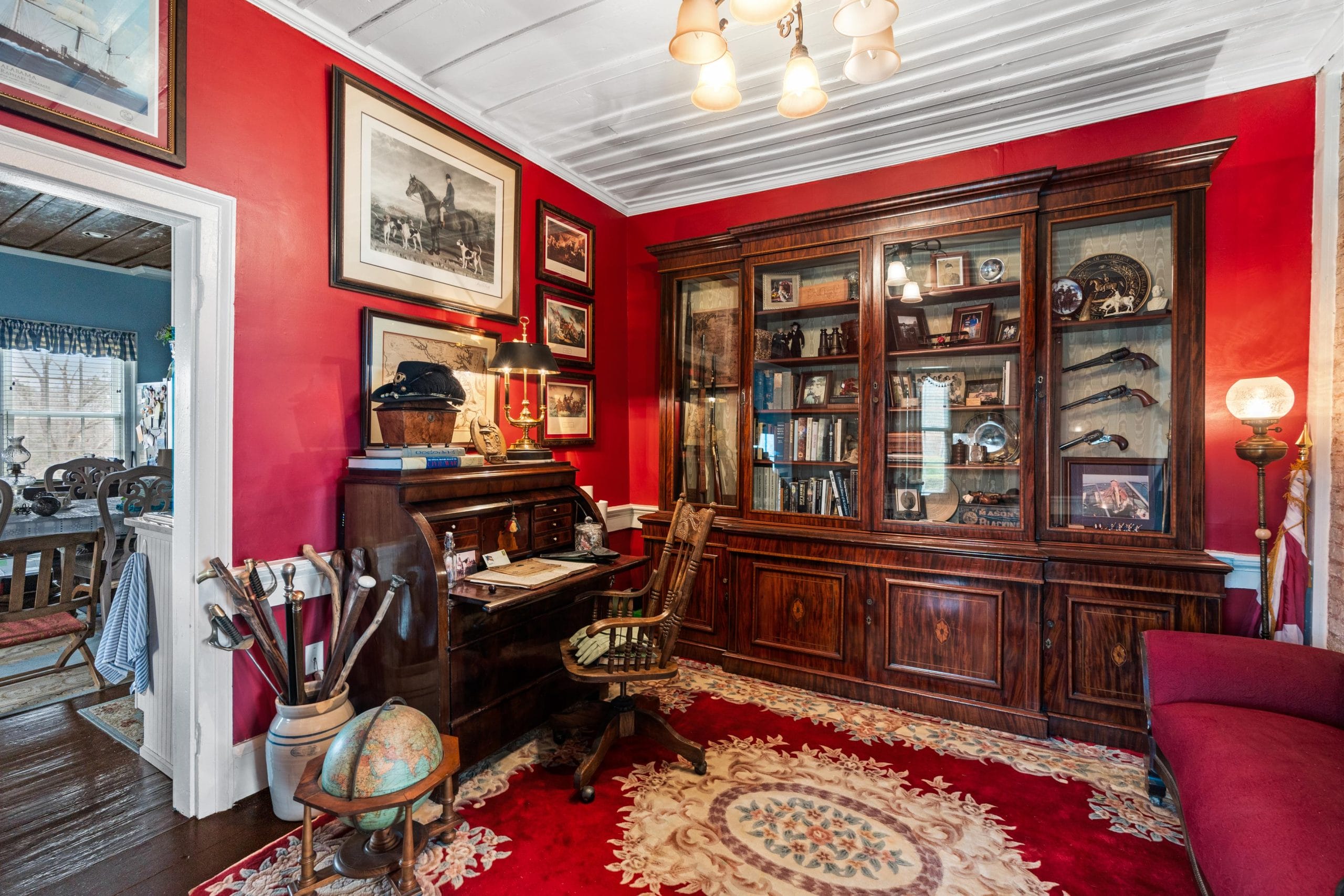 The big house at Pleasant Ridge is as practical as it is grand. A two-columned, monumental ionic portico fronts the symmetrical facade. The vista from it is of the almost two-hundred-year-old cedars ringing the u-shaped drive. Formal gardens are to either side. The two-story gallery and its balcony front double doors with arched fanlights accessing first-story and second-story halls. Upon entering the main floor, one can venture to the left into a formal dining room or to the right into a parlor. The grandly scaled rooms possess twelve-foot ceilings and could serve multiple purposes. These rooms, as well as the upper-story chambers, feature exquisite faux grained and marbled treatments on paneling, doors, and mantels. The hall ends in a porch which engages rear service wings. This porch functions as an outdoor living room during most seasons of the year, especially after toddy time! One service wing (extending from the dining room) contains a library and huge eat in kitchen. The second service wing is a mother-in-law suite. The main hall’s staircase accesses two large bedrooms with the same dimensions as the parlor and dining room below. A bathroom is located between them.
The picture has not always been so rosy at Pleasant Ridge. The Bethea family lost the property after the Civil War. It was let by let by later owners and fell into considerable decline. The main house was unoccupied for almost fifty years. By the 1980s, it was an evocative ruin. Previous owners completely restored the house and embellished the grounds. They respected and preserved historic features and introduced modern conveniences. The current owners have maintained and improved the whole with the utmost care.
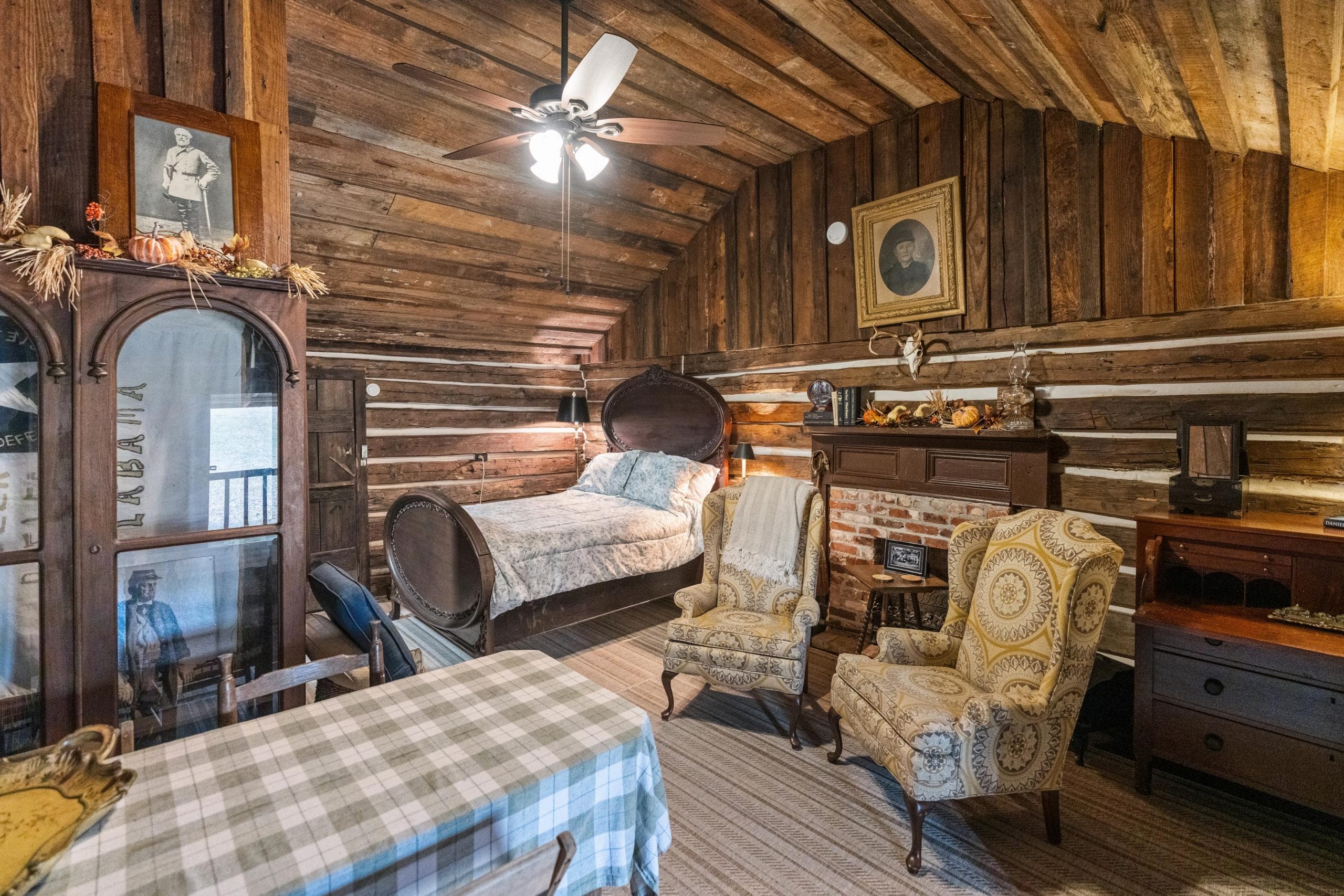 Again, the main house at Pleasant Ridge affords one undeniably beautiful view from any angle. Those vistas from the big house are equally if not more pleasing. Large double hung windows provide glimpses of formal and pastoral grounds. A number of ancillary buildings are found on the property. A late 19th Century log cabin serves as great overflow for guest and two frame bunkhouses are situated in close proximity to the main house in need of renovation. Having the appeal of follies, they serve and can serve further ends than the merely aesthetic. Both of the bunkhouses possess porches. One has multiple rooms. Additional quarters for family and friends on the weekends or the holidays are thus easily at hand.
Pleasant Ridge is a five mile drive from Camden. With Gaines Ridge Supper Club and The Pecan, that quintessentially Southern county seat offers more culinary options than any other in the Black Belt. Black Belt Treasures, the award-winning artists cooperative, Gee’s Bend, and Auburn’s Rural Studio are short distances for those with cultural inclinations. The recreational opportunities are abundant. Deer and turkey abound. If birds are your game, there are numerous outlets for you, your guns, and pup.
Camden is blessed and affords more than visual appeal, dining options, and country pursuits. Gracious locals are joined by families maintaining or restoring other historic buildings nearby. Wilcox County has the third largest concentration of Antebellum buildings in Alabama. The beauty of these structures and the landscapes upon which they stand are benefiting from increased investment and enjoyment.
Pleasant Ridge is that union of past, architecture, landscape, recreation, and community that is a proven betterment to self and family. A short drive from Birmingham, Montgomery, Mobile, and Meridian, this estate is move in ready and offered turn-key. A house made a happy home by the current owners, this wonderful place awaits a new people.
** Some photos were taken prior to the replacement of the new roof.
Pleasant Ridge Photo Galleries Pleasant Ridge Maps
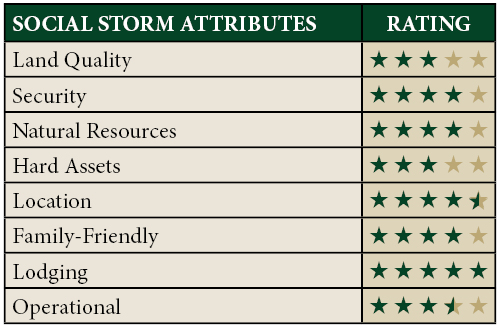 A Social Storm® Ranked Property: Pleasant Ridge and it's Social Storm® Property Attributes are Highly Ranked. This Social Storm® property belongs to a unique asset class with key property attributes that investors gravitate to for safety in bad times and buy for a recreation reward in good times.
Why choose a Social Storm® Property?
Broker’s Comments

The Kohler & Associates’
Difference
Didn’t find what you were looking for? Or want to discuss the market with the Leader in this niche?
Contact us to discuss one of our properties, for information on properties that are not yet released to the market or to discuss the market.
 From murky farm ponds to pristine glacier-cut lakes and everything in between, Knox Daniels’ expertise stems from a lifelong fascination of water and the creatures that live in and around it. He recognizes and helps clients appreciate the value water features bring to a property. “My goal is to help buyers realize and sellers maximize the value different water bodies bring to a property, not only in a recreational sense, but also for social storm reasons.” After extensively traveling the country for collegiate BASS fishing tournaments, Knox graduated and worked for the Southeast’s finest fisheries and wildlife biologist, Greg Grimes. With Grimes’ company, AES, Knox managed many of the southeast’s finest private lake estate/impoundment properties, and learned the intricacies of upscale property management. Learning from Greg and other biologists, Knox honed in on the specific conditions and habitat needed for optimal gamefish growth in private lakes. He has also worked as a property manager on several thousand acres and for a commercial developer, facilitating the dirt work and builds of several apartment complexes, but his true passion has always been in the outdoors. “I’ve always had an insatiable fascination with ponds/lakes and am grateful to be able to help to place clients on the properties of their dreams and make their personal fisheries/wildlife goals reality with JKA.” – Knox Daniels
 Jason has been assisting landowners for the last 28 years in Georgia and South Carolina obtain achievements the owners did not realize were possible. His degree in Biology from Georgia Southern stemmed from the desire to know how things in nature work. His plantation roots began at just 16 years old outside of Albany, GA and the last 20 years were spent in the Lowcountry of South Carolina. His entire career has been spent developing a global approach to plantation management. That plan included sales. Sales is in Jason’s blood- his mom had a 45-year career as a real estate broker. After college, he chose to pursue his passion of making properties great. In 2011, Jason sold his first plantation. Since then, he has assisted buyers and sellers with over $20 million in sales while most of that time working as a full-time General Manager of a large Lowcountry plantation. Today, he is committed to using his unique skill set and experience to guide landowners through the many challenges of plantation ownership.
 Bruce Ratliff is a retired elected official (Property Appraiser Taylor County). Bruce brings years of experience in ad valorem tax knowledge. His property tax background gives JKA Associates & clients a unique insight into the complicated tax process. Bruce held several positions in the Florida Association of Property Appraisers, including member of the Board of Directors, President, Vice-President and Secretary, and served on the Agricultural & Legislative Committees for the Association. The real estate business has been part of Bruce’s life since childhood. His mother, Shirley Ratliff owned Professional Realty of Perry, Florida and his father, Buster owned Ratliff Land Surveying which Bruce was General Manager of before his political career.
 Hailing from a long line of outdoorsmen, Tim learned a great deal from his father and grandfather. He saw first-hand what it means to be a good land steward. He believes land is so much more than a place to hunt, fish, and grow timber or crops. “It’s an identity, a resting place, a safe haven and a way of life, said Tim.” Tim’s family ties to Alabama run deep. During his grandfather’s first term, Governor James was responsible for signing into law Alabama’s first state duck stamp which helped to ensure funding for the procurement, development, and preservation of wetlands for migratory waterfowl habitat. He also established Alabama’s lifetime hunting license, so it is no surprise that Tim is an avid outdoorsman with a keen eye as to how best to improve habitat for the greater good of its wildlife.
 With Madison County roots, Lori grew up on her family farm at Pettis Springs along the historic Aucilla River. A love of the land was instilled in Lori very early on by her father who was a local farmer. Lori understands the importance of good land stewardship and has witnessed first-hand how her own father, a former 2-term member of the Florida House of Representatives whose district encompassed many rural counties of the Red Hills Plantation Region, with a little bit of sweat equity, so lovingly worked their own family land. These are core values she carries with her today, and nothing gives her more personal satisfaction than to represent some of the south’s best land stewards.
 Cole’s dedication to land management lies in his family roots. As a fourth-generation timber expert, Cole’s earliest memories were spent with his father managing timber investments. With a degree in Food Resource Economics from the University of Florida, Cole is the epitome of an up-and-coming leader. He grew up with a hands-on approach to learning land management and conservation and has spent the last 15 years learning every angle of the real estate and forest industry. Cole is a member of the Florida Forestry Association, Red Hills Quail Forever, Southeastern Wood Producers Association and he uses this platform as an advocate for landowners and their land investments. His family has dedicated the past 60 years to providing landowners in North Florida and South Georgia with professional land management services focused on improving and protecting one’s forestland and wildlife investment. In fact, their family business, M.A. Rigoni, Inc., was one of the first to introduce whole tree chipping to the Red Hills Region.
 As a landowner of his own family farm, Lick Skillet, along with family land that has been passed down and enjoyed together at Keaton Beach for 40 years, Jon knows what it means to be a steward of the last best places. As a third-generation land broker with more than 30 years of experience in advising landowners in this niche, Jon is known for his innate ability to harvest a land’s unique intrinsic value. Touting several notable sales under his belt, Jon personally closed Rock Creek/Molpus – 124,000 acres of premium timberland at $142,000,000 – which was known as the largest timberland land sale in the Southeast for eight years running. He is a co-founding member of LandLeader and achieved the real estate industry’s highest honor, “2022 National Broker of the Year – Recreational Land Sales,” by the Realtors® Land Institute.