
Stagecoach
Thomas, Georgia⁞210± ACRES
A Trophy Whitetail Property on the Old Stage Road, Located 14 Minutes from Downtown Thomasville
- 210± acre Legacy Sporting Land™ property in Thomas County, GA
- A trophy whitetail program
- The same hunting group has hunted it for 25 years under one rule: every buck taken goes on the wall
- 12- and 14-point bucks taken with consistency
- They harvest 10 to 15 does each season
- The property is surrounded by row crops and a large, lightly hunted tract across US 19
- The Ochlockonee River corridor is close by
- About 195± acres of upland habitat
- Native South Georgia wiregrass on Tifton soils
- Consistently burned
- Prolific longleaf pine
- Strong wild turkey
- Bobwhite quail-ready: the timber can be thinned, the tract blocked, and brood fields opened. Currently managed for slightly more deer cover
- A wood duck hole with plant-and-flood potential
- Conservation easement with the Georgia-Alabama Land Trust
- A 5± acre building envelope that can be placed anywhere, on either side of Stage Road
- Frontage on historic Stage Road, a pre-1861 stagecoach route
- 14 minutes to downtown Thomasville, about 12 minutes to Publix, and 24 miles to the Florida line
LEGACY SPORTING LAND™ ON SEVEN GENERATIONS OF FAMILY LAND
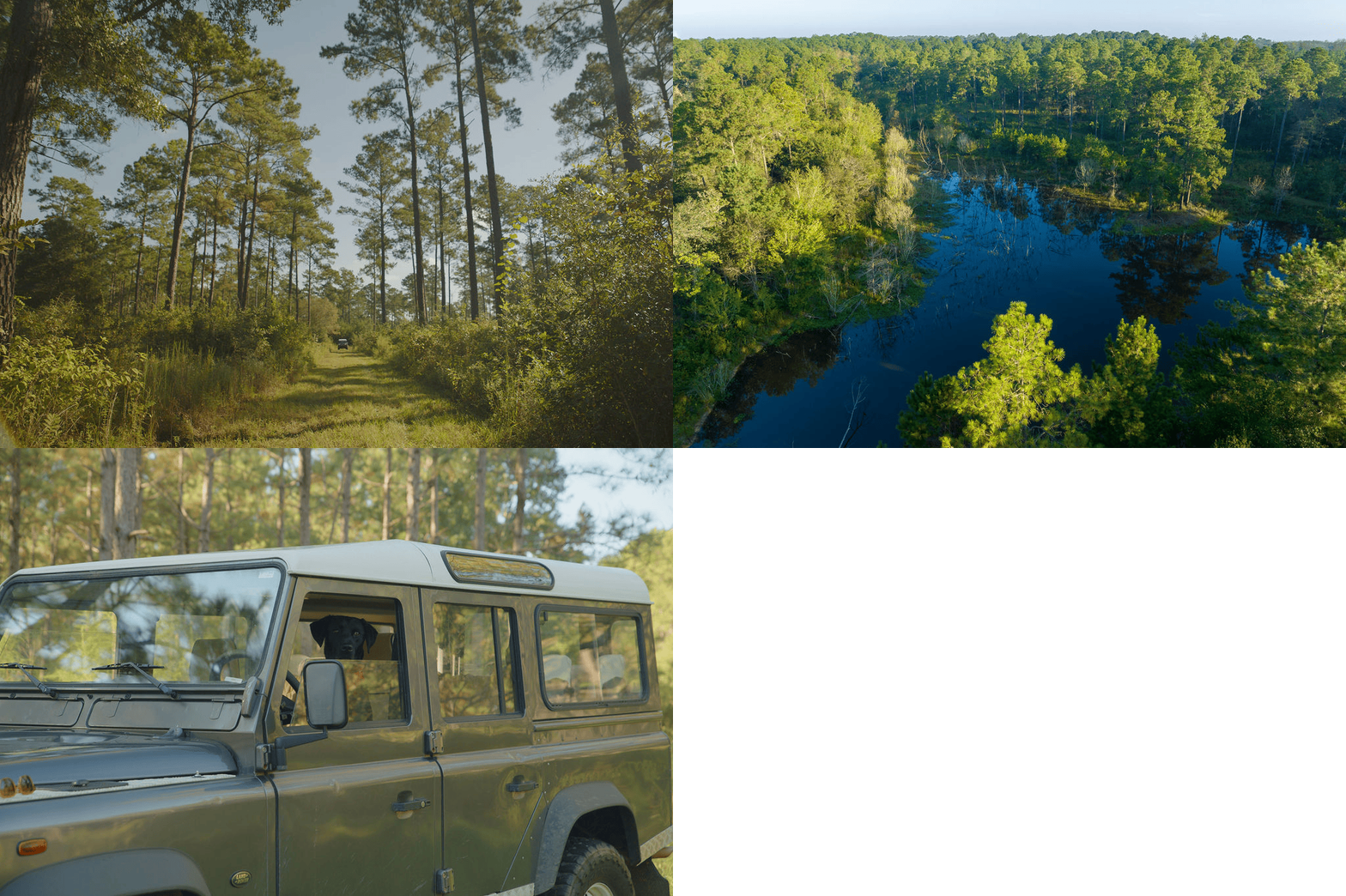 Stagecoach is 210± acres of classic Red Hills upland pine in Thomas County, Georgia, on the historic Stage Road in the heart of the Red Hills Plantation Belt. It has produced wall-hanging bucks for 25 years straight. It has strong wild turkey numbers, a wood duck hole, and 195+ acres of huntable uplands ready for quail. And it sits just 14 minutes from the shopping and restaurants of downtown Thomasville.
“Most people assume you need thousands of acres and eight figures to own a piece of the Red Hills. You don't. Stagecoach is the Red Hills: the soils, the wiregrass, the fire, the wildlife, the town. It's just sized so a family can actually use it" — Jon Kohler
"So what's so fascinating to me about this property is the consistency of which it produces large deer.” — Jon Kohler
210+/- Total Acres | ~195+ acres Huntable Uplands | 25 Yrs of Trophy Bucks | 14 Min to Downtown | $2.1M Offered as a Whole
Every Buck Goes on the Wall
Most tracts this size get hunted hard, or the big buck consistency just isn't there. This one checks every box. For a quarter century, the same group of hunters has held the lease and followed a single standard. They manage the does, pass on young bucks, and take only what's worthy of a wall. It's what most hunters wish they had.
““The people that have been hunting it have killed big deer every year. They manage the does and try to cull about 10 to 15 does per season. And then the bucks, their rule is if you're going to take a buck, it needs to go on a wall.” — Max Beverly, Owner
“There's some pretty deer that have come off of here. I mean, nice big 12, 14 pointers.” — Max Beverly, Owner
Why the Deer Come Here
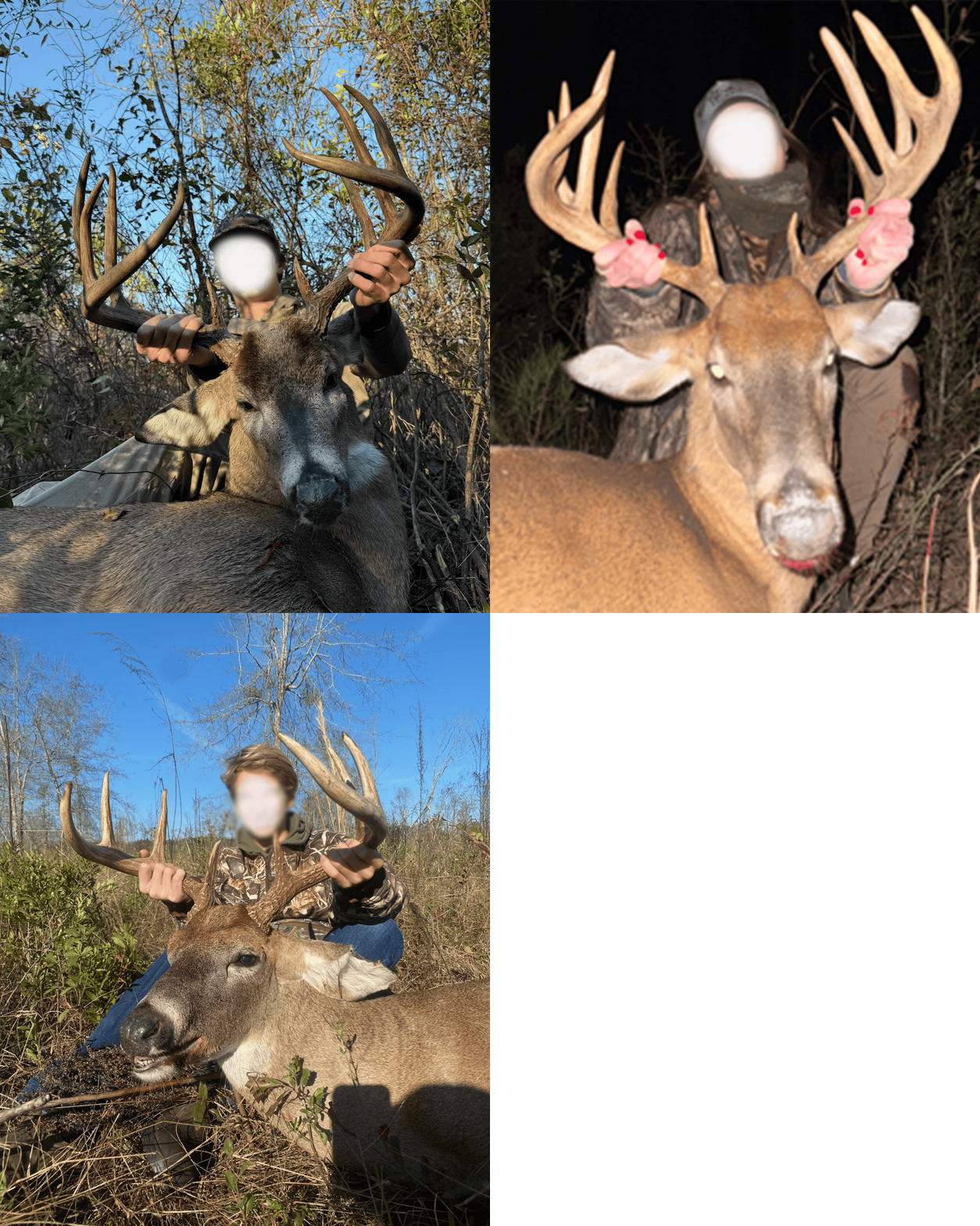 Trophy bucks don't happen by accident. They need age, and age requires low pressure. Stagecoach is surrounded by row crop ground on one side and a large, lightly hunted tract across US 19 on the other. There is ample feed. The Ochlocknee River bottom and its game-rich corridor are just beyond. Deer are drawn in from thousands of acres of farmland by the habitat and cover here.
“You end up pulling in deer from a large number, a large volume of acreage that's really not being hunted that well. It's not like every neighbor is hunting deer, so you get to pull in large big bucks.” — Max Beverly, Owner
This Is Why You Come to the Red Hills
The land is upland longleaf and pine, with both native wiregrass and old field ground on Tifton soils. It has been consistently burned for decades. The timber was never planted in rows and grown for pulpwood. It is a living forest floor.
“It is natural South Georgia wiregrass ground cover. This property is burned almost every year. It's not like it's just strictly been planted pines to be grown as thick as you can get them. There's an ecosystem on the forest floor.” — Max Beverly, Owner
“It's stereotypical Red Hills. This is why you come to the Red Hills.” — Jon Kohler
The Beverly family planted longleaf here about 30 years ago, knowing they would not see all of it mature. That is how this family has always approached land.
“I remember planting a field in 1989, knowing that I wasn't going to be alive when those trees were mature. So anyway, you kind of play the long game.” — Max Beverly, Owner
A Great Turkey Neighborhood
The Ochlocknee riparian corridor holds turkeys, and they spill onto Stagecoach. The property has strong wild turkey numbers.
“During the 2010 Georgia-Florida Turkey Invitational, I killed a 27-pound gobbler about a mile from here. It won the Calcutta. My partner missed one just as big. This has always been a great turkey area” — Jon Kohler
“It looked like the ground was moving, and it was probably 75 turkeys moving together.” — Max Beverly, Owner
One Heck of a Bird Place, With Very Little Effort
Max Beverly is part of some of the finest wild quail ground in the country, so when he evaluates a tract for birds, his opinion carries weight. Stagecoach is high and dry, with almost nowhere that floods. Thin the timber, block the tract, open a few brood fields, and this becomes an incredible quail place.
There is also a natural wood duck hole that was close to becoming a plant-and-flood pond.
Protected Forever, But Not Handcuffed
Max has placed many conservation easements on his family's land and knows them well. For good reason, the share of Red Hills plantations already protected by a conservation easement is pushing 50%. He calls this one the least restrictive his family holds.
“You can do anything you want to within a five-acre area, and that can be moved anywhere. It's not going to interfere with any timber harvesting. This is the most unrestrictive conservation easement we have.” — Max Beverly, Owner
“My father and his brother wanted to make sure that these properties remained woods for eternity, and that's why they put the easements on them.” — Max Beverly, Owner
The Old Stage Road
Before the railroad reached Thomasville in 1861, stagecoaches traveled this road along what was then the edge of Creek Indian territory. Goff Station, a stagecoach stop, stood just down the way. The Beverly family's connection to this land goes back to the 1820s.
“It literally was a stagecoach road back in the 1800s. There was a stagecoach station called Goff Station. We've hit that with metal detectors and found some pretty fabulous things.” — Max Beverly, Owner
After the war, wealthy Northerners rode the rails south to escape the winters. They hunted with local farmers, bought their land, and built the quail plantations that still shape this region.
“I cover all the major quail hunting belts. This one, because of the investment of the Northerners post-Civil War, financially was stronger. It had that lifeblood, and it really resonates today.” — Jon Kohler
“I've got photographs of Chester Nimitz and Bull Halsey, the two World War II admirals in the Pacific, hunting on a quail wagon.” — Max Beverly, Owner
“To me, the most interesting thing that happened here happened in the 1960s with the translocation of whitetail deer from high genetic areas. That was a game changer.” — Jon Kohler
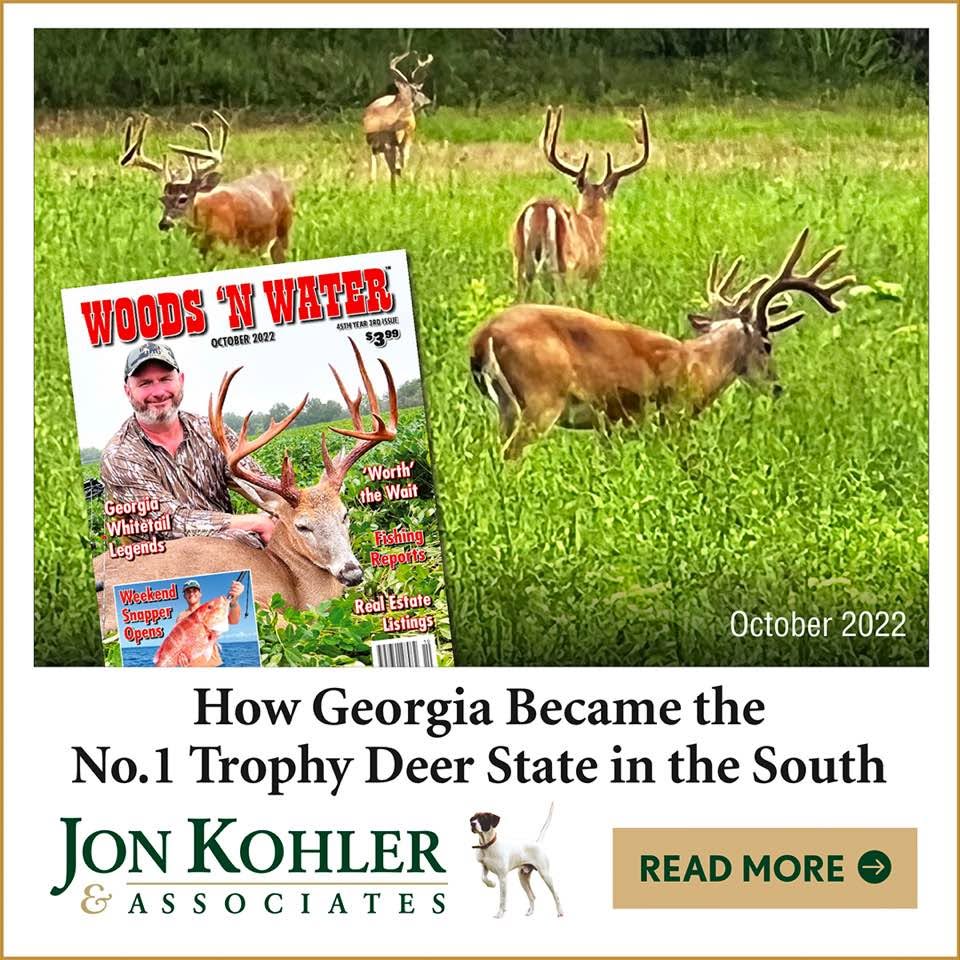 Those genetics are why Stagecoach keeps producing.
If you want to learn more about why and how Southwest Georgia became the South's #1 place to harvest Boone & Crockett whitetails, our Woods N Water article on it is our #1 requested back issue.
14 Minutes to the “Aspen of the South”
Most sporting properties require you to stay on the land until you leave for home. This one is 14 minutes from one of the healthiest downtowns in the South, with local restaurants ranging from white tablecloth dining to pool halls. This is a place your family will want to visit and enjoy. This isn't your typical deer camp.
“I call it the 'Aspen of the South.' There is nothing else like it. Bar none.” — Jon Kohler
“This is probably closer to town than 60 to 70% of the properties in the Red Hills plantation belt.” — Max Beverly, Owner
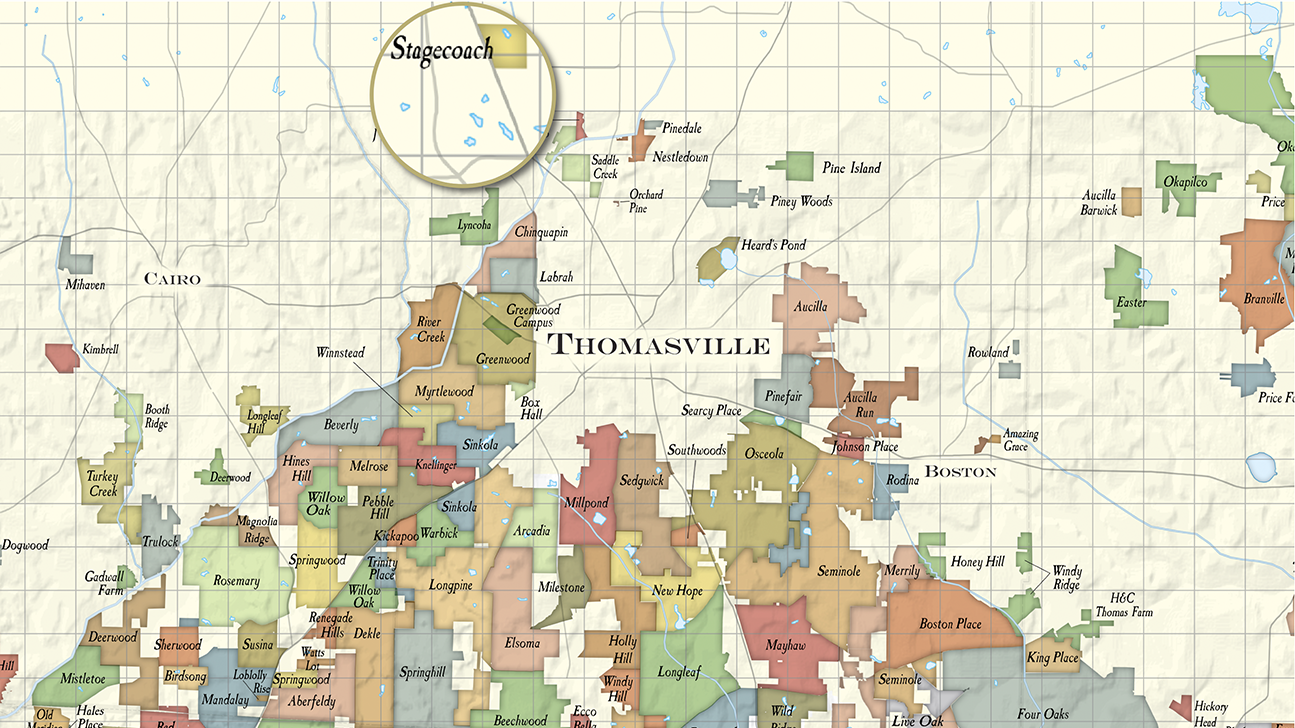
“I've run into a billionaire at the pool hall. You got a day that's totally rained out and you got a frog strangler going, everybody goes in town and people love it.” — Max Beverly, Owner, former Mayor of Thomasville
“The location is great and the wife appeal on this property is off the charts compared to the average hunting property somebody could buy.” — Jon Kohler
Why This Price Works
Trophy deer have changed the math on recreational land. In The Land Report's Summer 2026 issue, Jon noted that Southwest Georgia properties with proven trophy whitetails have been valued at more than $8,000-$10,000 per acre, a price point once reserved for top quail plantations.
“If there's a property where it's been proven that you can raise trophy deer, it's going to sell for more than basic recreational land, irrigated farmland, and even a lot of quail plantations.” — Jon Kohler, as quoted in The Land Report
Proven is the key word. Stagecoach has 25 years of wall-hangers from the same hunting group. That track record is the hardest thing to buy and the slowest thing to build. Pair it with Red Hills soils and fire-maintained wiregrass, then put it 14 minutes from downtown Thomasville, and the value is in what this property has already shown it can do.
Stagecoach also gives you a choice most Red Hills buyers don't have at this price. The deer hunting is turnkey, and the quail ground is ready whenever you want it.
We don't price land by simply averaging comps. Behind every position we take is the JKA Land Registry, our proprietary record of private, non-MLS recreational land transactions and the deal-maker commentary behind them.
“At Stagecoach, you aren't paying for a lodge or a promise. You're paying for 25 years of proof, in the Red Hills, 14 minutes from town.” — Jon Kohler
 To learn why trophy whitetails are now outpacing quail as the top driver of recreational land values, read The Land Report's Summer 2026 feature, “A Whole Different Animal,” featuring Jon Kohler.
Recommendations
A buyer's biggest fear about a trophy deer property is the weak link: the thing nobody mentioned that keeps it from producing. Here is what Jon would do with Stagecoach.
“Stagecoach doesn't need much. I'd thin the timber to let sunlight hit the ground. That thickens the cover for deer and starts it toward quail. I'd open a few small brood fields and plant chufa for the turkeys. I'd finish what the family considered on the wood duck hole and make it a plant-and-flood. And for the deer, I'd add high-protein forage. I've grown perennial peanut on Lick Skillet for 35 years. It's essentially the alfalfa of the South. Nutrition is what turns a good deer place into a great one.” — Jon Kohler
Handed Down to the Right Hunter
Max Beverly hunts birds behind dogs. He doesn't hunt deer. After 35 years of his family's stewardship, he wants this land to go to someone who will get as much from it as his deer-hunting friends have.
“I'll miss getting the pictures one morning in November and opening up my phone and having a picture of their son or daughter with a big buck. This place needs to find an owner who is more passionate about deer hunting.” — Max Beverly, Owner
Broker’s Comments
The Kohler & Associates’
Difference
Didn’t find what you were looking for? Or want to discuss the market with the Leader in this niche?
Contact us to discuss one of our properties, for information on properties that are not yet released to the market or to discuss the market.
 From murky farm ponds to pristine glacier-cut lakes and everything in between, Knox Daniels’ expertise stems from a lifelong fascination of water and the creatures that live in and around it. He recognizes and helps clients appreciate the value water features bring to a property. “My goal is to help buyers realize and sellers maximize the value different water bodies bring to a property, not only in a recreational sense, but also for social storm reasons.” After extensively traveling the country for collegiate BASS fishing tournaments, Knox graduated and worked for the Southeast’s finest fisheries and wildlife biologist, Greg Grimes. With Grimes’ company, AES, Knox managed many of the southeast’s finest private lake estate/impoundment properties, and learned the intricacies of upscale property management. Learning from Greg and other biologists, Knox honed in on the specific conditions and habitat needed for optimal gamefish growth in private lakes. He has also worked as a property manager on several thousand acres and for a commercial developer, facilitating the dirt work and builds of several apartment complexes, but his true passion has always been in the outdoors. “I’ve always had an insatiable fascination with ponds/lakes and am grateful to be able to help to place clients on the properties of their dreams and make their personal fisheries/wildlife goals reality with JKA.” – Knox Daniels
 Jason has been assisting landowners for the last 28 years in Georgia and South Carolina obtain achievements the owners did not realize were possible. His degree in Biology from Georgia Southern stemmed from the desire to know how things in nature work. His plantation roots began at just 16 years old outside of Albany, GA and the last 20 years were spent in the Lowcountry of South Carolina. His entire career has been spent developing a global approach to plantation management. That plan included sales. Sales is in Jason’s blood- his mom had a 45-year career as a real estate broker. After college, he chose to pursue his passion of making properties great. In 2011, Jason sold his first plantation. Since then, he has assisted buyers and sellers with over $20 million in sales while most of that time working as a full-time General Manager of a large Lowcountry plantation. Today, he is committed to using his unique skill set and experience to guide landowners through the many challenges of plantation ownership.
 Bruce Ratliff is a retired elected official (Property Appraiser Taylor County). Bruce brings years of experience in ad valorem tax knowledge. His property tax background gives JKA Associates & clients a unique insight into the complicated tax process. Bruce held several positions in the Florida Association of Property Appraisers, including member of the Board of Directors, President, Vice-President and Secretary, and served on the Agricultural & Legislative Committees for the Association. The real estate business has been part of Bruce’s life since childhood. His mother, Shirley Ratliff owned Professional Realty of Perry, Florida and his father, Buster owned Ratliff Land Surveying which Bruce was General Manager of before his political career.
 Hailing from a long line of outdoorsmen, Tim learned a great deal from his father and grandfather. He saw first-hand what it means to be a good land steward. He believes land is so much more than a place to hunt, fish, and grow timber or crops. “It’s an identity, a resting place, a safe haven and a way of life, said Tim.” Tim’s family ties to Alabama run deep. During his grandfather’s first term, Governor James was responsible for signing into law Alabama’s first state duck stamp which helped to ensure funding for the procurement, development, and preservation of wetlands for migratory waterfowl habitat. He also established Alabama’s lifetime hunting license, so it is no surprise that Tim is an avid outdoorsman with a keen eye as to how best to improve habitat for the greater good of its wildlife.
 With Madison County roots, Lori grew up on her family farm at Pettis Springs along the historic Aucilla River. A love of the land was instilled in Lori very early on by her father who was a local farmer. Lori understands the importance of good land stewardship and has witnessed first-hand how her own father, a former 2-term member of the Florida House of Representatives whose district encompassed many rural counties of the Red Hills Plantation Region, with a little bit of sweat equity, so lovingly worked their own family land. These are core values she carries with her today, and nothing gives her more personal satisfaction than to represent some of the south’s best land stewards.
 Cole’s dedication to land management lies in his family roots. As a fourth-generation timber expert, Cole’s earliest memories were spent with his father managing timber investments. With a degree in Food Resource Economics from the University of Florida, Cole is the epitome of an up-and-coming leader. He grew up with a hands-on approach to learning land management and conservation and has spent the last 15 years learning every angle of the real estate and forest industry. Cole is a member of the Florida Forestry Association, Red Hills Quail Forever, Southeastern Wood Producers Association and he uses this platform as an advocate for landowners and their land investments. His family has dedicated the past 60 years to providing landowners in North Florida and South Georgia with professional land management services focused on improving and protecting one’s forestland and wildlife investment. In fact, their family business, M.A. Rigoni, Inc., was one of the first to introduce whole tree chipping to the Red Hills Region.
 As a landowner of his own family farm, Lick Skillet, along with family land that has been passed down and enjoyed together at Keaton Beach for 40 years, Jon knows what it means to be a steward of the last best places. As a third-generation land broker with more than 30 years of experience in advising landowners in this niche, Jon is known for his innate ability to harvest a land’s unique intrinsic value. Touting several notable sales under his belt, Jon personally closed Rock Creek/Molpus – 124,000 acres of premium timberland at $142,000,000 – which was known as the largest timberland land sale in the Southeast for eight years running. He is a co-founding member of LandLeader and achieved the real estate industry’s highest honor, “2022 National Broker of the Year – Recreational Land Sales,” by the Realtors® Land Institute.