
I’ve always believed there’s a desire God built into our DNA that draws us to gathering.
It might look like church on Sunday morning, a fish fry at camp, or a Friday-night football game under lights that draw more draw bugs than people. But the pull is always the same. We enjoy standing shoulder to shoulder with others who believe in the same things.
Hunting is a quiet passion. But it’s never really solitary. It’s tied to land, tradition, restraint, and a shared understanding that only becomes visible when we come together.
Every winter, that understanding shows up again in a small North Florida town. A county that never had the need for even one red light.
In Monticello, FL…every November the woods come to town.
A Revival With Hooves
What happens here each year feels a little like an old-time revival, minus the hymnals, plus a few dog boxes. Hunters arrive from every kind of country you can imagine: flatwoods and plantations, river swamps and pine ridges. Some pull in from the concrete and holding pond world of Tampa. Different landscapes, same language.
And they don’t come to show off antlers.
They come to celebrate does.
That’s the irony—and the brilliance—of the Big Doe Challenge, hosted by Trophy Creek Outfitters. In a hunting culture long obsessed with inches of bone, this event flips the script. The winners aren’t crowned for rack size. They’re recognized for healthy animals, good habitat, and disciplined management.
For a one day, guns, beer, and deer sit right next to the courthouse. Kids hover near the scales. Stories get better with each telling. And the entire town seems to understand exactly why this matters.
The Man Behind the Counter
If there’s a constant in all of this, it’s JT Surles.
Surles owns Trophy Creek Outfitters, but calling it a “shop” doesn’t really cover it. It’s more like a crossroads. Rifles, rods, reels, optics, boots, camo—gear stacked so deep it’s almost overwhelming. He doesn’t “sell” stuff. He guides folks on the best gear for the budget to improve one’s outdoor experience. He reminds me of a character out of an old Western—the guy everyone ends up talking to because if something’s happening in town, he’s already involved. If it has to do with hunting, fishing, or the community, odds are Surles is part of it.
In our household, his shop is also where I’ve been told—more than once—by my wife, Erica, not to buy her any more gifts from Kevin’s or Trophy Creek Outfitters. For years this puzzled me greatly until one day it dawned on me. Unlike her, as a guy, I don’t have a store that I can walk into and buy whatever I want, whenever I want with automatic spouse approval…no questions asked.
A Growing Annual Thanksgiving Tradition
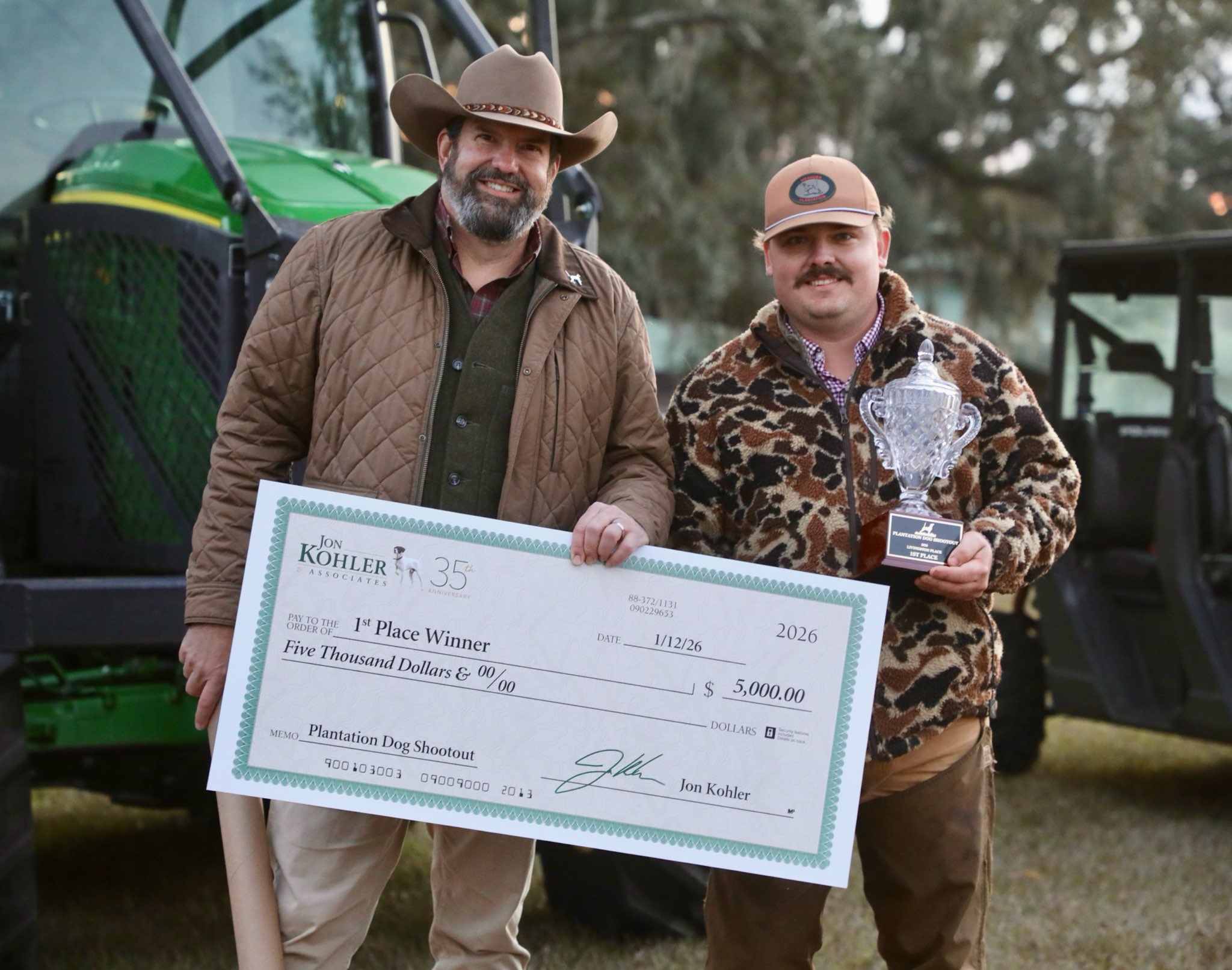 The Big Doe Challenge has grown into a family Thanksgiving tradition. The 13th annual event drew 132 registered hunters, with youth participation especially strong—80 young hunters took part. In total, 24 deer were weighed in, and four hunters harvested their first deer.
“Getting youth involved in hunting is an important initiative, and I want to recognize the parents of these kids,” said Surles. “This event wouldn’t be possible without their consent and encouragement, and we’re very thankful to the parents for their young hunter’s participation.”
Surles also emphasized the importance of visibility and access, noting that while Trophy Creek Outfitters hosts the Big Doe Challenge, the event is put on in partnership with the National Wild Turkey Federation and the Kings of Spring chapter. There are no entry fees, and local businesses and partners step up to award hunters and donate prizes—including a raffle for an ATV, firearms, and other giveaways.
“I also want to recognize the generosity of Beau Turner, who sponsors the youth part of the Big Doe Challenge, as well as Quail Forever’s Kenny Barker, who was master of ceremonies,” Surles said. “The event also raised $2,000 for the local youth scholarship program.”
Why This Matters More Than Ever
Events like this aren’t just about camaraderie. They’re about survival—of hunting itself.
Florida has about 240,000 licensed hunters. Thats only one percent of the population. Put another way: 99 out of 100 Floridians don’t hunt.
All Florida’s hunters combined wouldn’t fill three major college football stadiums on a single Saturday. Yet those same hunters are expected to fund wildlife conservation for everyone else.
In my world, it would seem that 40% of people hunted. The reality couldn’t be further from that. Georgia sits around seven percent participation. Alabama pushes 10. South Carolina is near four. Florida isn’t just low—it’s an outlier.
Nationally, only about five percent of Americans hold a hunting license. America’s hunting heritage—one of the pillars of wildlife management and conservation funding—has reached a generational inflection point. Wildlife populations in many places are strong, even growing. Hunter numbers and the funding they provide is not.
If that imbalance continues, the consequences won’t just be cultural. They’ll be ecological.
Recruitment Isn’t a Buzzword—It’s a Lifeline
That’s where R3—recruitment, retention, and reactivation—comes in. In my youth, I would have never imagined the threat would come in the form of not enough hunters. I was solely focused on habitat.
Organizations like Quail Forever and NWTF understand this. Habitat can be perfect. Wildlife numbers can be strong. But without hunters—especially young hunters—none of it holds. Fewer hunters may seem like more opportunities but that’s not how the North American Model of Wildlife Conservation works.
Kenny Barker is Quail Forever’s regional representative in Florida and Georgia, supporting a growing network of six local chapters and 15 plus regional staff members that fuel habitat conservation efforts and shooting sports initiatives across the Southeast alone. He said the R3 initiative focuses on public-lands habitat and directs funding toward outreach events and learn-to-shoot programs.
“It’s great to see the community come together and get behind events to weigh deer and encourage youth participation,” Barker said. “The event draws thousands, and our main goal is to get kids and young adults involved in shooting sports and appreciate our heritage. This involves working with private landowners to make it happen.”
“These events center on improving habitat, and when we improve quail habitat, we also improve habitat for deer, turkey, and everything else in the woods,” Barker added. “I’d like to thank JT and Beau for their support of our hunting heritage on local levels. Events like this wouldn’t be possible without them.”
Leadership That Looks Forward
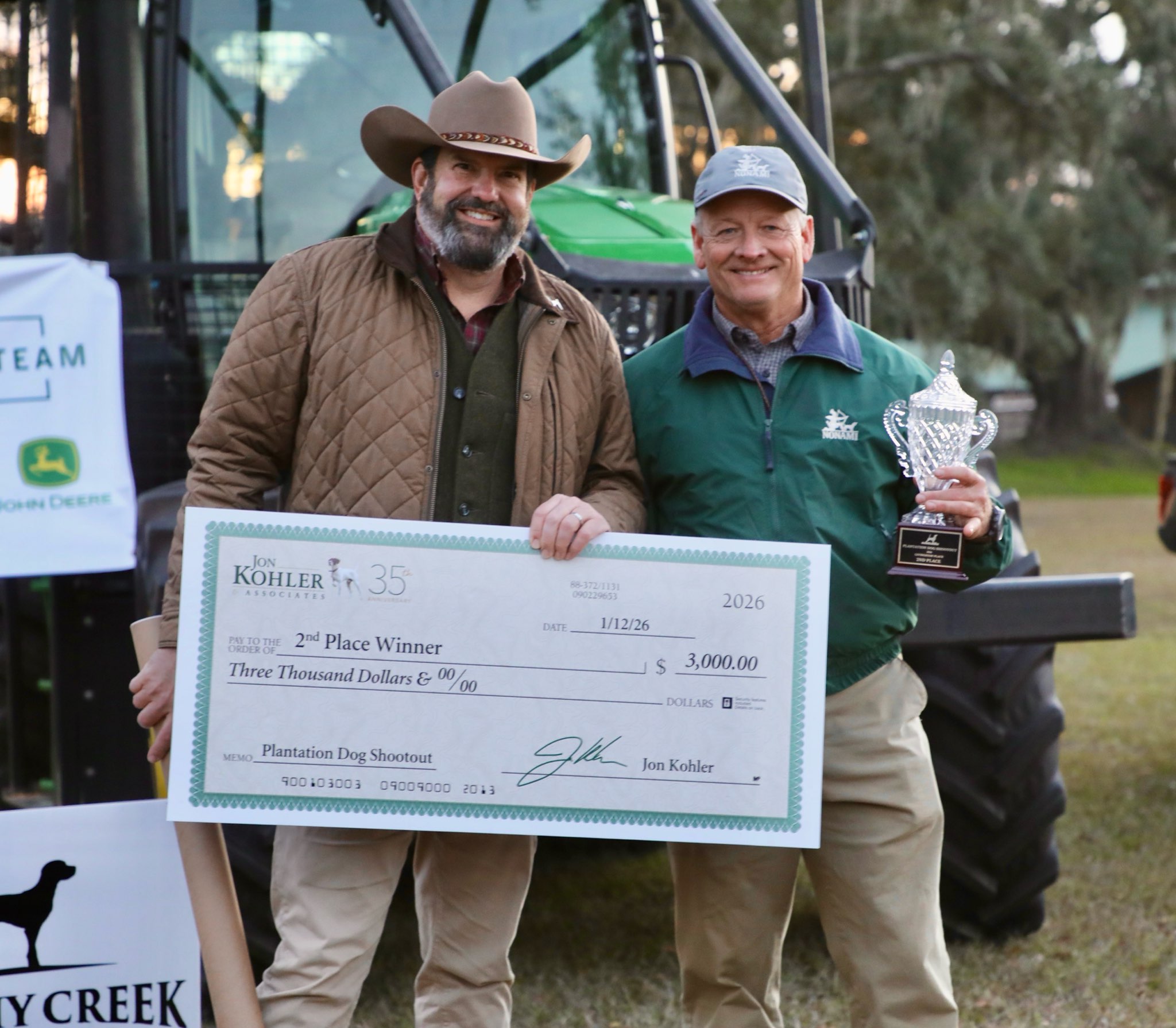 Few people embody the future of hunting and conservation like North Florida’s Beau Turner.
Son of Ted Turner, he oversees habitat management and hunting across Turner-owned lands nationwide. He sees the big picture. His real passion has been introducing others to the outdoors…and he’s very good at it.
For 20 years, Turner ran the Beau Turner Youth Center, a pilot program well ahead of its time that introduced kids and teenagers to shooting sports and the outdoors. I took my boys there. It was impressive. To a Florida Cracker like me it was better than Walt Disney World.
That influence hasn’t faded. Today, it shows up in the Big Doe Challenge and beyond. Whether promoting longleaf pine restoration before it was fashionable or championing youth engagement when funding was thin, Turner has consistently been out front.
“I always say, the most endangered species are young people in the outdoors,” Turner said. “It’s imperative that we start getting children offline—off their computers and video games—and get them into the wilds. Hunting and shooting are great ways to do it.”
Turner said many of his friends are passionate about hunting and fishing and want to do everything possible to keep sporting heritage alive.
“When something is a success, like the Big Doe Challenge, you know it carries on,” he said. “These types of events give young people the opportunity to get outdoors and keep their interest in hunting and habitat. We all know that habitat is declining rapidly, and refuges have no public voice. It’s imperative that we keep habitat protected and take kids to these places all the time.”
Turner described himself as “a big habitat guy” and stressed the importance of finding tools and resources to manage land better. For newcomers, he recommends starting with hunter safety courses, pairing kids with adults to learn responsibly and safely. Nothing impacts a youth’s life path more than having a mentor.
“Now more than ever, I think it’s important to stay in one place and have a purpose,” Turner said. “Recovering habitat is for everyone, and you don’t have to be interested in hunting to do it. I think the Big Doe Challenge and other like-minded events are creative ways to get kids outside—outside their backyards—and enjoy what we love. There’s nothing like purpose.”
What It Means at Lick Skillet
He is spot on. At Lick Skillet, the Big Doe Challenge has become the defining hunting event of the year. More planning goes into it than Thanksgiving.
My boys and their buddies have been attending for five years now. The high fence is off limits. Only native Aucilla River deer. Thanks to our fire-managed habitat and high protein perennial peanut, someone from our camp has always placed in the top 3. The family takes it very seriously—hours checking cameras, endless conversations about where the heaviest does might be and never-ending questions on the best stand.
The Chad Cole family has hunted it with us for years, driving five hours up and five hours back from Tampa. Several boys have harvested their first deer during this hunt. It’s grown into a celebration on par with the Fourth of July. The boys now talk about doe weights, not antler size.
When Showing Up Matters Most
There’s another reason events like the Big Doe Challenge matter, and it has less to do with trophies than it does with presence. The celebration is habitat, not horns.
A local Quail Forever chapter event is coming up soon. On the surface, it might look like just another dinner or fundraiser. But those rooms—and the people who choose to fill them—are where the future of hunting and habitat is actually decided.
Conservation doesn’t happen by accident. It happens when people show up. When they buy a ticket, raise a hand, volunteer a weekend, bring a kid, or invite someone who’s never been before.
That’s the common thread running from the courthouse square in Monticello to a Quail Forever or NWTF banquet table. Different settings. Same responsibility.
If hunting is going to endure—not just as a pastime, but as the backbone of wildlife conservation—we need more than strong opinions and fond memories.
We need participation.
We need presence.
Because when the woods come to town, what really matters is who’s there to greet them.
 From murky farm ponds to pristine glacier-cut lakes and everything in between, Knox Daniels’ expertise stems from a lifelong fascination of water and the creatures that live in and around it. He recognizes and helps clients appreciate the value water features bring to a property. “My goal is to help buyers realize and sellers maximize the value different water bodies bring to a property, not only in a recreational sense, but also for social storm reasons.” After extensively traveling the country for collegiate BASS fishing tournaments, Knox graduated and worked for the Southeast’s finest fisheries and wildlife biologist, Greg Grimes. With Grimes’ company, AES, Knox managed many of the southeast’s finest private lake estate/impoundment properties, and learned the intricacies of upscale property management. Learning from Greg and other biologists, Knox honed in on the specific conditions and habitat needed for optimal gamefish growth in private lakes. He has also worked as a property manager on several thousand acres and for a commercial developer, facilitating the dirt work and builds of several apartment complexes, but his true passion has always been in the outdoors. “I’ve always had an insatiable fascination with ponds/lakes and am grateful to be able to help to place clients on the properties of their dreams and make their personal fisheries/wildlife goals reality with JKA.” – Knox Daniels
 Jason has been assisting landowners for the last 28 years in Georgia and South Carolina obtain achievements the owners did not realize were possible. His degree in Biology from Georgia Southern stemmed from the desire to know how things in nature work. His plantation roots began at just 16 years old outside of Albany, GA and the last 20 years were spent in the Lowcountry of South Carolina. His entire career has been spent developing a global approach to plantation management. That plan included sales. Sales is in Jason’s blood- his mom had a 45-year career as a real estate broker. After college, he chose to pursue his passion of making properties great. In 2011, Jason sold his first plantation. Since then, he has assisted buyers and sellers with over $20 million in sales while most of that time working as a full-time General Manager of a large Lowcountry plantation. Today, he is committed to using his unique skill set and experience to guide landowners through the many challenges of plantation ownership.
 Bruce Ratliff is a retired elected official (Property Appraiser Taylor County). Bruce brings years of experience in ad valorem tax knowledge. His property tax background gives JKA Associates & clients a unique insight into the complicated tax process. Bruce held several positions in the Florida Association of Property Appraisers, including member of the Board of Directors, President, Vice-President and Secretary, and served on the Agricultural & Legislative Committees for the Association. The real estate business has been part of Bruce’s life since childhood. His mother, Shirley Ratliff owned Professional Realty of Perry, Florida and his father, Buster owned Ratliff Land Surveying which Bruce was General Manager of before his political career.
 Hailing from a long line of outdoorsmen, Tim learned a great deal from his father and grandfather. He saw first-hand what it means to be a good land steward. He believes land is so much more than a place to hunt, fish, and grow timber or crops. “It’s an identity, a resting place, a safe haven and a way of life, said Tim.” Tim’s family ties to Alabama run deep. During his grandfather’s first term, Governor James was responsible for signing into law Alabama’s first state duck stamp which helped to ensure funding for the procurement, development, and preservation of wetlands for migratory waterfowl habitat. He also established Alabama’s lifetime hunting license, so it is no surprise that Tim is an avid outdoorsman with a keen eye as to how best to improve habitat for the greater good of its wildlife.
 With Madison County roots, Lori grew up on her family farm at Pettis Springs along the historic Aucilla River. A love of the land was instilled in Lori very early on by her father who was a local farmer. Lori understands the importance of good land stewardship and has witnessed first-hand how her own father, a former 2-term member of the Florida House of Representatives whose district encompassed many rural counties of the Red Hills Plantation Region, with a little bit of sweat equity, so lovingly worked their own family land. These are core values she carries with her today, and nothing gives her more personal satisfaction than to represent some of the south’s best land stewards.
 Cole’s dedication to land management lies in his family roots. As a fourth-generation timber expert, Cole’s earliest memories were spent with his father managing timber investments. With a degree in Food Resource Economics from the University of Florida, Cole is the epitome of an up-and-coming leader. He grew up with a hands-on approach to learning land management and conservation and has spent the last 15 years learning every angle of the real estate and forest industry. Cole is a member of the Florida Forestry Association, Red Hills Quail Forever, Southeastern Wood Producers Association and he uses this platform as an advocate for landowners and their land investments. His family has dedicated the past 60 years to providing landowners in North Florida and South Georgia with professional land management services focused on improving and protecting one’s forestland and wildlife investment. In fact, their family business, M.A. Rigoni, Inc., was one of the first to introduce whole tree chipping to the Red Hills Region.
 As a landowner of his own family farm, Lick Skillet, along with family land that has been passed down and enjoyed together at Keaton Beach for 40 years, Jon knows what it means to be a steward of the last best places. As a third-generation land broker with more than 30 years of experience in advising landowners in this niche, Jon is known for his innate ability to harvest a land’s unique intrinsic value. Touting several notable sales under his belt, Jon personally closed Rock Creek/Molpus – 124,000 acres of premium timberland at $142,000,000 – which was known as the largest timberland land sale in the Southeast for eight years running. He is a co-founding member of LandLeader and achieved the real estate industry’s highest honor, “2022 National Broker of the Year – Recreational Land Sales,” by the Realtors® Land Institute.