
For those of us blessed to live where we do, islands are part of the mystique. From fellow quail hunter and fly fisherman, Jimmy Buffet turning “island life” into an international cultural phenomenon and entertaining millions to the 1980’s hit show “Fantasy Island”, islands are in our DNA. Who doesn’t remember the suspense as guests would arrive at the island by seaplane? I can hear Tattoo croon “De Plane…De Plane” like it was yesterday.
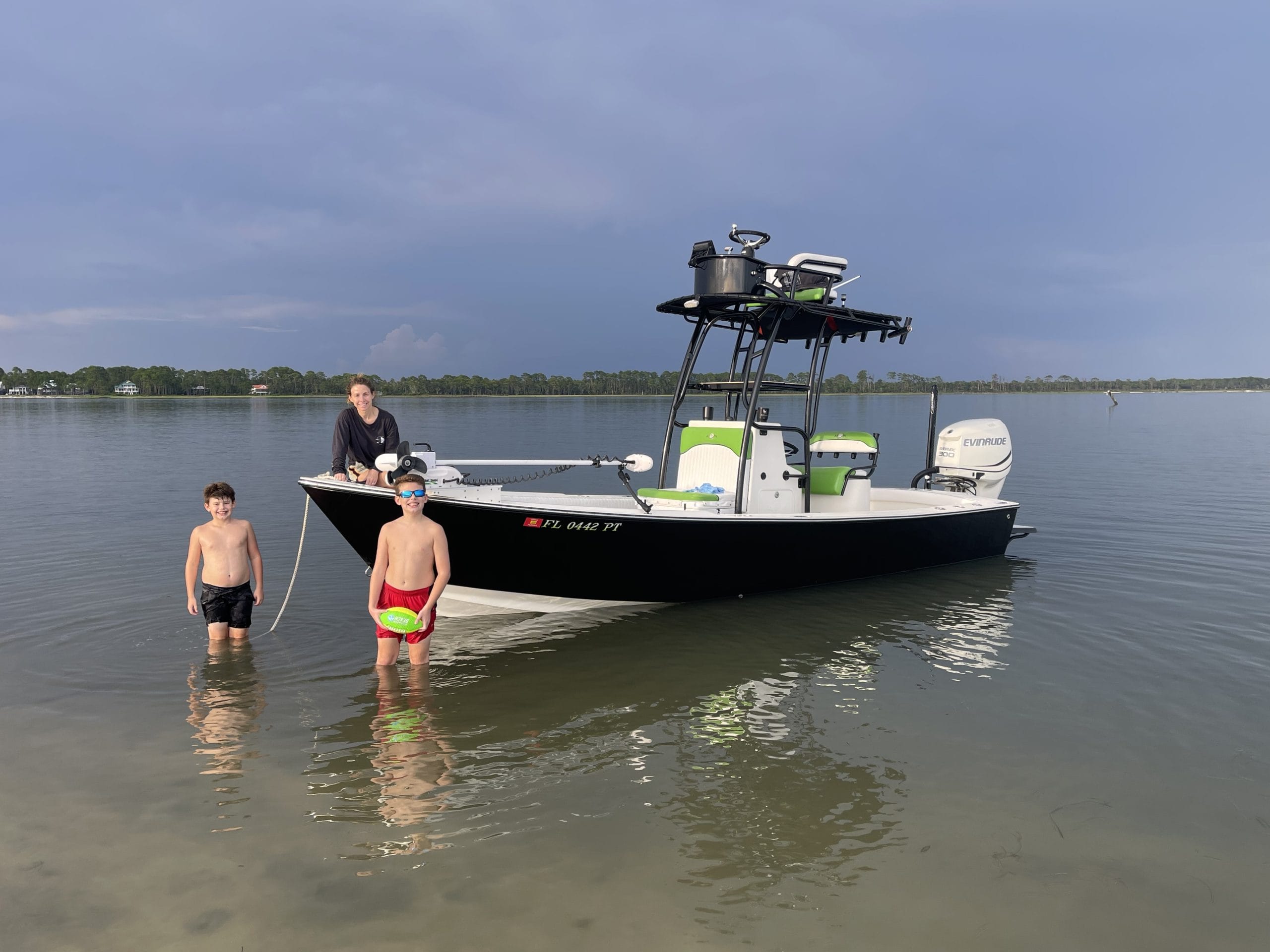
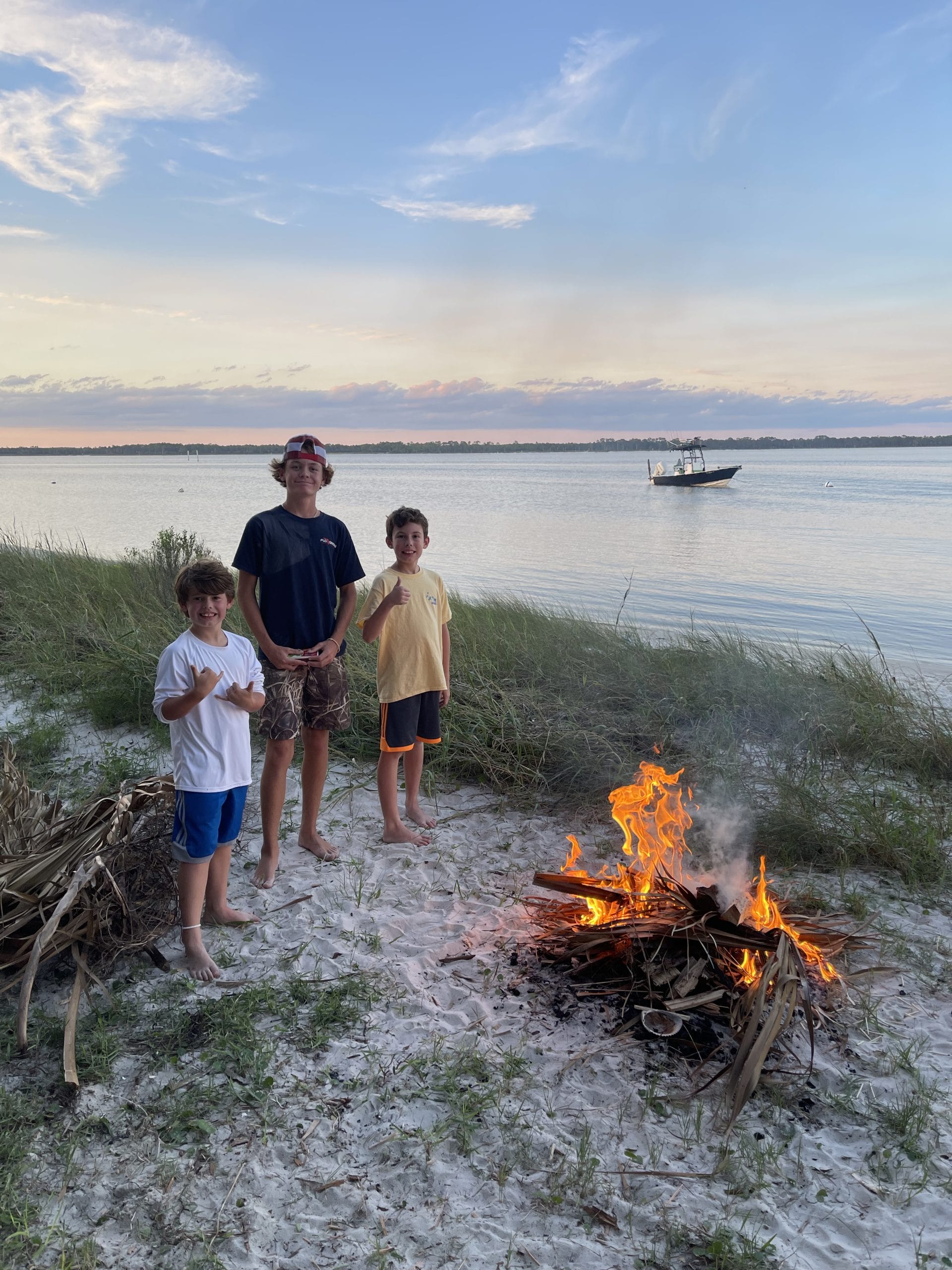 Recently, my family and a few of our closest friends boated the 80-mile round trip to Apalachicola from Alligator Point. I recall getting chills when Heath stepped onto the pier, and remarked to his three sons, “This is where our family first came to America. They landed at Ellis Island and immediately came here… This is where it all started.” The first Miller’s arrived here by boat in the early 1900’s. I doubt his family had much back then but today they do, as a direct result of helping grow America into what it is today. We need more people of this caliber going through Ellis Island.
And I wish we had more islands.
My own family’s business got its start on an island. As a young boy, my mother worked as a school teacher in Newberry to put my dad through medical school at the University of Florida. Not long after he graduated, they purchased 160 acres on the Gulf of Mexico. I remember thinking then what a rare and wild place it was. To think that someone like them, just getting started in his career, to be able to own a place like this today is unbelievable. This parcel on Blue Creek had coastal islands but the practically private fresh-water river running through it was its signature. The trees were enormous with ancient cypress and even included second-growth Longleaf pines. The Taylor County coast was about as wild a place to grow up as there is. As a boy, I vividly remember visiting the then-new Walt Disney World “Jungle Cruise” and thinking it was a bad knockoff trying to recreate the same adventures that we actually lived. I was always amazed by how many people flocked to the imitation vs how few people I saw when living the real thing. I do have to give credit where due as their fake crocodiles outnumbered our real alligators 10-1 in 1970’s Taylor County. I am appreciative that in the 21st century, people cherish the “Real Florida.”
Back then, I remember the feeling I got from the old timers that Dr. Kohler might be a little “off” by how enthusiastic he was for this land. They were amazed by how much he relished the things they took for granted like oyster beds, harvested for hundreds of years, and piled up by the Apalachee. He would drive a two-hour round trip just to spend a few minutes checking on the Island. I remember one fall weekend he hired a crew to help clear some land. He came home disgusted nothing was accomplished. Apparently, he looked across the field and innocently stated “There’s a buck,” and was mortified when everyone rushed home to get their Walker hounds not to be seen again for the rest of the weekend. Life is about adventures.
Today, that parcel – located near Keaton Beach – is called Blue Creek Coastal Preserve. What I wished for back then has certainly happened; like that jungle cruise, more folks now appreciate these special places.
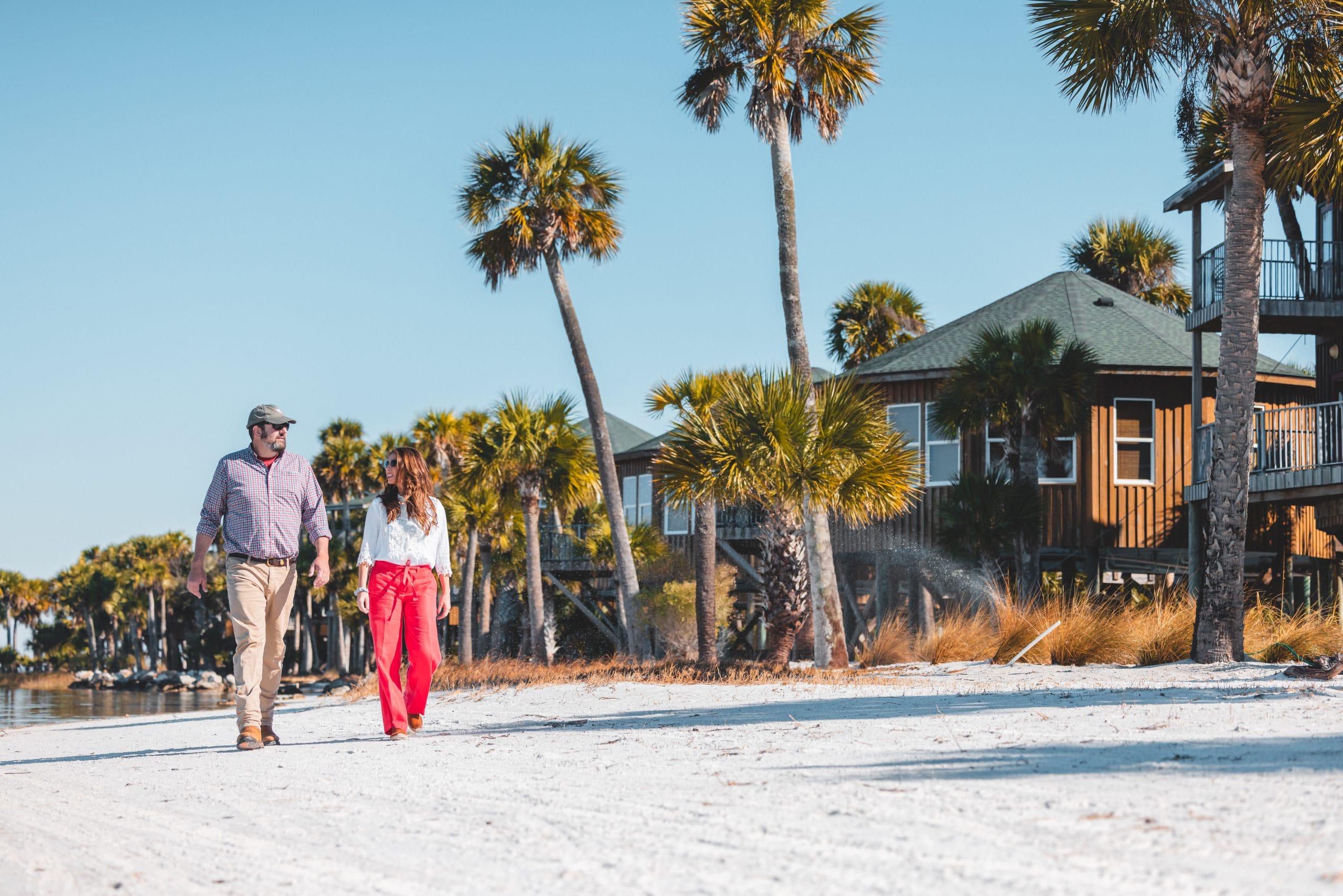 I grew up on the “Nature Coast” before it was called that. It certainly has a better ring to it than the Tide Swamp or Deadman’s Bay which are the real names of the places we frequented. Then there is the 80-mile stretch of barrier islands from Alligator Point to Cape San Blas, which if up to me would be called the “Island Coast.” One side of these islands teem with fertile, shallow estuaries flanked by turquoise water and quartz sand beaches on the other. In fact, they rank among “the best beaches in the world (according to expert “Dr. Beach”).
Places here are literally named after the Saints, like St. Vincent Island, St. George Island, and St. Joseph Bay. Then, on the opposite side of the respected name spectrum, there is Dog Island. Arguably, one of the most beautiful of the islands, it’s also so well regarded that today 90% of it is owned by the Nature Conservancy. However, its honored status was not always so. During a time period when Apalachicola was one of the largest and most prosperous cities in Florida, Schooners, sloops, brigs, and all types of sailing vessels from around the country and the world crowded the harbor. The ships brought in immigrants like the Miller family and unloaded and loaded goods, and people, that built Florida into what it is today. The practical problem was that a lot of the unskilled sailors, especially those new to the profession, wanted to stay in Florida making it difficult to ensure there was enough labor to make the trip back. Called “dogs” in maritime parlance these new sailors were often dropped off on the 1st barrier island on the way into port. After several weeks stranded, in what many today consider an island paradise they more than volunteered to get off the Island and go back to work. Thus, the name Dog Island.
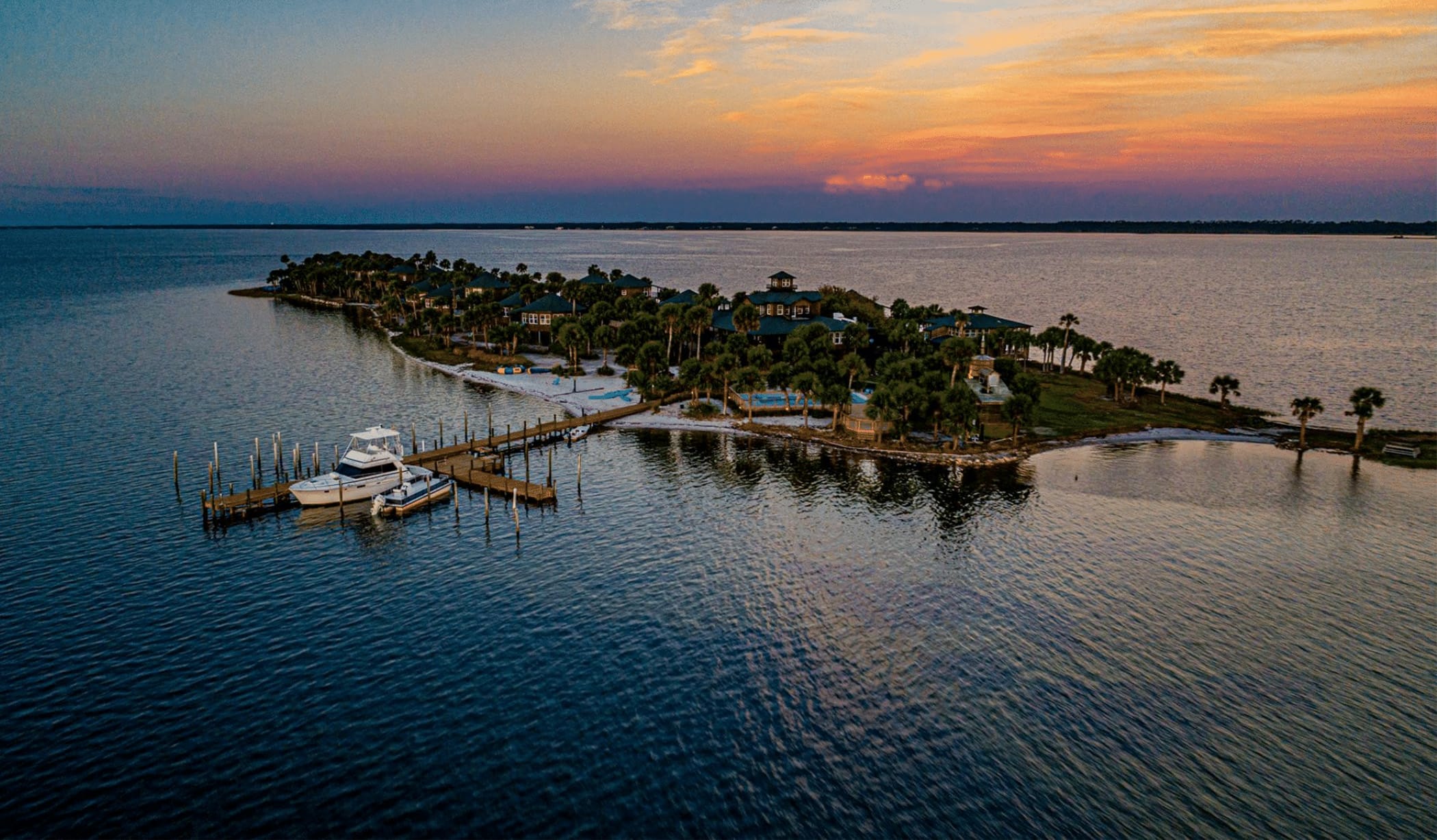
Today, a nearby 7-acre island has gained international respect after being transformed from a secret pirate hangout to a 4-star resort complete with 26 private bungalows and a restaurant. Like the knockoff “Jungle Cruise” so too Disney created the popular “Pirates of the Caribbean.” Again, the real thing too is found along this coast and the truth is better than any magic Disney could make up. This was Captain “Black Sam” Bellamy’s Island. Known as the “Prince of Pirates” and “The Robin Hood of Pirates” Bellamy is considered to have been not only the most likable but the richest pirate in history. Unlike others like his own mentor, Edward Teach, aka “Blackbeard” he was known for treating his crew fairly and equally. Of the 53 ships he plundered many times, he would simply upgrade his own fleet and set the captured crew back on their way. Named for refusing the custom of wearing a wig, Bellamy instead tied a black satin bow to his hair and carried four dueling pistols in his sash. Bellamy is estimated to have “earned” around $120,000,000 according to Forbes. (Note: this is pre-income tax so he also was able to keep all of it which is about $48,000,000 more than “earning” it today.) His legend lives on and his namesake, now 4-star resort “Blacks Island” can be bought for just about the same price that he would have owed the IRS on his $120M fortune. While he may be renowned in the history books for being the only one not wearing a wig, I may be the only one to ever wear a cowboy hat on his island. The ironic thing is that while in 1717 Bellamy lost his life and fortune in a Nor’easter off the Massachusetts coast, just a little over 300 years later his Florida island withstood a direct hit from Category 5 Hurricane Michael and went relatively unscathed. In fact, like a scene from Forrest Gump the Weather Channel featured the island to their utter surprise that it stood alone through the devastation. Islands and legendary pirates get a new life in the world of 2024 real estate marketing.
Floridians can credit Florida Forever for preserving some of the best land in the state. It’s hard to imagine that between State lands and the Federal refuge, 86% of the 188-mile stretch of coastline from Mashes Sands to Weeki Wachi is forever protected and undeveloped. In terms of its recreational lands, its citizens are some of the wealthiest of any state. As far as large private holdings go there is one last large undeveloped, but developable coastal tract left still in private hands. Much of this land – at least four miles of St. Marks coastal river frontage – looks today just like it did when “Black Sam” Bellamy sailed here.
These sentiments and my own personal family history are what drive me to consider these places as an asset class all their own. They weren’t always thought of like that. Thankfully, the “real Florida” is more regarded today than artificial magic. Thankfully, more and more people realize that. From growing up on Blue Creek and the remarkable place that was, it has been a driving force in my 30+ years in this industry – a career representing people and places I am passionate about.
 From murky farm ponds to pristine glacier-cut lakes and everything in between, Knox Daniels’ expertise stems from a lifelong fascination of water and the creatures that live in and around it. He recognizes and helps clients appreciate the value water features bring to a property. “My goal is to help buyers realize and sellers maximize the value different water bodies bring to a property, not only in a recreational sense, but also for social storm reasons.” After extensively traveling the country for collegiate BASS fishing tournaments, Knox graduated and worked for the Southeast’s finest fisheries and wildlife biologist, Greg Grimes. With Grimes’ company, AES, Knox managed many of the southeast’s finest private lake estate/impoundment properties, and learned the intricacies of upscale property management. Learning from Greg and other biologists, Knox honed in on the specific conditions and habitat needed for optimal gamefish growth in private lakes. He has also worked as a property manager on several thousand acres and for a commercial developer, facilitating the dirt work and builds of several apartment complexes, but his true passion has always been in the outdoors. “I’ve always had an insatiable fascination with ponds/lakes and am grateful to be able to help to place clients on the properties of their dreams and make their personal fisheries/wildlife goals reality with JKA.” – Knox Daniels
 Jason has been assisting landowners for the last 28 years in Georgia and South Carolina obtain achievements the owners did not realize were possible. His degree in Biology from Georgia Southern stemmed from the desire to know how things in nature work. His plantation roots began at just 16 years old outside of Albany, GA and the last 20 years were spent in the Lowcountry of South Carolina. His entire career has been spent developing a global approach to plantation management. That plan included sales. Sales is in Jason’s blood- his mom had a 45-year career as a real estate broker. After college, he chose to pursue his passion of making properties great. In 2011, Jason sold his first plantation. Since then, he has assisted buyers and sellers with over $20 million in sales while most of that time working as a full-time General Manager of a large Lowcountry plantation. Today, he is committed to using his unique skill set and experience to guide landowners through the many challenges of plantation ownership.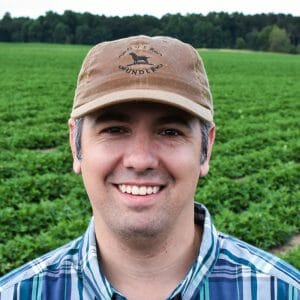
 Bruce Ratliff is a retired elected official (Property Appraiser Taylor County). Bruce brings years of experience in ad valorem tax knowledge. His property tax background gives JKA Associates & clients a unique insight into the complicated tax process. Bruce held several positions in the Florida Association of Property Appraisers, including member of the Board of Directors, President, Vice-President and Secretary, and served on the Agricultural & Legislative Committees for the Association. The real estate business has been part of Bruce’s life since childhood. His mother, Shirley Ratliff owned Professional Realty of Perry, Florida and his father, Buster owned Ratliff Land Surveying which Bruce was General Manager of before his political career.
 Hailing from a long line of outdoorsmen, Tim learned a great deal from his father and grandfather. He saw first-hand what it means to be a good land steward. He believes land is so much more than a place to hunt, fish, and grow timber or crops. “It’s an identity, a resting place, a safe haven and a way of life, said Tim.” Tim’s family ties to Alabama run deep. During his grandfather’s first term, Governor James was responsible for signing into law Alabama’s first state duck stamp which helped to ensure funding for the procurement, development, and preservation of wetlands for migratory waterfowl habitat. He also established Alabama’s lifetime hunting license, so it is no surprise that Tim is an avid outdoorsman with a keen eye as to how best to improve habitat for the greater good of its wildlife.
 With Madison County roots, Lori grew up on her family farm at Pettis Springs along the historic Aucilla River. A love of the land was instilled in Lori very early on by her father who was a local farmer. Lori understands the importance of good land stewardship and has witnessed first-hand how her own father, a former 2-term member of the Florida House of Representatives whose district encompassed many rural counties of the Red Hills Plantation Region, with a little bit of sweat equity, so lovingly worked their own family land. These are core values she carries with her today, and nothing gives her more personal satisfaction than to represent some of the south’s best land stewards.
 Cole’s dedication to land management lies in his family roots. As a fourth-generation timber expert, Cole’s earliest memories were spent with his father managing timber investments. With a degree in Food Resource Economics from the University of Florida, Cole is the epitome of an up-and-coming leader. He grew up with a hands-on approach to learning land management and conservation and has spent the last 15 years learning every angle of the real estate and forest industry. Cole is a member of the Florida Forestry Association, Red Hills Quail Forever, Southeastern Wood Producers Association and he uses this platform as an advocate for landowners and their land investments. His family has dedicated the past 60 years to providing landowners in North Florida and South Georgia with professional land management services focused on improving and protecting one’s forestland and wildlife investment. In fact, their family business, M.A. Rigoni, Inc., was one of the first to introduce whole tree chipping to the Red Hills Region.
 As a landowner of his own family farm, Lick Skillet, along with family land that has been passed down and enjoyed together at Keaton Beach for 40 years, Jon knows what it means to be a steward of the last best places. As a third-generation land broker with more than 30 years of experience in advising landowners in this niche, Jon is known for his innate ability to harvest a land’s unique intrinsic value. Touting several notable sales under his belt, Jon personally closed Rock Creek/Molpus – 124,000 acres of premium timberland at $142,000,000 – which was known as the largest timberland land sale in the Southeast for eight years running. He is a co-founding member of LandLeader and achieved the real estate industry’s highest honor, “2022 National Broker of the Year – Recreational Land Sales,” by the Realtors® Land Institute.