
Go and sit in the spring woods at first light, the way you did 20 years ago, and listen for what isn’t there. Gobbling turkeys are going thin, following the same trend as the bobwhite’s whistle. Is it happening now to wild turkeys, too?
Across the South, the wild turkey is decreasing, and while Florida isn’t as dramatic, Georgia’s spring harvest dropped 66% in a single decade! There’s a pattern here. Like the bobwhite, there are many possible causes. Could part of it be a product of unintended consequences?
Could it be a perfect storm between those who are the best at managing our wildlife and those who know absolutely nothing about it? Could it be as simple as the never-ending conflict between those who follow a Biblical worldview versus those who don’t? Perhaps.
The land and its wildlife were given to us to steward over – and that stewardship is a charge from God Himself – and the quiet woods are telling us we aren’t doing something right. There is a reason those poults aren’t making it where they once were. And, it is not only the turkey the quail, the rabbit, a whole host of creatures that were once prolific everywhere are now found in great abundance in only a few places. What are those places doing that everywhere else isn’t?
What’s the difference? Let me take you to Lick Skillet, my own place on the Aucilla, and tell you what I’ve observed for myself and across the 1.2 million acres of highly-managed plantation land, of which my firm represents a lion’s share. Sometimes I think those of us who steward land are a tribe unto ourselves – and I mean that the way the Old Testament means it.
When Israel came into the promised land, the Lord did not give every tribe the same job. Judah was given the throne. The men of Issachar understood the times. The Levites were set apart for the tabernacle, and later the temple, to carry it and keep it and tend the worship inside – the one tribe that drew no land of its own, because the Lord told them plainly that He Himself was their inheritance. Different tribe, different charge.
I look at land stewards as that same kind of tribe. Our charge is taking care of God’s great wild places, and it is about as close to the original job description as a man can get. But as humans, much as we try, we don’t get everything right.
When the Lord set the first man in the garden, He gave him two verbs: to “dress it and to keep it.” We like the first one. Dress it – plant the food plots, burn the woods, watch it green up in April, and bear fruit in the fall. It’s the second one that’s the bigger problem, where the temptation of a one-time financial gain can ruin generations of hard work. Keep it. In the old Hebrew, that word is shamar – to guard, to watch over, to protect from harm. To keep a thing is to stand between it and whatever would destroy it. A garden is not merely grown. It is defended.
How He Built It
I developed a test that I run on every situation.
Test #1: There is God’s way – what the Bible says – and there is an anti-God voice, loudly carried by society, that says the exact opposite. This test never fails. God created the garden with someone to steward over it; we are a part of creation. Yet there is another voice that claims mankind is an intruder – not natural, that everything we do on earth is inherently bad because we aren’t supposed to be here. The exact opposite of what God says.
I don’t know what God would call the tribe that stewards over land and wildlife, but I’d be in it, along with a good portion of everyone I know. And, I’m glad I wasn’t born in Old Testament days, because the fact is that mankind has come a long way in understanding how to manage wildlife to thrive.
One of the things many of us do is run wildlife feeders. Lots of them. By industry estimates, there are somewhere between 400,000 and 850,000 in Florida and Georgia alone, and the U.S. market runs around $280 million a year, growing nearly 6% annually.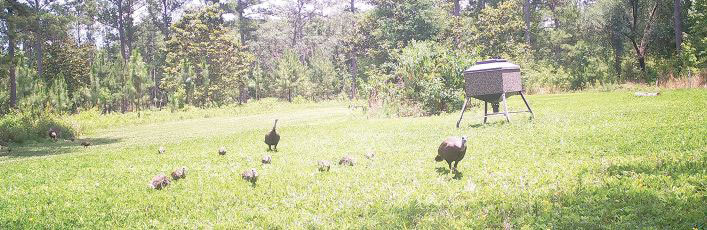
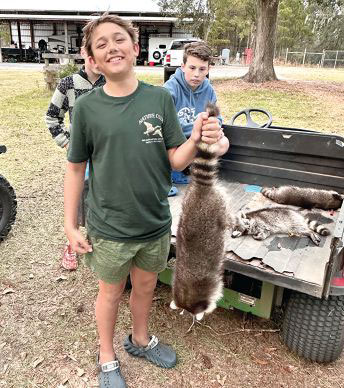
I serve on the national board of directors for Quail Forever and Pheasants Forever, and as such, I attended one of the nation’s top wildlife meetings. I will never forget what the small game director of Texas told me. Some places in Texas have a deer feeder every 26 acres. With each feeder come three or four corn-fed, fat and healthy…raccoons. The feeders run dry after deer season, and not long afterward, the turkeys and quail begin to nest. Those coons are now hungry, some for the first time, and any egg on the ground is going to be found. He’s right. I’ve seen so many raccoons on the trail camera at one of my feeders that they ran every deer off but a single buck – and I’ve got a picture of eight of them trying to face down even a bear.
Test #2: The way God designed things, the natural order works perfectly – our job is only to steward and oversee it.
So what else happened? We eliminated the animals that naturally kept raccoons in check. A red wolf is one of the few things raccoons fear – wolves ran the coons so ragged that a sow would keep her young deep in the hardwood bottoms and stay there, away from the open pine uplands where a turkey and a quail nest. They pushed the egg-eaters into the corner and held them there, exactly as designed…until they didn’t.
I grew up knowing little about Florida’s wolf, except that there are a few on St. Vincent Island – and I’ve since consulted on a property in North Carolina that sits in the heart of the only place on earth where wild red wolves still roam, fewer than two dozen of them left. I had no idea that the Florida black wolf, the largest red wolf subspecies, was declared extinct in 1921.
That boded well for a lot of people back then, because in the Roaring Twenties, raccoon fur was all the craze – on Princeton’s campus, coon coats were “as thick as flies,” and the fad swept Yale and Harvard too. There was a 1928 hit song called “Doin’ the Raccoon,” and in 1929, the coat landed on the cover of The Saturday Evening Post.
Then, in the mid-1950s, came the Davy Crockett coonskin-cap craze. When I was a kid, there were still trappers and coon hounds. I don’t think I know even five people with a coon hound anymore – I’m still shocked the best one is worth more than the best pointer, by a long shot.
So, which came first to save the egg? The red wolf, by a thousand years. The Ivy League kid in his coon coat picked up the slack, and the dog-proof trap came last of all – which brings us to now.
The Bill
Now it’s up to land stewards to make things right.
Test #3: Making things right costs something.
Last season, on 300 acres of about the best-managed habitat in the Red Hills, we trapped 31 raccoons and 35 possums, among other things. That’s a raccoon every nine and a half acres and a possum every eight and a half – about 66 raccoons per square mile. Can you imagine having as many as 66 turkeys per square mile?
From the first egg a hen lays until her poults can fly up to a safe roost is roughly seven to eight weeks on the ground – she incubates about 28 days, and the poults can’t fly for two more weeks after they hatch. Seven or eight weeks on the ground, in a country that was essentially carrying a major egg-eating predator every four and a half acres. It’s not “God, what were you thinking?” – it’s how do we fix the imbalance we created?
So, here are my observations. Lick Skillet runs 800 acres; we trap only 300 (there’s that cost) and haven’t begun on the rest – so the experiment sits in the budget between more trapping and the other things a wife would wisely think are alternative places to invest money.
College kids don’t wear ankle-length fur coats anymore, and there’s zero market for Southern fur, so this tribe is on its own. On the 500 we don’t trap,
guess how many turkey poults we counted this year. Zero. It isn’t scientific – I’m not saying there are none, we just haven’t seen any. On the 300 we do trap? Guess how many turkeys we’re carrying now, adults and flying poults – about 62 per square mile, just shy of the raccoon number above.
And, how many bobwhite quail? Our spring whistle count showed 42 whistling males, and one whistling male equates (hopefully) to one full covey come fall. Forty-two coveys. If I can hold that trend, that’s a 100% home run, and it turns trapping into one of the biggest returns I can make. The whistle count on the 60%of the place that’s untrapped and not as well managed? One. Just one.
Yet, we run feeders too – six of them on the 300 acres, one every 50 acres – and every one is paired with one to three traps that have to be checked every single day. A dog-proof trap is about the most selective tool there is – a coon has to reach down inside and grab the bait to get caught. Essentially, they catch raccoons and almost nothing else.
The second-best thing is an invention by Brad Mueller of American Wild-life Enterprises – a former Tall Timbers quail researcher – where an electronic signal tells you which box trap has been sprung. He can cover thousands of acres and cut man-hours tremendously, though, like any investment, it has a setup cost before the savings kick in. For a large property, or for neighbors going in together, it would be ideal. In the meantime, what we’ve got is investment enough.
So, here is what I’ve come to consider an ethic: if we are going to hang a feeder, we ought to trap. In fact, it would be a fine thing if every one of those hundreds of thousands of feeders came boxed with a dog-proof or a live trap. I don’t know anyone who runs coon dogs anymore, or I’d invite them. It’s that important.
What actually moves the needle? The number-one tool, bar none, is prescribed fire – sunlight on the ground. Burn on the right rotation, and you grow the seed, the bugs and the low cover a poult needs to live. Number two, right beside it, is trapping.
I’m not an Obama fan, but I picked up a thing or two listening to him. He would slap “common sense” on the front of an idea and dare anyone to argue, because who in his right mind stands against common sense? Fine. I’ll borrow the move.
What we practice at Lick Skillet is common-sense predator balance. We’re standing in the gap – the gap the Florida wolf and the panther once held, and that a nation of coon hunters and fur-wearing college kids and Davy Crockett fans held for a while after them. The Florida black wolf is gone. The market is gone. The hounds are all but gone. We’re what’s left to hold the balance God built when the keepers He appointed are no longer here. Who could be against that?
Well done
So that is the difference. The turkeys are declining because the keepers left – the predator balance is off – the red wolf, the fur market, the coon hounds, one after another. But turkey and quail were created by God to be able to bounce back…and fast. They were only waiting on the tribe willing to take a stand: to burn the woods, invest in a trap line and keep what he was given to keep.
We never owned this ground anyway – we’re only keepers, the land lent to us for a little while. And, when the true Landowner walks His garden and finds it dressed, and kept, and full of life, may He say to a tired man in the Red Hills the two best words any steward could ever hope to hear: Well done.
 From murky farm ponds to pristine glacier-cut lakes and everything in between, Knox Daniels’ expertise stems from a lifelong fascination of water and the creatures that live in and around it. He recognizes and helps clients appreciate the value water features bring to a property. “My goal is to help buyers realize and sellers maximize the value different water bodies bring to a property, not only in a recreational sense, but also for social storm reasons.” After extensively traveling the country for collegiate BASS fishing tournaments, Knox graduated and worked for the Southeast’s finest fisheries and wildlife biologist, Greg Grimes. With Grimes’ company, AES, Knox managed many of the southeast’s finest private lake estate/impoundment properties, and learned the intricacies of upscale property management. Learning from Greg and other biologists, Knox honed in on the specific conditions and habitat needed for optimal gamefish growth in private lakes. He has also worked as a property manager on several thousand acres and for a commercial developer, facilitating the dirt work and builds of several apartment complexes, but his true passion has always been in the outdoors. “I’ve always had an insatiable fascination with ponds/lakes and am grateful to be able to help to place clients on the properties of their dreams and make their personal fisheries/wildlife goals reality with JKA.” – Knox Daniels
 Jason has been assisting landowners for the last 28 years in Georgia and South Carolina obtain achievements the owners did not realize were possible. His degree in Biology from Georgia Southern stemmed from the desire to know how things in nature work. His plantation roots began at just 16 years old outside of Albany, GA and the last 20 years were spent in the Lowcountry of South Carolina. His entire career has been spent developing a global approach to plantation management. That plan included sales. Sales is in Jason’s blood- his mom had a 45-year career as a real estate broker. After college, he chose to pursue his passion of making properties great. In 2011, Jason sold his first plantation. Since then, he has assisted buyers and sellers with over $20 million in sales while most of that time working as a full-time General Manager of a large Lowcountry plantation. Today, he is committed to using his unique skill set and experience to guide landowners through the many challenges of plantation ownership.
 Bruce Ratliff is a retired elected official (Property Appraiser Taylor County). Bruce brings years of experience in ad valorem tax knowledge. His property tax background gives JKA Associates & clients a unique insight into the complicated tax process. Bruce held several positions in the Florida Association of Property Appraisers, including member of the Board of Directors, President, Vice-President and Secretary, and served on the Agricultural & Legislative Committees for the Association. The real estate business has been part of Bruce’s life since childhood. His mother, Shirley Ratliff owned Professional Realty of Perry, Florida and his father, Buster owned Ratliff Land Surveying which Bruce was General Manager of before his political career.
 Hailing from a long line of outdoorsmen, Tim learned a great deal from his father and grandfather. He saw first-hand what it means to be a good land steward. He believes land is so much more than a place to hunt, fish, and grow timber or crops. “It’s an identity, a resting place, a safe haven and a way of life, said Tim.” Tim’s family ties to Alabama run deep. During his grandfather’s first term, Governor James was responsible for signing into law Alabama’s first state duck stamp which helped to ensure funding for the procurement, development, and preservation of wetlands for migratory waterfowl habitat. He also established Alabama’s lifetime hunting license, so it is no surprise that Tim is an avid outdoorsman with a keen eye as to how best to improve habitat for the greater good of its wildlife.
 With Madison County roots, Lori grew up on her family farm at Pettis Springs along the historic Aucilla River. A love of the land was instilled in Lori very early on by her father who was a local farmer. Lori understands the importance of good land stewardship and has witnessed first-hand how her own father, a former 2-term member of the Florida House of Representatives whose district encompassed many rural counties of the Red Hills Plantation Region, with a little bit of sweat equity, so lovingly worked their own family land. These are core values she carries with her today, and nothing gives her more personal satisfaction than to represent some of the south’s best land stewards.
 Cole’s dedication to land management lies in his family roots. As a fourth-generation timber expert, Cole’s earliest memories were spent with his father managing timber investments. With a degree in Food Resource Economics from the University of Florida, Cole is the epitome of an up-and-coming leader. He grew up with a hands-on approach to learning land management and conservation and has spent the last 15 years learning every angle of the real estate and forest industry. Cole is a member of the Florida Forestry Association, Red Hills Quail Forever, Southeastern Wood Producers Association and he uses this platform as an advocate for landowners and their land investments. His family has dedicated the past 60 years to providing landowners in North Florida and South Georgia with professional land management services focused on improving and protecting one’s forestland and wildlife investment. In fact, their family business, M.A. Rigoni, Inc., was one of the first to introduce whole tree chipping to the Red Hills Region.
 As a landowner of his own family farm, Lick Skillet, along with family land that has been passed down and enjoyed together at Keaton Beach for 40 years, Jon knows what it means to be a steward of the last best places. As a third-generation land broker with more than 30 years of experience in advising landowners in this niche, Jon is known for his innate ability to harvest a land’s unique intrinsic value. Touting several notable sales under his belt, Jon personally closed Rock Creek/Molpus – 124,000 acres of premium timberland at $142,000,000 – which was known as the largest timberland land sale in the Southeast for eight years running. He is a co-founding member of LandLeader and achieved the real estate industry’s highest honor, “2022 National Broker of the Year – Recreational Land Sales,” by the Realtors® Land Institute.