
by Jon Kohler, JD
America is the land of firsts. We were the first to earn independence from colonial rule and the first to create a form of government based on Biblical principles.
What’s also dear to my heart is that we were also the first to create what’s now known as the “North American Model for Wildlife Conservation” and the belief that individuals can make a difference. Just as it’s easy to overlook the fact that our difference lies in our Judeo-Christian values, so too is our unique belief that wildlife belongs to all people. A good part of the world doesn’t share this belief.
With the creation of the national parks system, we were the first to establish a nationwide land program with a two-fold goal of conservation and recreation. Individually, we are a land of givers as evidenced by the fact that we have more conservation groups than anywhere in the world. All of these speak to American ingenuity and determination, but it is this last – the reverence for our land – that showcases the appreciation we have for what God granted all of us.
Sadly, I can think of many more bad things happening in today’s culture than good. However, when it comes to good, I have seen the conservation of our last great lands grow into a culture and way of life I only dreamed about as a kid.
Working together today, it’s not just the landowners, the government, and NGOs, but individuals and diverse groups working hand in hand to make things better. A successful example of sportsmen coming together for habitat is Quail Forever and Pheasants Forever. Started by a determined group of hunters 40 years ago, they are nationally the de facto ambassadors for all of us who pursue upland birds behind a good set of bird dogs. In fact, over 80% of its members own hunting dogs (which to me, is further testament to the fact these are good people).
These two sister organizations and their army of volunteers have acquired over 218,000 acres for protection and hunting use since their inception in 1982. With current revenue of over $98 million, over 400 employees and more wildlife biologists than any other organization in the world, an impressive 91% of every dollar goes back into the habitat mission. I like to point out that its Charity Navigator ranking is almost perfect and on the polar opposite side of the spectrum from that of say… the Clinton Foundation.
Their stats are certainly impressive, but I didn’t know the secret until I started serving on the National Board of Directors. What almost no one knows, is that the blueprint for this organization was taken from our own Founding Fathers. Imagine, if you will, a form of government where independent states come together for a limited purpose, where centralized government fills a limited servant’s role in order to benefit all, and the only money/power that gets sent to the national government is the bare minimum needed to accomplish their common goals.
Sound familiar? This is as American a concept as it gets, but unlike today’s America, this is how Quail Forever/ Pheasants Forever actually works. Volunteer chapters, comprised of folks in the field working hard, know best where they need their local habitat money to go, not “Washington.”
Unbelievably to most, when you attend a chapter event, 100% of the money raised goes to the habitat choices that the local chapter volunteers choose. When it comes to land, local knowledge is usually the best knowledge, and given the fact that there are 567,000 habitat projects, there doesn’t seem to be a shortage of good ideas.
The only monies that get sent to the National office stem from some merchandise sales and a ridiculously-low $35 annual membership fee. There are no bronze statues or glamorous national headquarters to bankroll here. The funds are scattered by an army of volunteers across 22M acres and counting! The hard-working folks who run the 750 chapters don’t send their money to “Washington” and then ask nicely to get some of it sent back or “prove worthy.”
Here, these 400,000 members, supporters, and partners keep it. They see the need, have the energy and use the national folks to help them come together and hold a successful fundraiser to benefit their local community and support a national effort. To assist, there is an army of 175 – and growing – wildlife biologists scattered across the country to help further improve habitat.
The growth of this organization and the fact that it’s about to complete a record-breaking $500,000,000 “Call of the Uplands” endowment campaign to preserve and improve 9 million acres of upland habitat is a good measuring stick of America’s appetite for conservation and preservation.
“Partnerships and education efforts emphasizing an appreciation for hunting heritage make Quail Forever special among conservation organizations. Yet, we recognize our mission is one we cannot accomplish alone. We look to Southern landowners for partners, not just to improve habitat, but also for their input in preserving a way of life unique to the Southeast,” said Andy Edwards, Quail Forever program manager involved with QF growth and expansion in the Southeast.
In my real estate business, I tell my folks that we are a communications and relationship company first and land brokerage second. The guys who volunteer for conservation groups are the people we enjoy the most. In my travels, it is interesting to me how certain regions seem to raise experts in different fields.
It seems folks from Macon really have a penchant for buying and flipping timberland, folks from around Live Oak seem to have breeding improved genetic whitetails in their DNA, but when it comes to fire and land conservation, the Red Hills around Tallahassee are the first place I would expect to find them.
I get to meet some of America’s greatest conservationists and share their passion. The thing that continues to impress me, and I am most proud of, is that here in our area, we live and breathe the outdoors year-round, and to many of us, it’s the focal point of our lifestyle. Whether it’s the folks at the famed Thomasville Ducks Unlimited Sponsor chapter (one of the top fund-raising Ducks Unlimited Chapters) or Quail Forever’s own Albany Chapter just to the north (one of the nation’s leading chapters of any conservation organization), these regional efforts have national impact.
Speaking of fundraising and Tallahassee bringing out leaders, few know that Tallahassee’s own Steve Shafer serves as the campaign chair leading the “Call of the Uplands” initiative – and will soon announce having met their lofty goal of raising half a billion dollars for habitat.
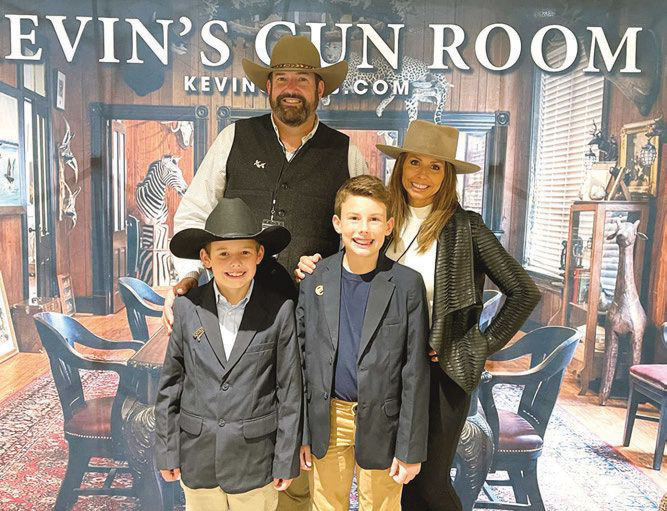
Again, coming out of Tallahassee and Thomasville is Kevin and Kathleen Kelly from Kevin’s Guns (and their customers), which just finished their sixth annual “Kevin’s Game Fair” raising upwards of almost $200,000 locally for Tall Timbers. When one looks at this, along with all the great work that Tall Timbers and its supporters do and the vast changes they are responsible for, the Red Hills region and world are in a better place.
Like the examples of Steve, Kevin and Kathleen, the conservation world is made up of individual volunteers that on many occasions rise to make a huge difference. Certain folks have had both an energy to help and were born at the right time in history.
Look at the difference the early founders of Tall Timbers made when it was first established in 1958 by Herbert Stoddard and the Komarek family. Born in Rockford, Illinois, but raised in the Central Florida longleaf pine woods, Stoddard made his way to the Red Hills in 1924 when the U.S. Bureau of Biological Survey hired him to study the habitat and life of quail in the region. From those studies, The Bobwhite Quail: Its Habits, Preservation, and Increase was published in 1931. Today, we know this volume as the catalyst for active land management and, particularly, the use of modern-day prescribed burning.
Tall Timbers has a long-standing history of utilizing scientific study to determine best practices for land management and conservation in The Red Hills. We are now working with Tall Timbers on a study to determine how consistent prescribed fire impacts land values. In my experience, I can tell you that regularly burning increases value, but with Tall Timbers scientific method we’ll be able to show concrete numbers.
“Our founders, including Herbert Stoddard and the Komarek family, were among the first to apply empirical research techniques to better understand the role of fire in nature,” Tall Timbers representatives said. “Even today, fire is the common theme encompassing every part of our research. Our Fire Ecology Database has over 30,000 citations of historical and current works.”
The reason we are even talking about quail and habitat today has its own story about timing. About 20 years after the Civil War, the modern shot shell first became available to the public. Now, no longer needing to reload a clumsy muzzleloader and with a quick second shot, a new addictive sport began.
Northern sportsmen began to purchase many of the long-abandoned cotton plantations as wing-shooting retreats. Thus, in about 1888, the modern asset class that we now know as a quail plantation was first born. If I’m in a jocular mood, I have been known to say, “Yankees invented the Southern sport of quail hunting.” Like any sport, you want to invite your family and friends.
One such family, the Beadels, purchased Hickory Hill in the Red Hills. Henry L.
Beadel visited this plantation as a young man starting in 1895 and eventually took over the family property in 1919.
He brought with him his northern and government-backed attitude toward controlled fire and, most likely, was surprised and concerned when he first saw woods burning. This type of thing is still all too common with folks moving here every day.
According to a talk Beadel gave in 1962 at the first Tall Timbers Fire Ecology Conference he was very concerned about burning the woods. To his credit, he listened to and observed local residents who had used fire as a management tool for generations and thus continued the practice on his lands.
It was during this time that this avid hunting family partnered with Stoddard on his now-famous quail study and Tall Timbers was created.
Tall Timbers is now the world’s leader in sharing its research with others about fire ecology and raising the “fire bird.” It’s amazing to me how to this day, that because of their founders’ early questions, everything they recommend is based on scientific research. Their science ends the debate.
The history and success of both Quail Forever on a local and national level, and Tall Timbers, across the entire Bobwhite range, showcases the importance of key individuals and volunteers in protecting our lands and conserving the outdoor recreational and hunting way of life. God created the land, but he gave mankind dominion over it. Thanks be to all those that steward over it.
In addition to the Red Hills, there are three other main quail plantation areas – the Albany area in Georgia, Union Springs in Alabama and the ACE Basin in South Carolina. Each is 300,000 acres or more. These areas are ecologically as important as any national park, yet it is not a government plan that maintains these lands. It’s the independently- minded landowners with their desire to protect and conserve that have maintained these lands and will continue to do so long into the future.
 From murky farm ponds to pristine glacier-cut lakes and everything in between, Knox Daniels’ expertise stems from a lifelong fascination of water and the creatures that live in and around it. He recognizes and helps clients appreciate the value water features bring to a property. “My goal is to help buyers realize and sellers maximize the value different water bodies bring to a property, not only in a recreational sense, but also for social storm reasons.” After extensively traveling the country for collegiate BASS fishing tournaments, Knox graduated and worked for the Southeast’s finest fisheries and wildlife biologist, Greg Grimes. With Grimes’ company, AES, Knox managed many of the southeast’s finest private lake estate/impoundment properties, and learned the intricacies of upscale property management. Learning from Greg and other biologists, Knox honed in on the specific conditions and habitat needed for optimal gamefish growth in private lakes. He has also worked as a property manager on several thousand acres and for a commercial developer, facilitating the dirt work and builds of several apartment complexes, but his true passion has always been in the outdoors. “I’ve always had an insatiable fascination with ponds/lakes and am grateful to be able to help to place clients on the properties of their dreams and make their personal fisheries/wildlife goals reality with JKA.” – Knox Daniels
 Jason has been assisting landowners for the last 28 years in Georgia and South Carolina obtain achievements the owners did not realize were possible. His degree in Biology from Georgia Southern stemmed from the desire to know how things in nature work. His plantation roots began at just 16 years old outside of Albany, GA and the last 20 years were spent in the Lowcountry of South Carolina. His entire career has been spent developing a global approach to plantation management. That plan included sales. Sales is in Jason’s blood- his mom had a 45-year career as a real estate broker. After college, he chose to pursue his passion of making properties great. In 2011, Jason sold his first plantation. Since then, he has assisted buyers and sellers with over $20 million in sales while most of that time working as a full-time General Manager of a large Lowcountry plantation. Today, he is committed to using his unique skill set and experience to guide landowners through the many challenges of plantation ownership.
 Bruce Ratliff is a retired elected official (Property Appraiser Taylor County). Bruce brings years of experience in ad valorem tax knowledge. His property tax background gives JKA Associates & clients a unique insight into the complicated tax process. Bruce held several positions in the Florida Association of Property Appraisers, including member of the Board of Directors, President, Vice-President and Secretary, and served on the Agricultural & Legislative Committees for the Association. The real estate business has been part of Bruce’s life since childhood. His mother, Shirley Ratliff owned Professional Realty of Perry, Florida and his father, Buster owned Ratliff Land Surveying which Bruce was General Manager of before his political career.
 Hailing from a long line of outdoorsmen, Tim learned a great deal from his father and grandfather. He saw first-hand what it means to be a good land steward. He believes land is so much more than a place to hunt, fish, and grow timber or crops. “It’s an identity, a resting place, a safe haven and a way of life, said Tim.” Tim’s family ties to Alabama run deep. During his grandfather’s first term, Governor James was responsible for signing into law Alabama’s first state duck stamp which helped to ensure funding for the procurement, development, and preservation of wetlands for migratory waterfowl habitat. He also established Alabama’s lifetime hunting license, so it is no surprise that Tim is an avid outdoorsman with a keen eye as to how best to improve habitat for the greater good of its wildlife.
 With Madison County roots, Lori grew up on her family farm at Pettis Springs along the historic Aucilla River. A love of the land was instilled in Lori very early on by her father who was a local farmer. Lori understands the importance of good land stewardship and has witnessed first-hand how her own father, a former 2-term member of the Florida House of Representatives whose district encompassed many rural counties of the Red Hills Plantation Region, with a little bit of sweat equity, so lovingly worked their own family land. These are core values she carries with her today, and nothing gives her more personal satisfaction than to represent some of the south’s best land stewards.
 Cole’s dedication to land management lies in his family roots. As a fourth-generation timber expert, Cole’s earliest memories were spent with his father managing timber investments. With a degree in Food Resource Economics from the University of Florida, Cole is the epitome of an up-and-coming leader. He grew up with a hands-on approach to learning land management and conservation and has spent the last 15 years learning every angle of the real estate and forest industry. Cole is a member of the Florida Forestry Association, Red Hills Quail Forever, Southeastern Wood Producers Association and he uses this platform as an advocate for landowners and their land investments. His family has dedicated the past 60 years to providing landowners in North Florida and South Georgia with professional land management services focused on improving and protecting one’s forestland and wildlife investment. In fact, their family business, M.A. Rigoni, Inc., was one of the first to introduce whole tree chipping to the Red Hills Region.
 As a landowner of his own family farm, Lick Skillet, along with family land that has been passed down and enjoyed together at Keaton Beach for 40 years, Jon knows what it means to be a steward of the last best places. As a third-generation land broker with more than 30 years of experience in advising landowners in this niche, Jon is known for his innate ability to harvest a land’s unique intrinsic value. Touting several notable sales under his belt, Jon personally closed Rock Creek/Molpus – 124,000 acres of premium timberland at $142,000,000 – which was known as the largest timberland land sale in the Southeast for eight years running. He is a co-founding member of LandLeader and achieved the real estate industry’s highest honor, “2022 National Broker of the Year – Recreational Land Sales,” by the Realtors® Land Institute.