
by Jon Kohler, JD
by Lori Bembry Weldon
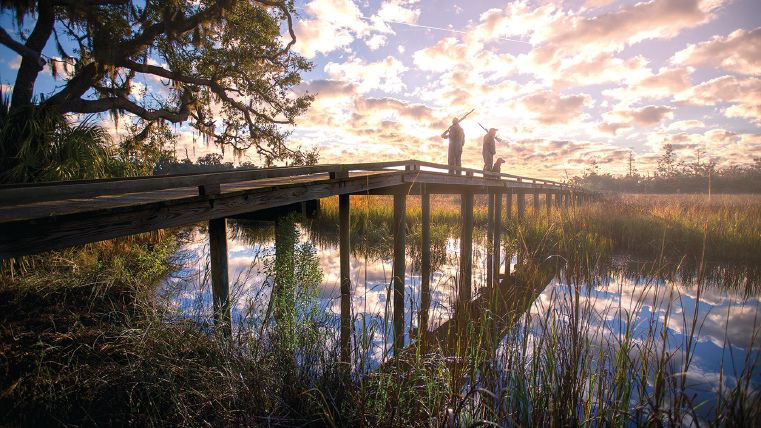
There is something magical about Coastal Georgia – the charming historic homes with their huge wrap-around porches, majestic live oaks, cozy porch swings and, maybe best of all, the coastal marsh views that encourage one to slow down, sit for a spell and reflect on the early days of this great country.
The State of Georgia was settled by General James Oglethorpe in the early 1700s. King George II of England signed the charter creating the 13th and final American colony of Georgia on April 21, 1732. Georgia proved to be very profitable for England with its vast riches of timber and other natural resources. The colony also provided a natural buffer zone between South Carolina and Florida, aiding in the defense of the other twelve colonies, from the Spanish who settled Florida, and the French who settled Louisiana.
In 1733, the city of Savannah would become Georgia’s first settlement. During those early days, the colony of Georgia included much of present-day Alabama and Mississippi. It was a much sought-after area because of its large river systems, including the Altamaha and Savannah rivers. These waterways provided valuable conduits of transportation, essential in building the British Empire in the Americas.
Additionally, the coastal shores of Georgia, with its miles of marshland, provided a great natural barrier system that provided natural protection for whoever controlled it.
Fast forward to today – who now owns all that wonderful marsh? According to Georgia’s 1981 Protection of Tidewaters Act, the state does. Having the pleasure of representing several island properties in the Savannah area, I have found, believe it or not, remnants of King George’s rule here that usurp that 1981 act. I often encounter Coastal Georgia land gifted to landowners by King George II of Great Britain during colonial times.
These land grants are referred to as King’s Grants and can be passed down through generations to today’s landowners. Oftentimes, these grants were originally awarded by King George to loyal colonists who served in the military and settled in the colony of Georgia.
One of our current listings, Black Island Estate, located in Darien, Georgia is attached to a King’s Grant. This property is located just across the creek from the historic British outpost of Ft. King George. The British flag and old cannons along the fort perimeter are visual reminders of struggles during colonial times. It has been an interesting exercise to research the history of Black Island, which dates back to the 1700s and the settlement of Georgia. And, maybe the most interesting component is that Black Island is surrounded by 90 acres of marshland that are owned by the private landowner through a King’s Grant. How nice it must be, to sit on your private wrap-around porch and look over your private marshland.
While researching the history of these properties, I visited many local historical sites to educate myself on the back story and history of the area. Needless to say, American history has taken on an entirely new meaning, and my affinity for this area grows with each visit.
One of my favorite historical sites to visit is Ft. King George, across the waterway from Black Island. This fort was built in 1721 along the Darien River and served as the southernmost outpost of the British Empire in the Americas until 1727. Known as the Little Amazon of the South, the Altamaha River Delta provided a much sought-after area that Great Britain, France and Spain were competing to control.
The Altamaha River is the largest free-flowing river east of the Mississippi and Georgia’s greatest natural resource. The Altamaha River is the second largest contributor of freshwater to the Atlantic Ocean east of the Mississippi, so gaining control of this massive waterway allowed Great Britain to establish a defensive line along the southern frontier which would encourage new settlements in the Americas. Control of this large river system was vital for Great Britain
and afforded them the ability to control economic activities and commerce in the Southeast, most notably fur trade.
Georgia is home to over 400,000 acres of tidal marshland. These salt marshes are some of the most biologically productive natural systems on Earth. The Georgia Department of Natural Resources has estimated that these marshlands produce nearly 20 tons of biomass per acre, which makes them four times more productive than the most carefully cultivated cornfields.
The importance of conserving and protecting these areas is of vital importance. And, wouldn’t it be nice to do your part by owning your own piece of Georgia’s coastal marsh?
The tranquil salt marshes, abundant wildlife and majestic live oaks are all trademarks of this Coastal Georgia area often referred to as the Golden Isles. I love representing these properties and having an integral part in finding new land stewards that will continue to pro tect these precious natural resources – dedicating ourselves to the preservation of land and conserving these wildlife habitats to ensure that future generations will be afforded the opportunity to enjoy its breathtaking beauty.